
Art Deco Elevator Panels — Fred French Building, 1927 — Glinsky & Bach
Eight gilt bronze panels — Industry, Commerce, Finance, and Building — conceived as a unified iconographic program.
A rare surviving ensemble of gilt bronze panels created in 1927 by Vincent Glinsky and Oscar Bach.
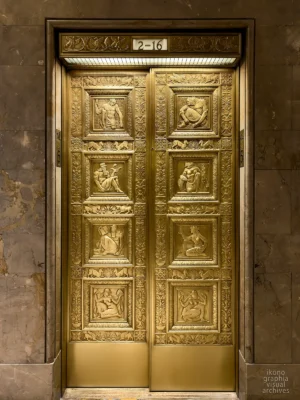
These elevator doors visualize the four pillars of Fred F. French’s real-estate empire—Industry, Commerce, Finance, and Building—through a sculptural language rooted in Art Deco geometry and documented Babylonian sources.
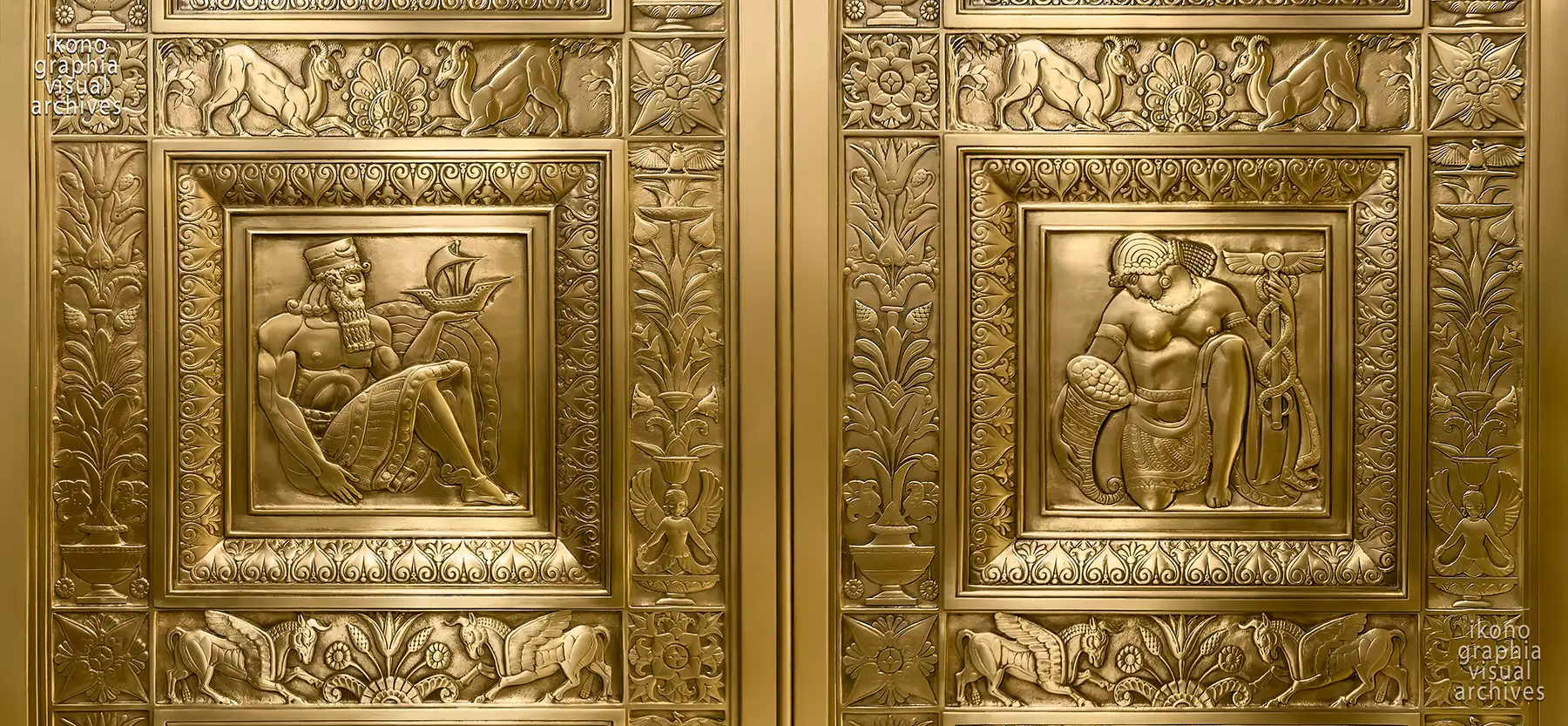
Completed in 1927, the Fred F. French Building stands as one of Manhattan’s finest expressions of the early Art Deco style. While the tower is admired for its stepped crown and gilded ornament, its most exceptional artworks lie hidden in the lobby: eight bronze elevator panels conceived by sculptor Vincent Glinsky and master metalworker Oscar Bach.
Commissioned to embody the vision of developer Fred Fillmore French, these doors translate the essential forces driving New York’s rise—labor, trade, wealth, and architecture—into a sophisticated visual program. Their hybrid style reflects Classical allegory, modern stylization, and the direct influence of Babylonian and Chaldean sources — documented by architect H. Douglas Ives in his own writing before a single panel was cast.
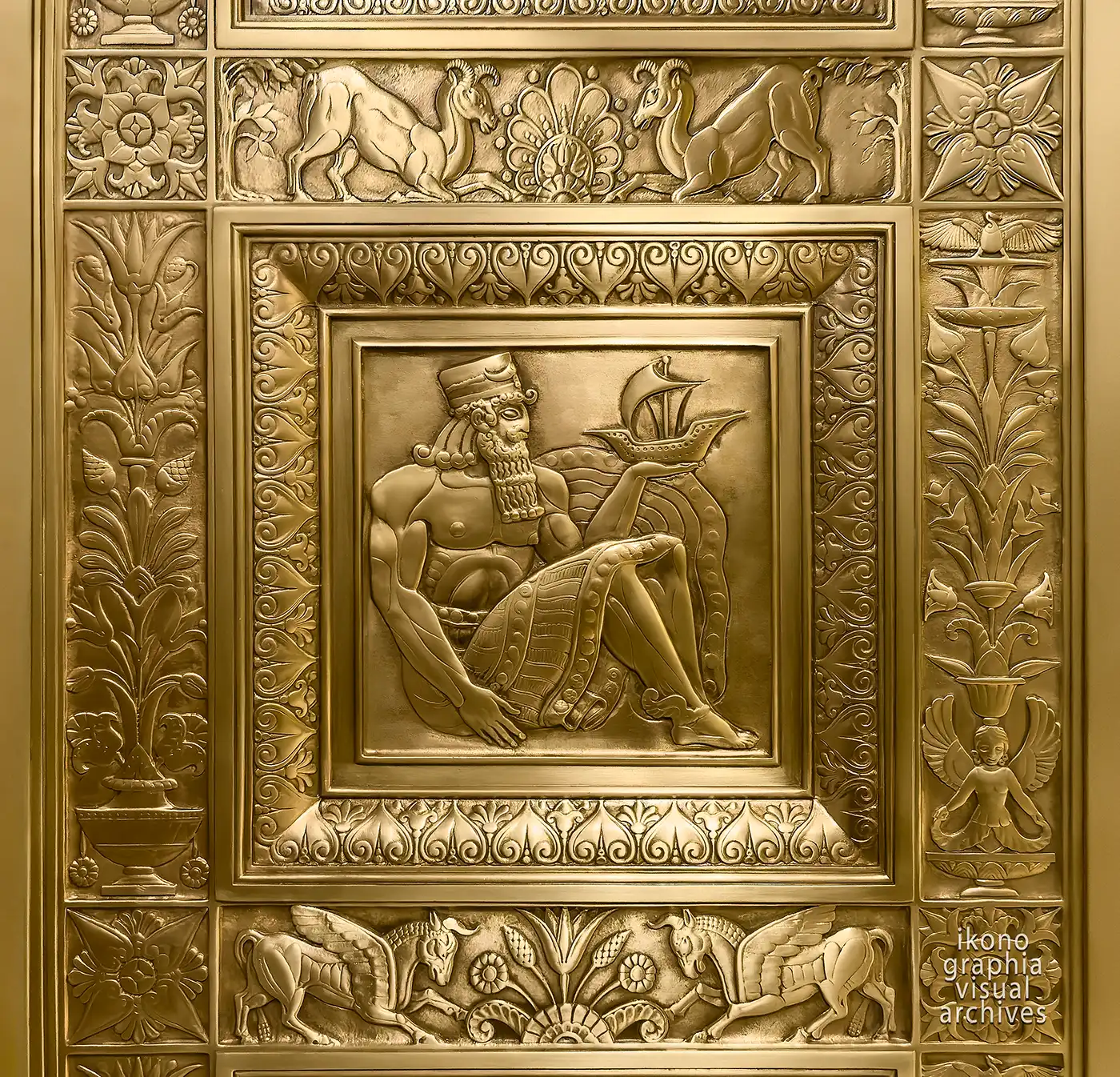
The Merchant — Commerce.
Symbolizing maritime trade and international exchange.
Holding a ship in his hand, the bearded figure embodies maritime trade — the engine of international commerce in the early twentieth century.
His confident pose and the ship he carries identify him directly — a Mesopotamian merchant prince, translated into gilt bronze by Glinsky following Ives's documented sources.
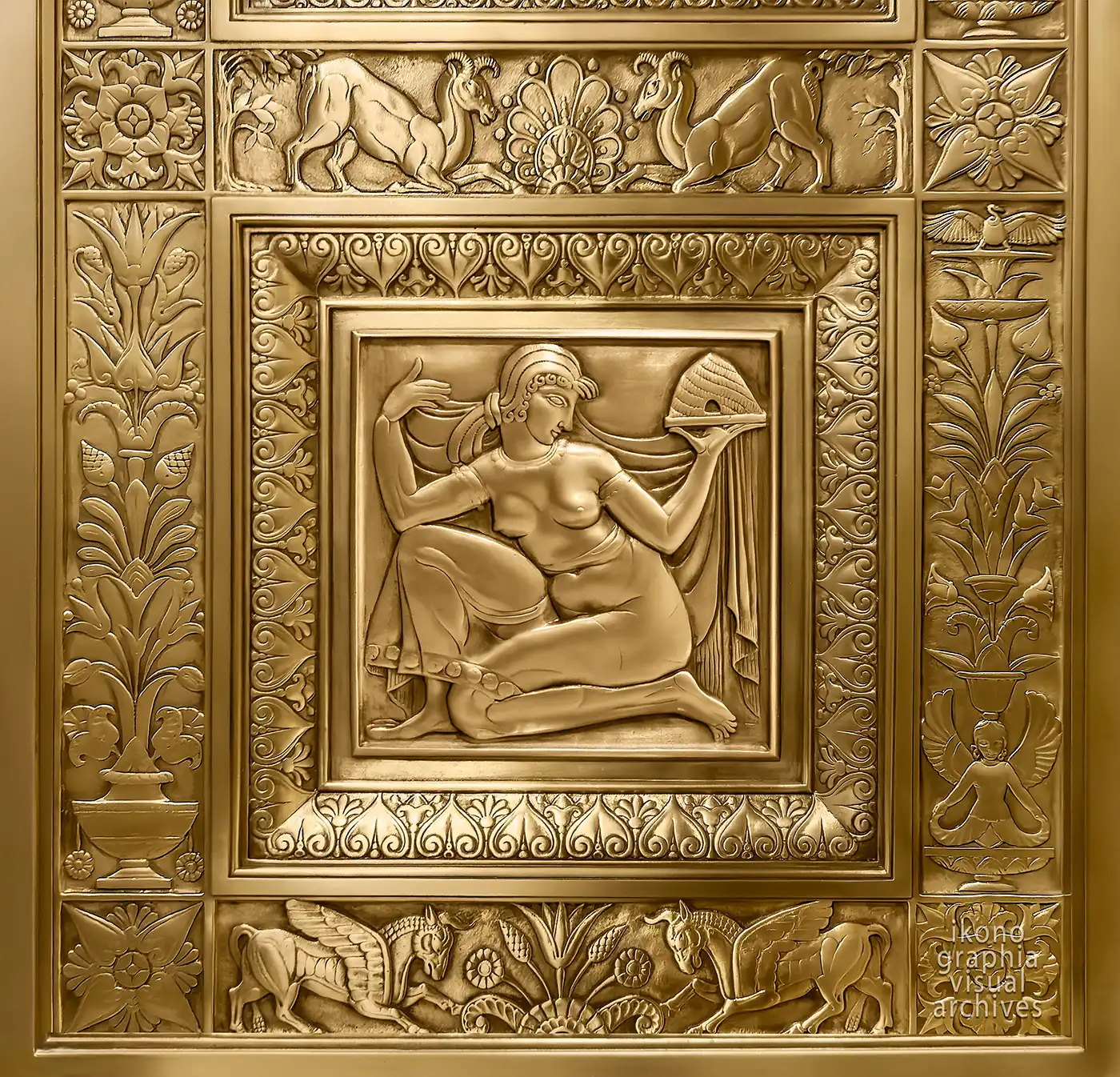
The Beekeeper — Commerce.
Symbolizing industriousness, shared enterprise, and the organization of commerce.
A seated woman holds a beehive — the ancient emblem of collective effort and the wealth that organized labor produces.
Her pose and adornment place her within the same Babylonian visual tradition as the panels around: composed, frontal, deliberate. Commerce rendered not as transaction but as civilization.
The Artists & The Style
Glinsky & Bach: Sculptor and Metalwork Virtuoso.
Vincent Glinsky shaped the narrative sequences in low relief, giving the figures a compact mass and rhythmic energy typical of early Deco sculpture. Oscar Bach realized the panels in gilt bronze, applying the refined technical methods that made him one of the pre-eminent metalworkers of his era.
Together, they produced one of the most complete and coherent decorative cycles in American Art Deco. The vertical registers, crouching beasts, muscular torsos, and geometric borders follow a visual language Ives had studied directly — the Ishtar Gate of Babylon, reconstructed at Berlin's Pergamon Museum in the early twentieth century, and the enameled brick of ancient Chaldea. The source was not general fascination. It was specific research, translated into bronze.
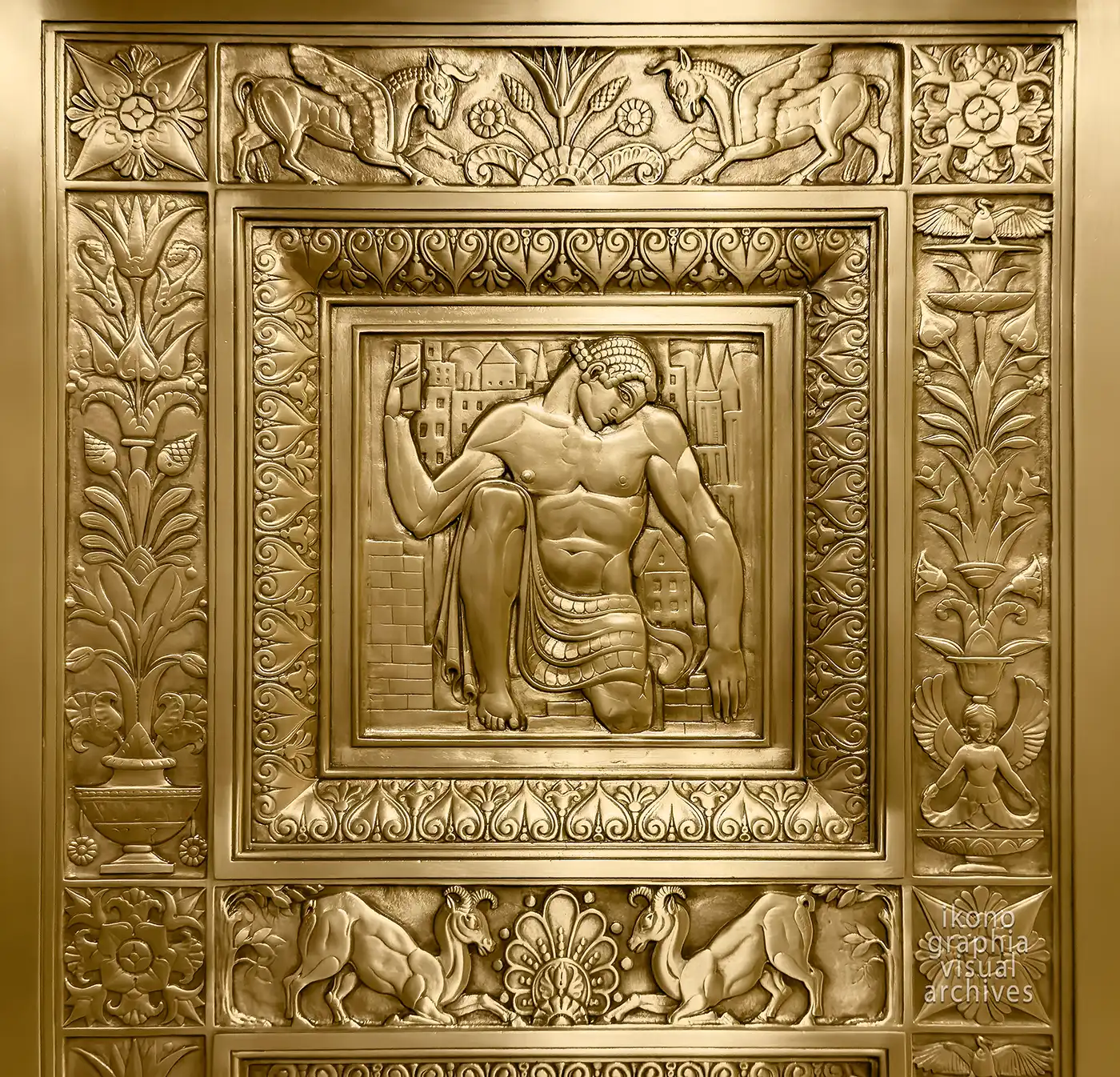
The Builder — Building.
Symbolizing skilled craft, technical mastery, and urban growth.
A kneeling figure, powerfully built, bends over his work with concentrated force — the architecture of the city rising behind him.
Where The Merchant carries trade and The Beehiver holds its product, the Builder is defined entirely by his labor. The body is the instrument. Glinsky's modelling here is at its most physical — the weight of the figure fully committed to the act of construction.
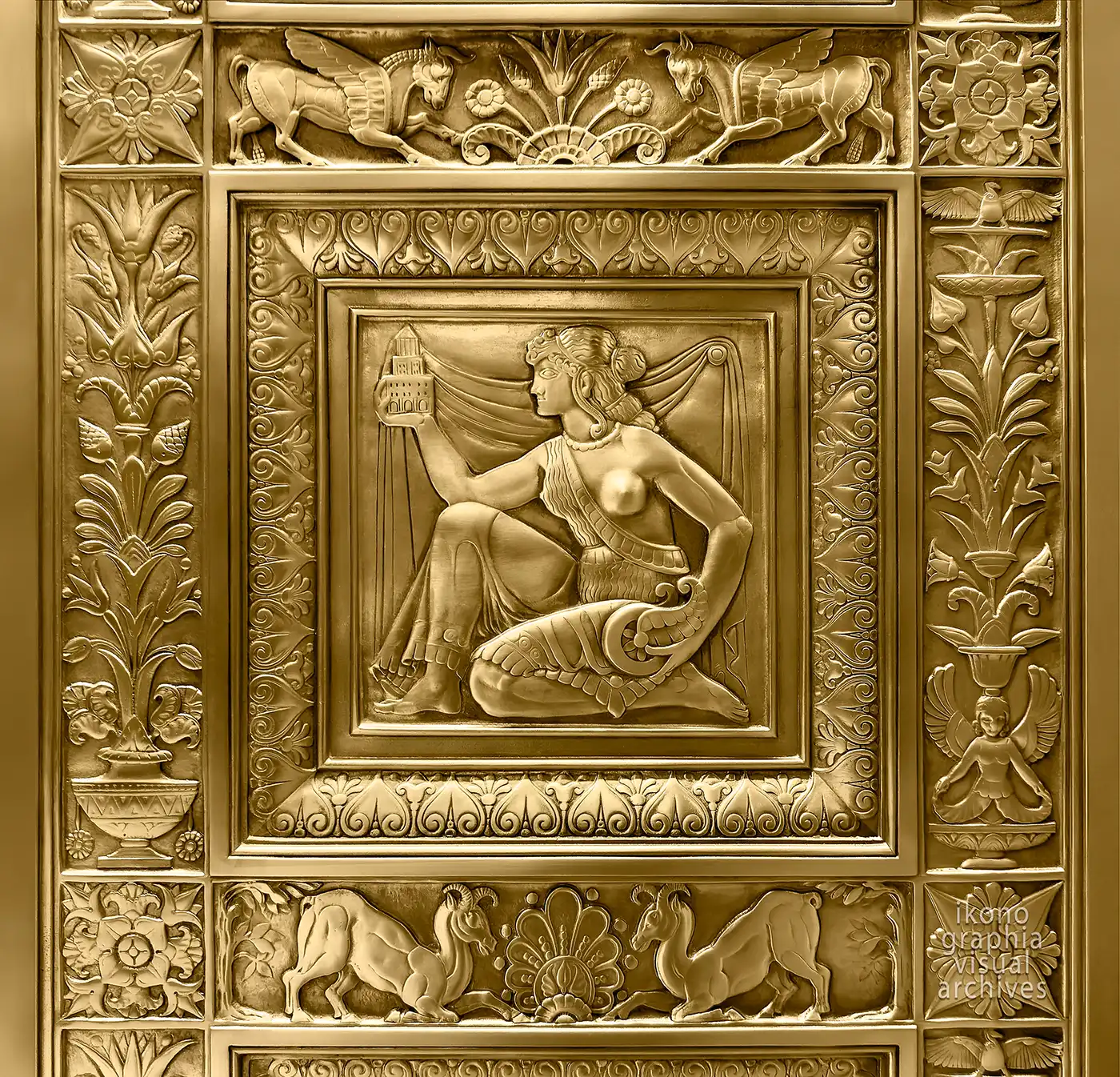
The Architect — Building.
Symbolizing design, planning, and architectural vision.
A seated female figure holds a miniature building raised in her hand — the classical pose of the architect-as-creator, the city held and commanded rather than built by hand. Her posture is composed, her gaze inward.
Where the Builder is all physical effort, the Architect is stillness and conception. Together they complete Building's two movements: the idea and the labor that executes it.
The Four Pillars
Industry, Commerce, Finance, and Building.
Each elevator panel embodies one of the four sectors central to the French Companies:
• Industry — strength, engineering, infrastructure
• Commerce — exchange, trade, and refined goods
• Finance — wealth, investment, administration
• Building — architecture, planning, construction
Though allegorical, the imagery was designed for instant legibility. These were the forces shaping New York in the 1920s: the labor that built the skyline, the commerce animating Fifth Avenue, the financial system behind every development, and the architectural vision that defined modern urban life.
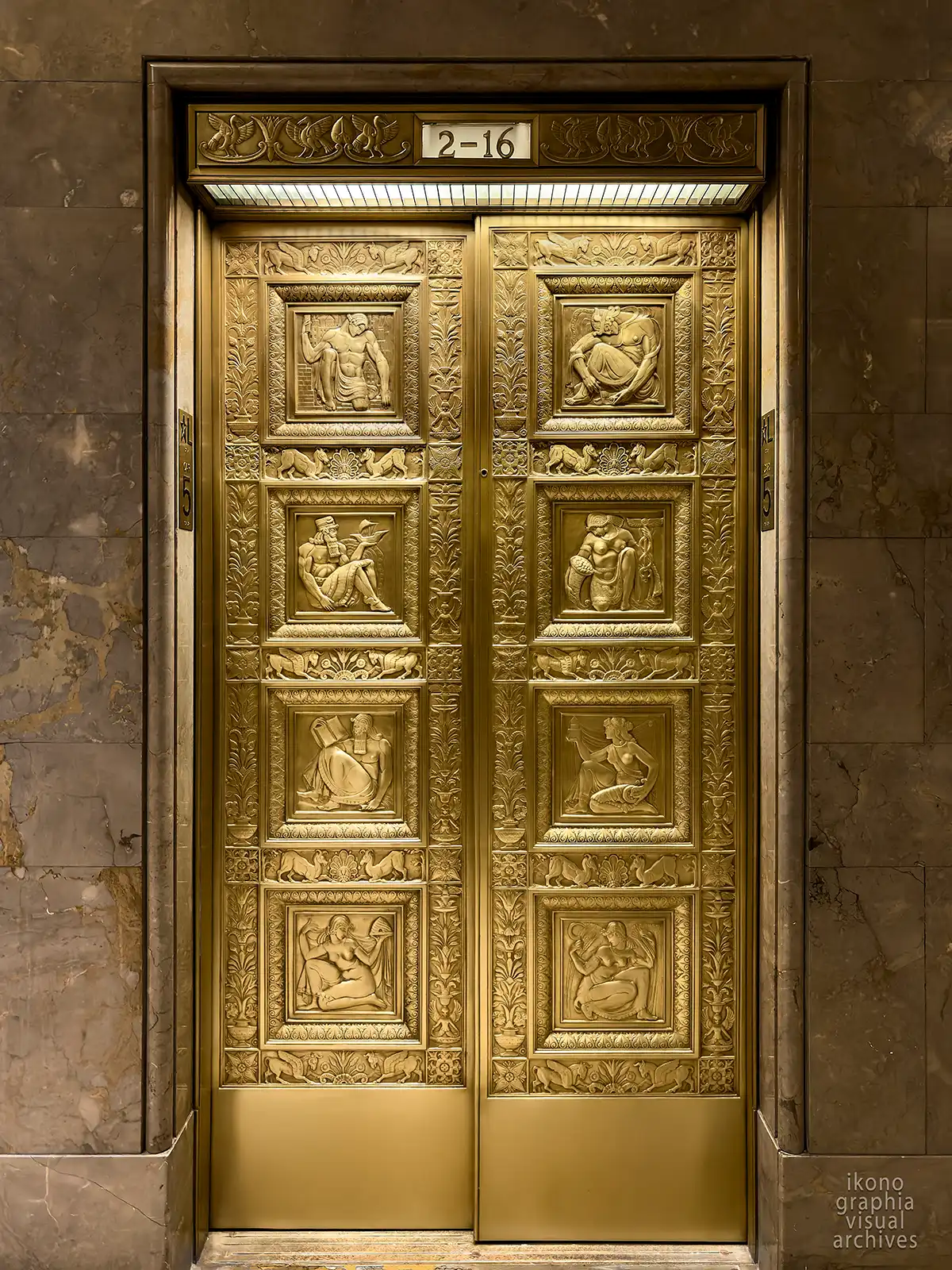
A complete symbolic program:
Commerce, Industry, Finance, and Building.
The eight gilded panels of the Fred French Building lobby — a sculptural cycle honoring the forces that powered New York's 1920s rise.
The arrangement is graphically balanced, not thematically ordered: the eye moves across figures and ornament before resolving into program. Ives's logic reveals itself slowly — four themes, eight figures, one coherent argument about what a city is and what sustains it.
The most complete Mesopotamian-themed decorative cycle in American Art Deco.
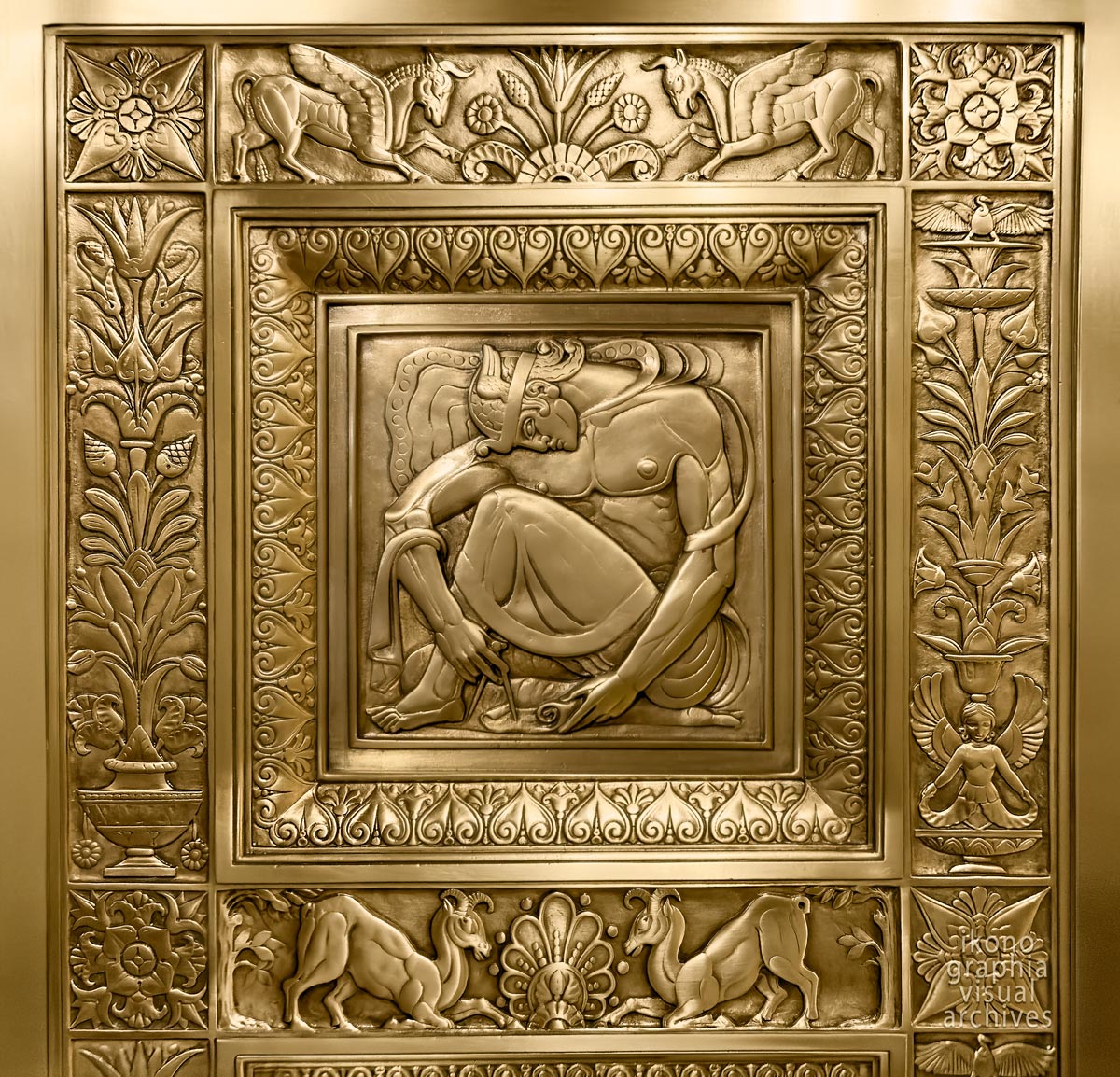
The Industrial Worker — Industry.
Symbolizing labor, engineering, and the infrastructure of the modern city.
A muscular figure crouches over his work, the full weight of his body engaged.
Where the Architect conceives and the Builder constructs, the Industrial Worker powers the infrastructure beneath both.
New York's modernization — its utilities, transport, and rising skyline — ran on this kind of labor. Glinsky gives it the same dignity as the figures of commerce.
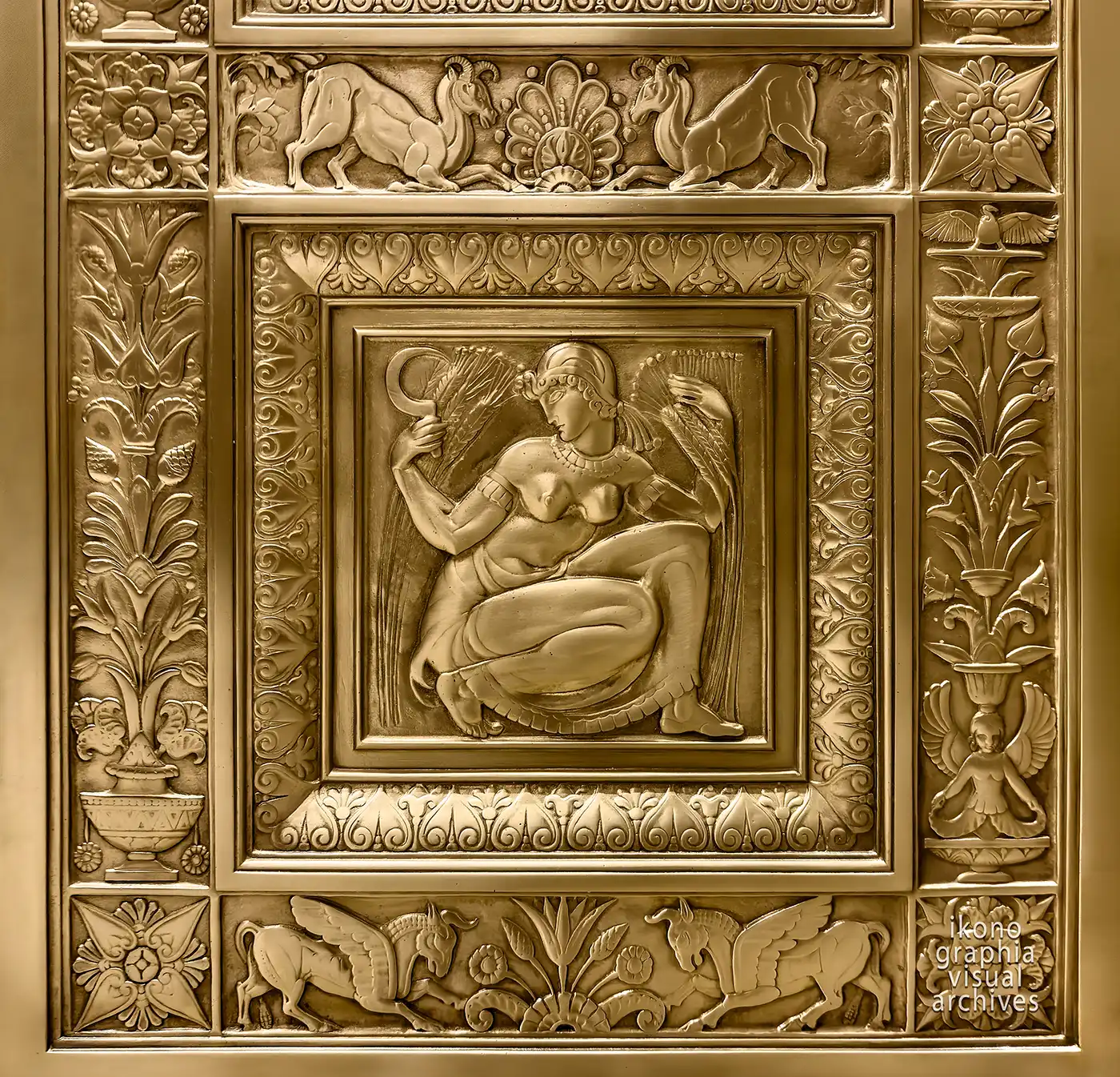
The Harvester — Industry.
Symbolizing production, agriculture, and foundational industry.
A reclining female figure holds a bundle of wheat and a crescent sickle — the oldest symbols of harvest, drawn directly from the Mesopotamian tradition Ives had studied.
Industry here is not mechanical but elemental. Before the city rises, the land must yield. Glinsky places her with the same authority as the figures of commerce — the foundation that makes everything above possible.
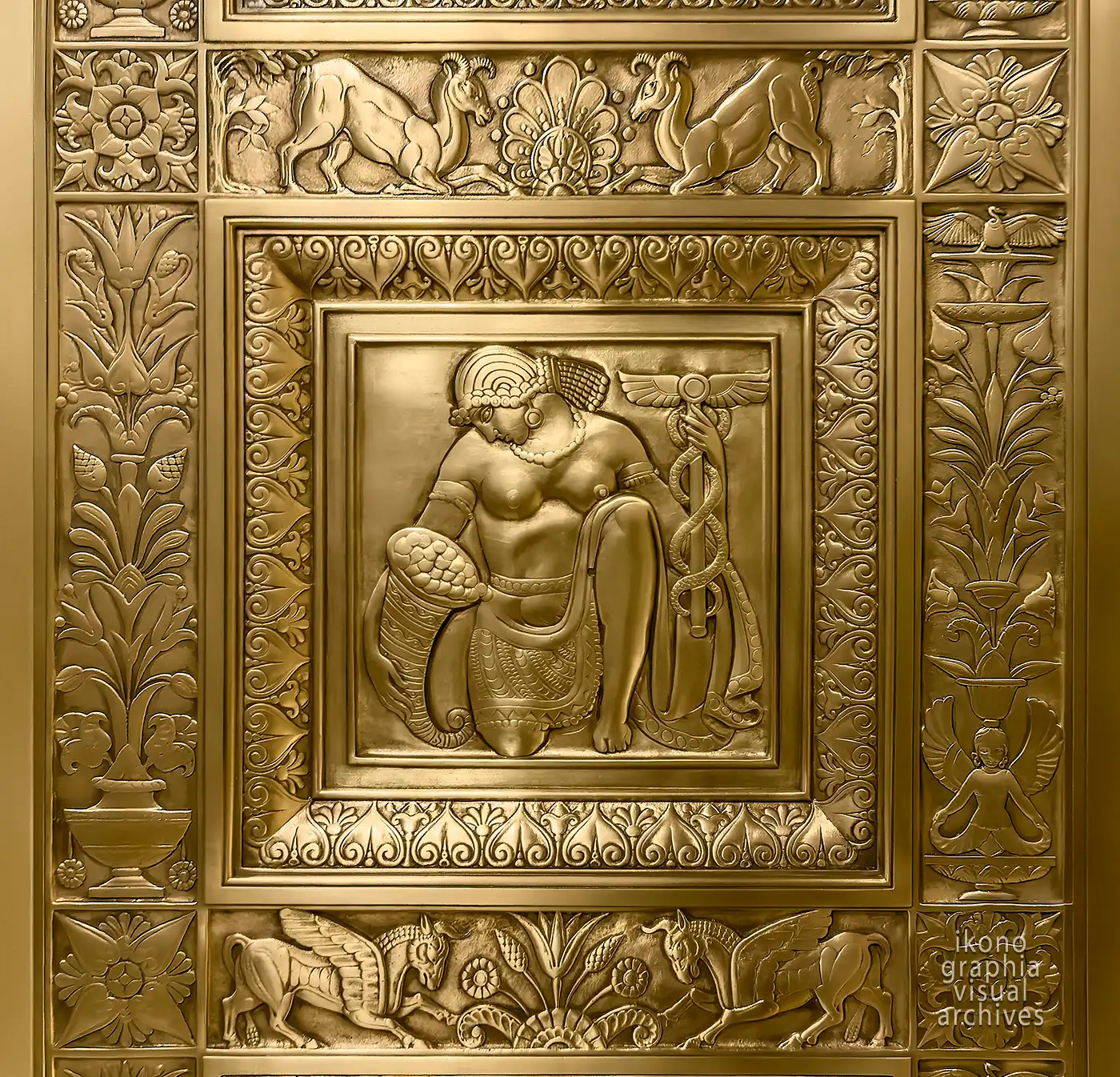
The Wealth Bearer — Finance.
Symbolizing prosperity generated through investment and trade.
A seated figure holds a cornucopia and a caduceus — abundance in one hand, the instrument of exchange in the other. The objects are precisely chosen: not wealth accumulated, but wealth in motion.
Finance here is presented as a creative force, not a passive one. The building it occupies was itself a monument to that conviction — Fred French's own statement that capital, directed with ambition, builds cities.
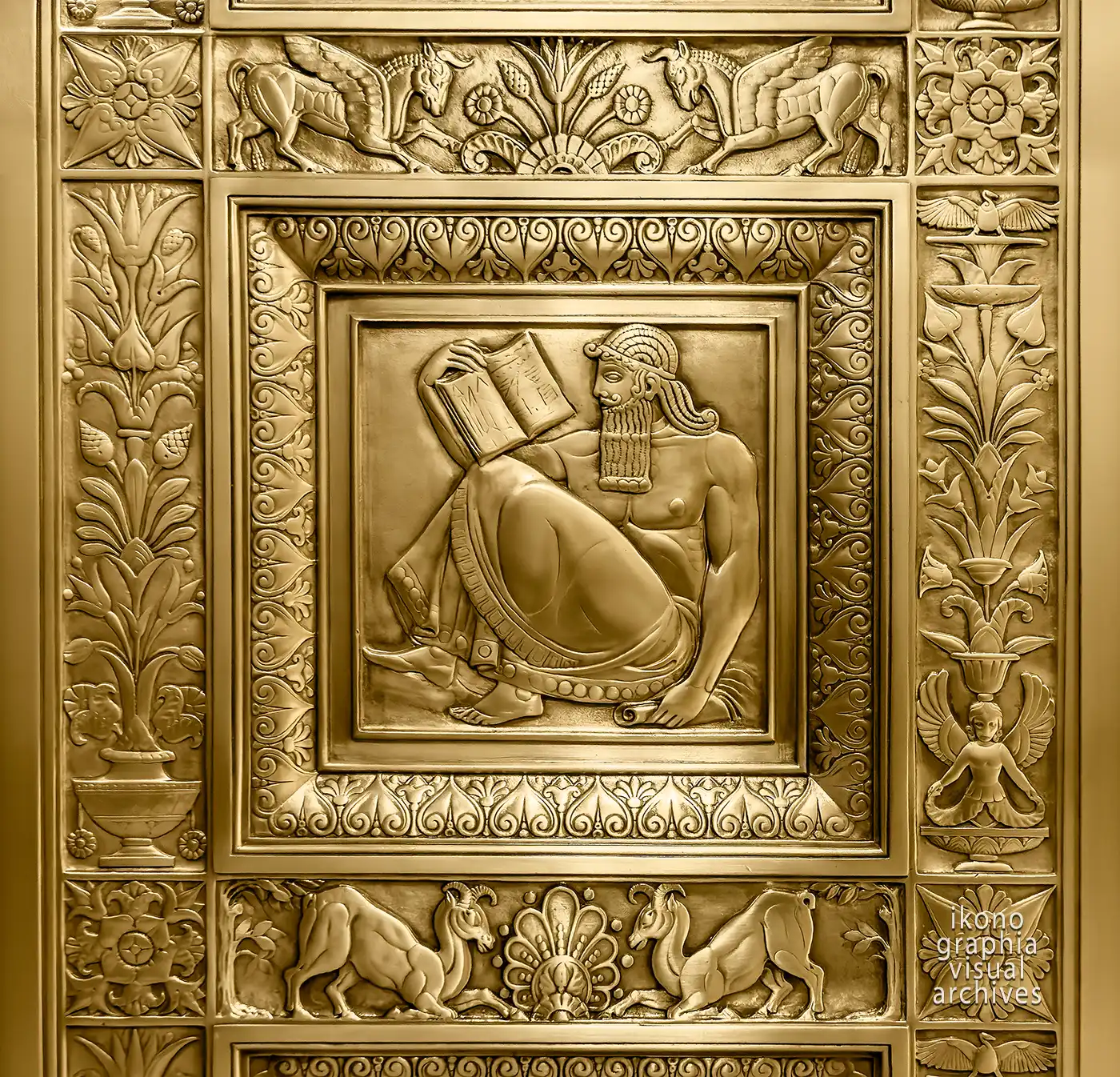
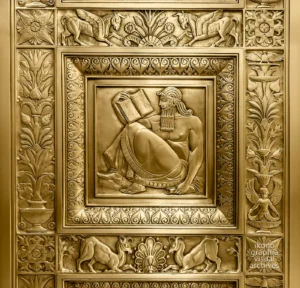
The Scholar — Finance.
Symbolizing knowledge, law, and administrative order.
A bearded figure holds an open tablet close to his face, absorbed in the text — the only figure in the program who reads, not acts, not carries.
Finance rests on law, record, and precedent. Where The Wealth Bearer puts capital in motion, the Scholar is the system that governs it — the written framework without which no transaction holds.
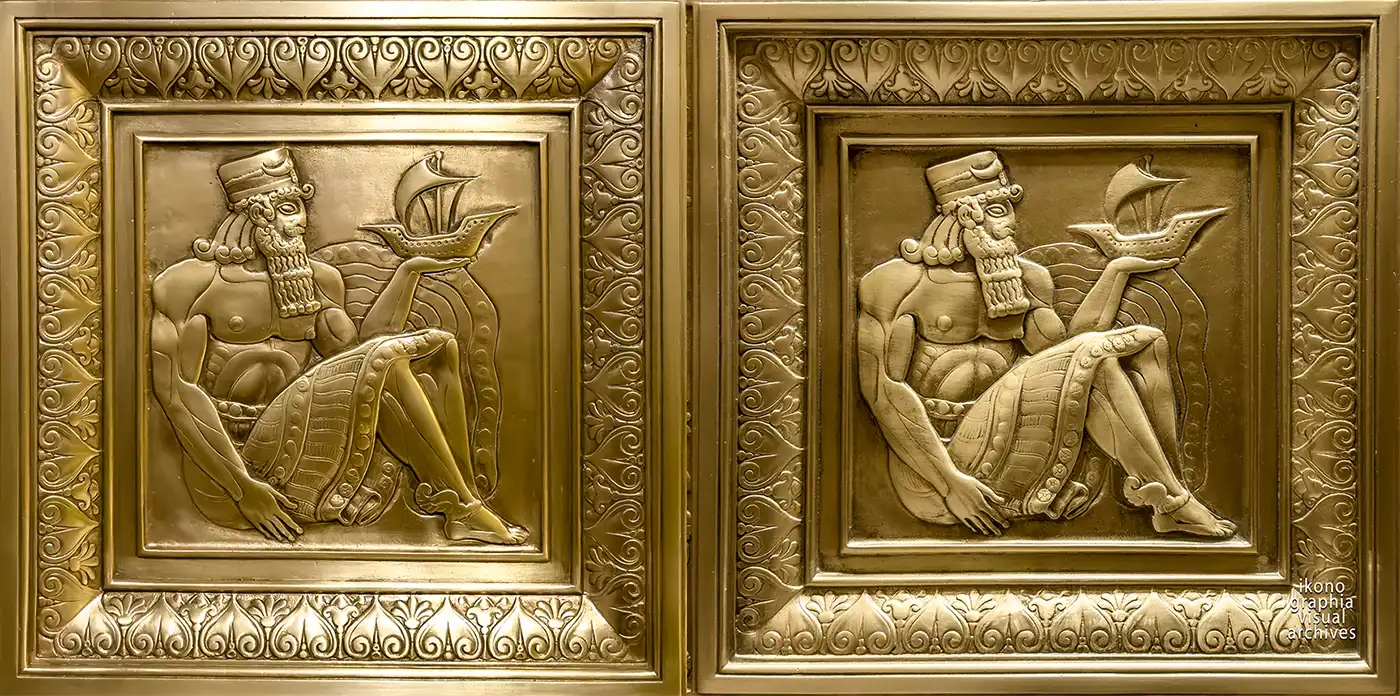
The Elevator Doors Enigma — One Century Apart
The Merchant, from two different elevator doors, as shot — two entirely different surfaces, texture, color, with tones virtually inverted. The gilded coating makes the intent legible: a surface designed to hold light. Which rendition reflects Ives and Glinsky's original intent? The darker reading, however compelling, works against the material logic of the object.
On the Photographs
Eight doors. Forty versions. Three months.
These photographs were made in available light. Eight elevator doors line the lobby, sixty-four panels in total — the same subject, across different doors, produces entirely different surfaces, texture, color, with tones sometimes inverted. The only certain element was the light from above, embedded in the original design. Every additional light source introduced over a century was a question mark. Which one is closer to Ives and Glinsky's original intent was the editorial question.
Each door was documented as a complete object, the individual panels photographed separately. The tool that made this possible was an iPhone 15 Pro Max. Unobtrusive in a working lobby, it allowed multiple versions of each subject to be produced rapidly in the available light of the lobby. Imperfections in the files were compensated by the exceptional rendition of Apple ProRAW on gilt bronze.
Back at the desk, the range of versions — sometimes inverted in light and tone — became a tool for interpretation. The gilded coating makes the intent legible: a surface designed to hold light. The darker readings, however compelling, work against the material logic of the object. Choosing which version best served that intent was a subjective editorial decision. These photographs are an interpretation, a decoding attempt, not a record.
The Merchant and The Wealth Bearer were published full page in FMR Magazine. It was the first time in decades Roberto Bigano had worked without a Multi-Shot Hasselblad reproducing works of art.
CODA — A Declaration in Bronze
The elevator doors of the Fred French Building remain among the best-preserved Art Deco bronzes in Manhattan. The program has not dated — the symbolism is as legible today as it was in 1927.
In an ordinary lobby, the elevator is a utility. Here it is an argument — about what commerce is, what a city requires, and what ambition looks like when cast in gilt bronze.
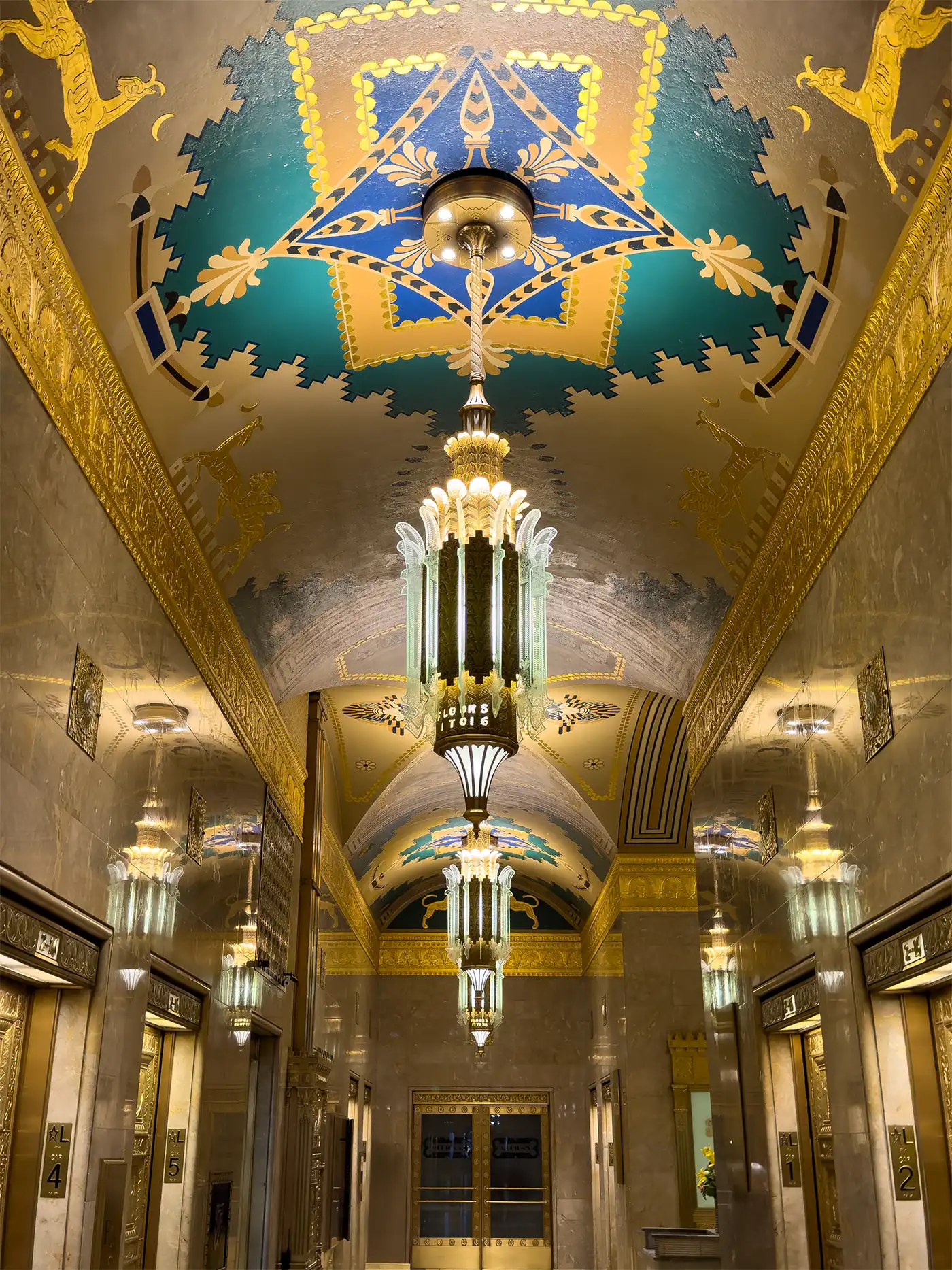
The Elevator Lobby.
Architecture as procession.
This view reveals the French Building's elevator lobby as a carefully staged passage: marble surfaces, gilded doors, and a richly painted ceiling guiding visitors toward the vertical heart of the building.
Light fixtures and ornament establish a measured rhythm, framing the elevators not as utilities but as destinations. The lobby does not simply connect — it prepares.
Browse the New York City Art Deco Archive
-

The Symbolic Program Elevator Doors — Fred French Building, New York
€95.00 -

The Scholar Elevator Panel — Fred French Building, New York, 1927
€95.00 -

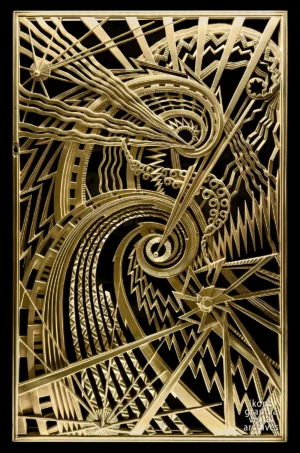
Art Deco Allegory of Effort — Gilded Grille, Chanin Building, New York, 1929
€95.00 -

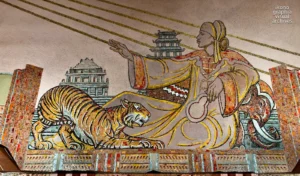
Asia — Continents Linked by Telephone and Wireless Silhouette Mosaic — Hildreth Meière, 1932
€95.00
About Vincent Glinsky. A short bio.

Vincent Glinsky
Vincent Glinsky
Vincent Glinsky (1895–1975) was a Russian-born American sculptor whose work fused Beaux-Arts training with the emerging modernist vocabulary of the 1920s and 1930s. Educated in Petrograd and later active in New York, he developed a sculptural language marked by precise anatomies, architectural clarity, and an expressive narrative sense ideal for architectural relief.
His most ambitious commission, under the direction of architect H. Douglas Ives, was the bronze program for the Fred French Building on Fifth Avenue (1927) — eight gilded elevator panels, a monumental mailbox, and entrance reliefs forming the most complete Mesopotamian-themed decorative cycle in American Art Deco.
Realized in gilt bronze by master metalworker Oscar Bach, the panels translate four allegorical themes — Industry, Commerce, Finance, and Building — into a unified sculptural sequence of exceptional refinement. They remain the definitive example of his work at architectural scale, and among the finest surviving bronzes of the Art Deco era in New York.
About Oscar Bach. A short bio.
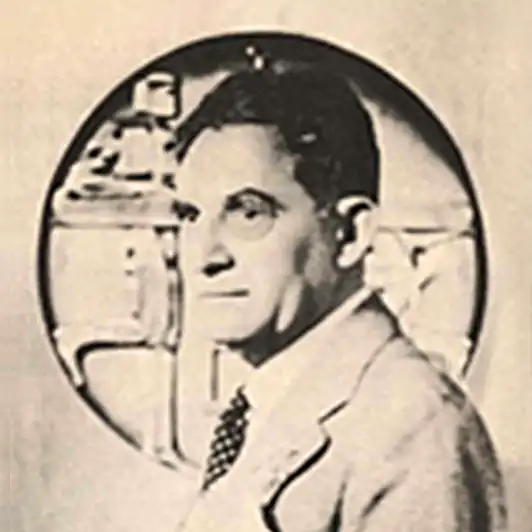
Oscar Bach
Oscar Bach
Oscar Bach was a German-born master metalworker whose technical innovation shaped some of the most celebrated interiors of early twentieth-century America. Trained in the European guild tradition, he brought exceptional skill in architectural bronze, iron, and nickel-silver to the United States after emigrating in 1911.
Working from his New York studio, Bach produced metalwork for major skyscrapers, department stores, civic buildings, and luxury residences. His commissions include the Empire State Building — where he executed the monumental Art Deco aluminum mural in the Fifth Avenue lobby — and Radio City Music Hall, where he realized the three eighteen-foot relief sculptures on the 50th Street facade in collaboration with artist Hildreth Meière. His style combined Old World ornament with modern geometric clarity, defining a distinctive branch of American Art Deco. His workshop became synonymous with excellence in decorative metal, leaving a legacy preserved in landmarked interiors across the country.