Old and New Testament Ivory Carvings Archive (11th–12th Century)
A curated archive combining licensable images with editorial content and historical research.
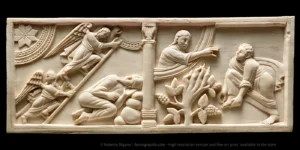
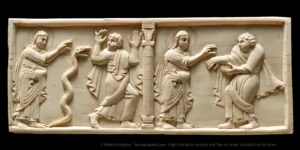
A photographic archive of the Salerno Ivories—among the world's most extensive unified sets of pre-Gothic ivory carvings, yet largely unknown beyond specialist circles. This collection documents nearly complete Biblical narrative cycles from the 11th and 12th centuries.
The Old Testament series is documented in full; the New Testament series is currently in preparation and will complete this comprehensive visual record of one of medieval art's most enigmatic treasures.
Royalty-free high-resolution files for editorial, commercial, and large-format reproduction.
Archive Overview
The Salerno Ivories
Housed in the Diocesan Museum of the Cathedral of Salerno, Italy, these ivory plaques depict Biblical scenes with remarkable artistic synthesis—merging multiple medieval traditions into a cohesive visual language. Their origins remain mysterious, likely connected to the Maritime Republic of Amalfi during its period of cultural and commercial prominence.
What the Archive Includes
Old Testament Series (Complete)
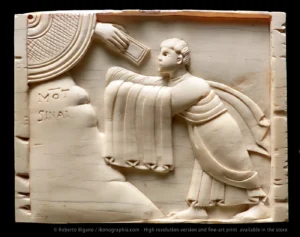
16 ivory plaques documenting Genesis through Exodus—from the Creation and the Flood to Abraham's covenant and Moses at Mount Sinai. Each plaque measures approximately 10×22 cm and features paired scenes.
New Testament Series (In Preparation)
27 plaques with 51 scenes, created a century later with more intricate designs and greater narrative complexity. Full documentation forthcoming.
Historical Context
Dating from the late 11th to early 12th century, these works represent one of the most complete surviving narrative cycles from the Romanesque period blending Early Christian, Byzantine, Islamic, Western Romanesque, and Anglo-Saxon artistic traditions. . Despite their art-historical significance, they remain underappreciated—at the time of documentation, the museum averaged only three visitors per day.