
Plastic Girls: 50 Years of Artificial Beauty
A long-term photographic study of window mannequins as cultural artifacts of their time, by Roberto Bigano.
Plastic Girls is a long-term photographic study of window mannequins as cultural artifacts of their time. Created over nearly fifty years, the project examines how artificial female bodies were designed and displayed in public space, reflecting changing ideals of beauty, femininity, desire, and social aspiration. Read as a continuous sequence rather than isolated images, the series reveals how consumer culture repeatedly shaped—and reshaped—the representation of the female form.
This featured story is an editorial hub, conceived as a new re-editing of multiple existing stories and archival materials. It brings together previously separate contents into a single, coherent narrative framework, allowing the visitor to explore the subject in depth and as a whole rather than as isolated fragments.
Importanant Notice. All photographs were taken from the street, through shop-window glass, without special access or permissions. Nothing is staged or arranged for the camera: the images record what is openly visible yet rarely observed with sustained attention.
Over time, this accumulation exposes patterns no single moment could reveal—recurring gestures, evolving materials, racial and anatomical codifications, and a gradual movement from abstraction to hyper-realism. The project seeks neither irony nor nostalgia, but sustained looking.

September 1979.
Braunschweig, West Germany — Delmod Department Store.
The hyper-detailed facial modeling and naturalistic stance collapse the distance between mannequin and living figure. The pose signals an early movement toward simulated presence, where realism begins to replace display as the dominant visual language.
August, 1990. KaDeWe (Kaufhaus des Westens), Berlin, West Germany
A hieratic mannequin staged with ceremonial stillness and sculptural precision. Elongated proportions, controlled gesture, and ritualized styling transform fashion display into a form of visual authority, where elegance becomes posture and excess is held in deliberate suspension.
Early Works (1978-1980) — The Age of Plastic Innocence
Shop-window mannequins before the rise of performative display.
The visual language of mannequins was restrained, with controlled gestures and composure. Display favored balance over spectacle. Before mannequins began dramatizing identity, they were poised and restrained, simply displaying clothing.
This period marks the final phase of an ‘innocent’ artificial body, culturally unburdened and achieving intensity through stillness. Seen today, these mannequins represent a quiet entry of artificial femininity into public space, unburdened by performance.

September 1980.
London, Knightsbridge — United Kingdom.
Oxford Street and Regent Street series.
The hyper-detailed facial modeling and naturalistic stance collapse the distance between mannequin and living figure. The pose signals an early movement toward simulated presence, where realism begins to replace display as the dominant visual language.

February 1980.
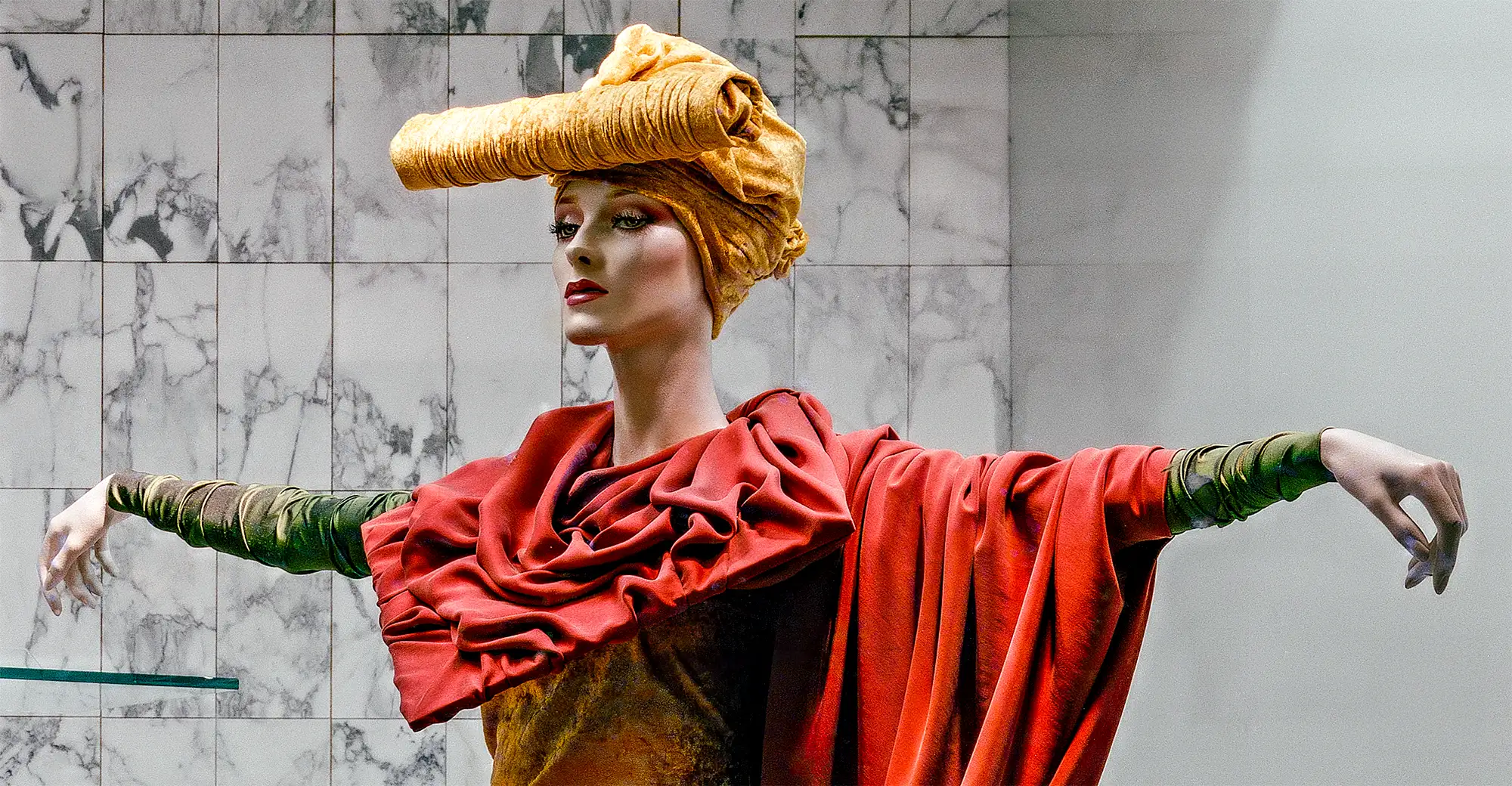
KaDeWe Luxury Dept. Store — Berlin, West Germany — Streisen Design
Berlin shop-window display embracing avant-garde fashion language at the start of the 1980s. Sculptural silhouettes, exaggerated headwear, and graphic layering reflect the city’s long-standing role as a laboratory for experimental design, were already being absorbed into commercial presentation, blurring the boundary between fashion display and performative gesture.
American Mannequins — Journey into Hyperreality (1982–1988)
Artificial bodies and performative realism in American retail display
Between 1982 and 1989, while traveling across the United States, Roberto Bigano encountered a retail landscape increasingly shaped by realism, performance, and visual persuasion. In this context, shop-window mannequins became concentrated expressions of American hyperreality. Modeled with lifelike faces and posed with cinematic restraint, these figures occupied a space between representation and presence.
Photographed from the street without staged intervention, the images document mannequins as active agents of the 1980s visual economy—no longer neutral displays, but instruments through which reality itself was performed.

August 1985
Hollywood, United States — Elegant shop on Sunset Strip.
The hyperreal modeling of the face and the restrained, naturalistic pose collapse the distance between mannequin and living figure. Rather than theatrical display, the figure conveys a quiet, inward presence, signaling the rise of psychological realism in mid-1980s American shop-window design.

August 1984 — Rodeo Drive — Beverly Hills, United States.
An earlier generation of mannequin carving, distinguished by sculpted features rather than molded realism.
The face—particularly the mouth and eyes—retains a hand-shaped expressiveness, poised between elegance and emotional distance.
Set against the quiet intrusion of national symbolism, the tilted head and relaxed arm introduce a note of vulnerability, transforming the display into a composed study of desire and aspiration.

August 1988.
New York City, United States — Altman’s Department Store.
Three mannequins occupy the window in composed stillness: two upright and turned inward, one seated apart. Saturated jackets, luminous silk scarves, and deep surrounding shadows create a deliberate tonal balance. The scene emphasizes introspection and psychological weight rather than spectacle.
Glamour, Aggression, and Display (1980–1997)
A shared escalation toward excess, beyond style, geography, or chronology.
This chapter documents the moment when artificial femininity becomes overtly cosmetic, sexualized, and confrontational. Across different countries and contexts, mannequins adopt exaggerated makeup, exposed poses, and aggressive gazes, turning the female face and body into surfaces of visual pressure rather than neutral display. What unites these images is not style, geography, or chronology, but a shared escalation toward excess as a dominant mode of display.
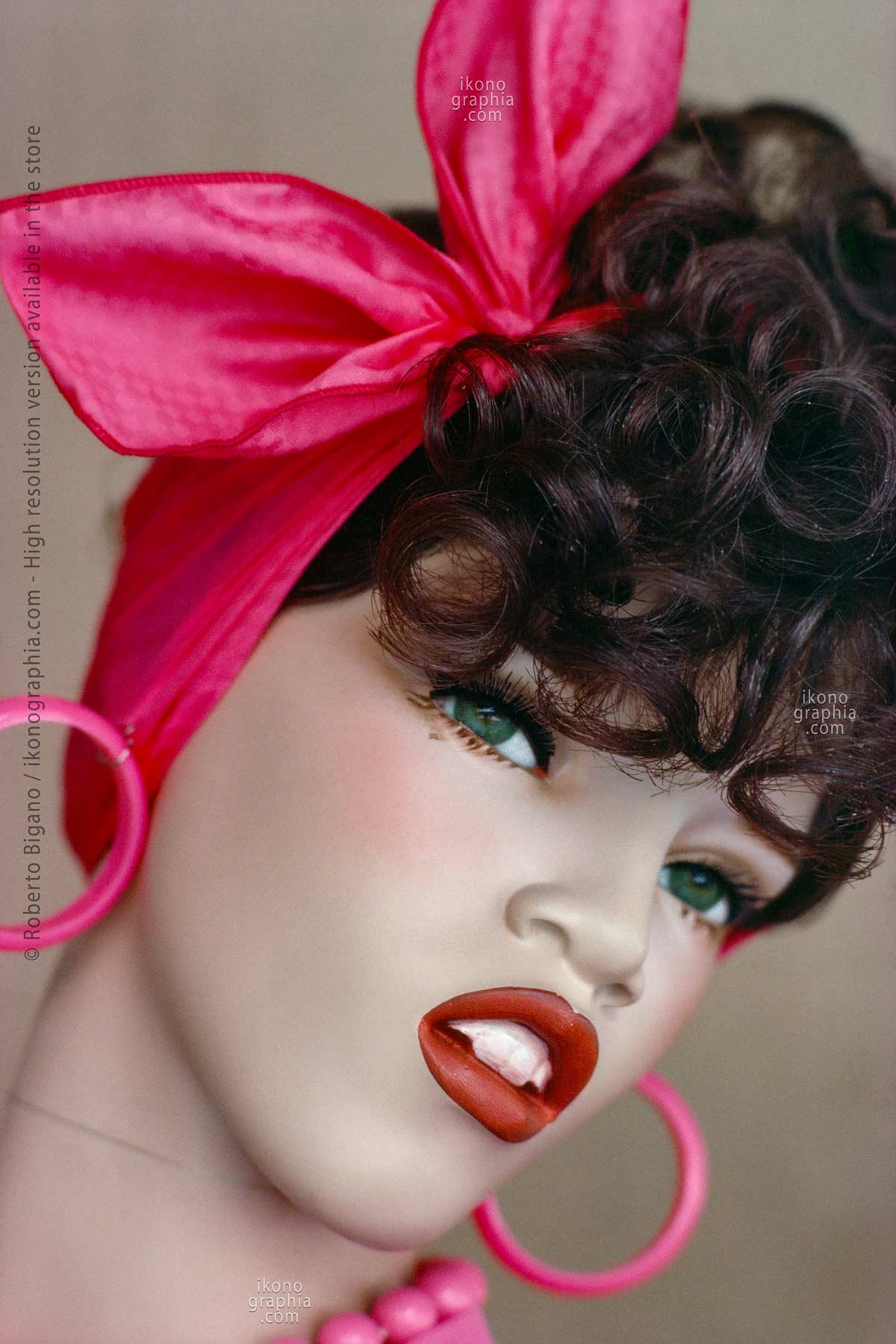
May 1980.
San Sebastian, Spain.
Polished facial surfaces, refined color accents, and controlled expression define a moment of composure rather than excess. The mannequin presents femininity as stylized elegance, where cosmetics signal aspiration but remain carefully contained.
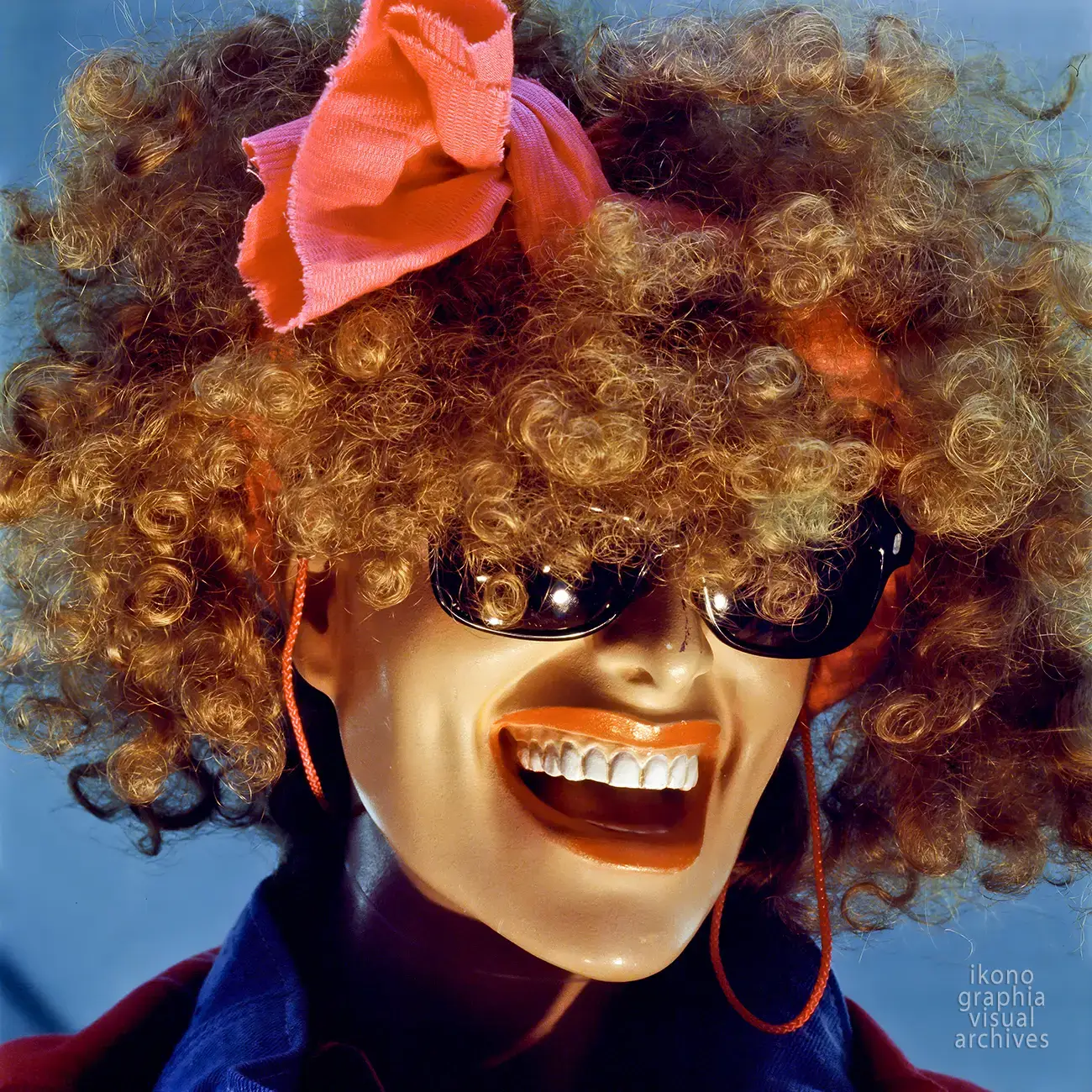
August 1986.
Copenhagen, Denmark.
Fixed smile, exposed teeth, and dark lenses produce a hypnotic and surreal effect, holding the viewer’s attention while withholding emotional response.
Spain (1997) — Glamorous Brides
Ritual, spectacle, and artificial femininity in Andalusian display culture.
Photographed in Seville during the Feria de Abril, this group of images examines how artificial femininity is shaped by ritual, tradition, and spectacle. Bridal mannequins appear as ceremonial figures—coded bodies carrying social expectation, erotic charge, and cultural identity.
Lace, makeup, and sculpted expressions transform the artificial face into a performative surface, intensifying femininity through excess rather than restraint. In contrast to the psychological realism of American shop-window display, these figures embrace theatricality and visual heat, revealing a Mediterranean grammar of desire rooted in ceremony as much as in consumption.

March 1997.
Sevilla, Spain.
Feria de Abril.
The mannequin’s face is modeled with extreme smoothness and precision: porcelain skin, sharply defined lips, and a distant upward gaze. The bridal figure is isolated as a sculpted surface of desire, where makeup, hair, and veil function as visual intensifiers rather than cultural markers.

March 1997.
Sevilla, Spain — Feria de Abril.
This mannequin adopts a more overtly charged presence. Intensified makeup, exaggerated lashes, and saturated color push the face toward theatrical allure. Artificial femininity is openly staged here, shifting from bridal idealization to direct visual seduction.
CODA — After the Window
Seen today, Plastic Girls reads as a long arc rather than a sequence of moments. What began as neutral display gradually absorbed desire, performance, and psychological charge, until artificial femininity became both omnipresent and invisible.
These mannequins do not simply reflect changing fashions, but register how society learned to recognize itself in constructed bodies. With time, what once appeared exceptional becomes normalized, and what was staged as spectacle dissolves into everyday visual noise.
This distance between the moment of capture and the present gaze is where the series ultimately resides — not as documentation of mannequins, but as a record of how artificial beauty quietly became a dominant language of public life.
Copyright, Links and credits
Photography, Copyright & Credits
All photographs © Ikonographia / Roberto Bigano — All Rights Reserved.
These images are part of the Ikonographia Visual Archives: Plastic Girls Collection.
⸻
Terms of Use (Summary)
The images presented in this story are copyrighted and available for licensed use only through Ikonographia Visual Archives.
You may not download, reproduce, publish, or distribute these images without a valid license.
For commercial or editorial licensing, please refer to the product pages or contact Ikonographia directly.
A full explanation of licensing terms is available in the Shop / Licensing Information section on the site.
⸻
Ikonographia Mission Statement
Ikonographia is committed to the accurate documentation, preservation, and ethical dissemination of twentieth-century visual culture.
⸻
Archival Notes
These photographs were produced as part of Ikonographia’s ongoing documentation of significant examples of twentieth-century visual culture. Image preparation includes controlled lighting and accurate color management to preserve architectural integrity and material detail.
⸻
Further Reading (Selected Sources)
Explore the Plastic Girls Archive


