Portfolio by Brodovitch Archive (1950–1951)
A curated archive combining licensable images with editorial content and historical research.
An never seen before archive of Portfolio Magazine, the legendary editorial experiment directed by Alexey Brodovitch that pioneered integrated visual design—treating photography, typography, and layout as a unified system.
Ikonographia presents these layouts as complete reconstructed double-page spreads: for decades, binding obscured the central sections of most compositions, hiding Brodovitch's full visual architecture. Now unbound and digitally restored, these spreads reveal the magazine's deliberate sequencing and graphic logic as originally conceived.
Royalty-free high-resolution files for editorial, commercial, and large-format reproduction.
Archive Overview
Portfolio Magazine — Brodovitch and the Reinvention of Editorial Design
1950–1951 · New York
Published between 1950 and 1951, Portfolio was not conceived as a magazine in the conventional sense, but as an experimental platform for a new visual language. Under the direction of Alexey Brodovitch, each issue functioned as a laboratory where photography, typography, illustration, and editorial sequencing were treated as a single, integrated system.
There was no fixed layout, no stable hierarchy, and no separation between content and form. Meaning emerged through rhythm, interruption, scale, and contrast, with white space functioning as an active element rather than a neutral background. In Portfolio, the art director assumed the role of editor, author, and composer of visual narratives.
Revealing the Hidden Architecture of Portfolio.
Like many mid-century publications, it was bound extremely tightly, using heavy metal staples intended to guarantee durability rather than readability. As a result, the central areas of many double-page spreads were permanently obscured. Key elements of Brodovitch’s compositions—axes, alignments, transitions—were lost in the gutter, even to contemporary subscribers.
Ikonographia’s work on Portfolio is centered on revealing this hidden architecture. Through careful digital reconstruction, original double-page spreads are restored as continuous visual compositions, allowing the magazine to be seen as it was conceptually intended rather than as it was materially constrained.
This is not restoration in the nostalgic sense, nor reinterpretation. It is an act of disclosure: making visible what was always there, but physically inaccessible.
The Portfolio archive at Ikonographia includes carefully reconstructed spreads from all three published issues:
Portfolio No. 1 (Winter 1950) — the inaugural statement, introducing Brodovitch’s radical editorial grammar.
Portfolio No. 2 (Summer 1950) — a refinement of the experiment, with increased emphasis on rhythm and contrast.
Portfolio No. 3 (Winter 1951) — the most ambitious and complex issue, and the final articulation of the project.
Whether your work involves architectural research, Art Deco design, or cultural heritage studies, this archive provides a reliable and meticulously organized visual resource—built progressively, with scholarly care and editorial depth.
Showing 13–24 of 31 resultsSorted by latest
-

Women Figures and Bearded Men from Steinberg’s Private Sketchbook. Portfolio 1950
€29.00 -
The Albro Alphabet Typeface Designed by Alexey Brodovitch. 1950
€29.00 -
Florets, Borders, and Rules Designed by Gian Battista Bodoni. Portfolio 1, 1950.
€29.00 -
For Art’s Sake, Artwork by Joan Miró. Portfolio Magazine 2, Summer 1950
€29.00 -
William Steig. Arrangements of disembodied heads. Portfolio 2, Summer 1950
€29.00 -

William Steig. Disembodied heads. Acrobat, Daydreamer and Carouser. Portfolio 1950
€29.00 -
William Steig Cartoons. From “Disembodied heads” series. Portfolio 1950
€29.00 -

Portfolio Magazine N.2. Summer 1950 cover featuring “Kite” by Charles Eames
€24.00 -
Guillaume Appollinaire. Il Pleut, from Arts et Metier Graphiques 1930
€29.00 -
Two curious pages from an early Christian panegyric. Portfolio Magazine 1950
€29.00 -
A design from a Pierre Reverdy’s poem, illustrated with lithographs by Picasso
€29.00 -
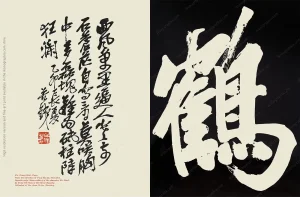
A design from a poem by Wu Chang-Shih in the calligraphic style
€29.00