Plastic Girls — Glamour, Aggression, and Display (1980–1997)
Plastic Girls — Glamour, Aggression, and Display (1980–1997)
A shared escalation toward excess, beyond style, geography, or chronology.
This chapter documents the moment when artificial femininity becomes overtly cosmetic, sexualized, and confrontational. Across different countries and contexts, mannequins adopt exaggerated makeup, exposed poses, and aggressive gazes, turning the female face and body into surfaces of visual pressure rather than neutral display. What unites these images is not style, geography, or chronology, but a shared escalation toward excess as a dominant mode of representation.
Photographed from the street, without access or intervention, these images record what shop windows openly displayed at the time. Seen together, they show how exaggerated cosmetics, exposed poses, and confrontational gazes accumulated across different contexts, forming a shared visual condition rather than isolated stylistic choices.
These photographs belong to "Plastic Girls: 50 Years of Artificial Beauty", a long-term photographic project developed over nearly five decades, in which shop windows are approached as a continuous site of cultural observation.
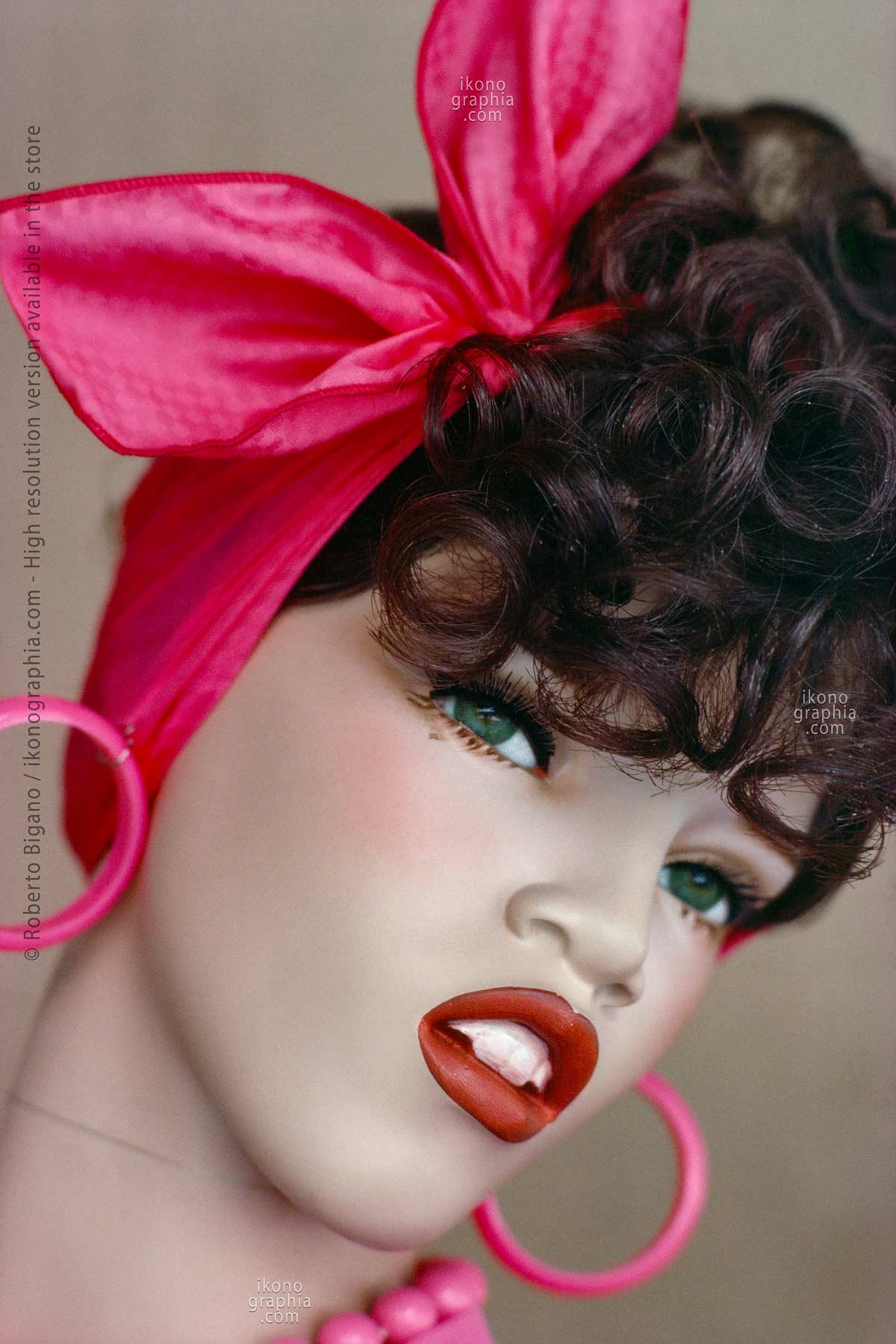
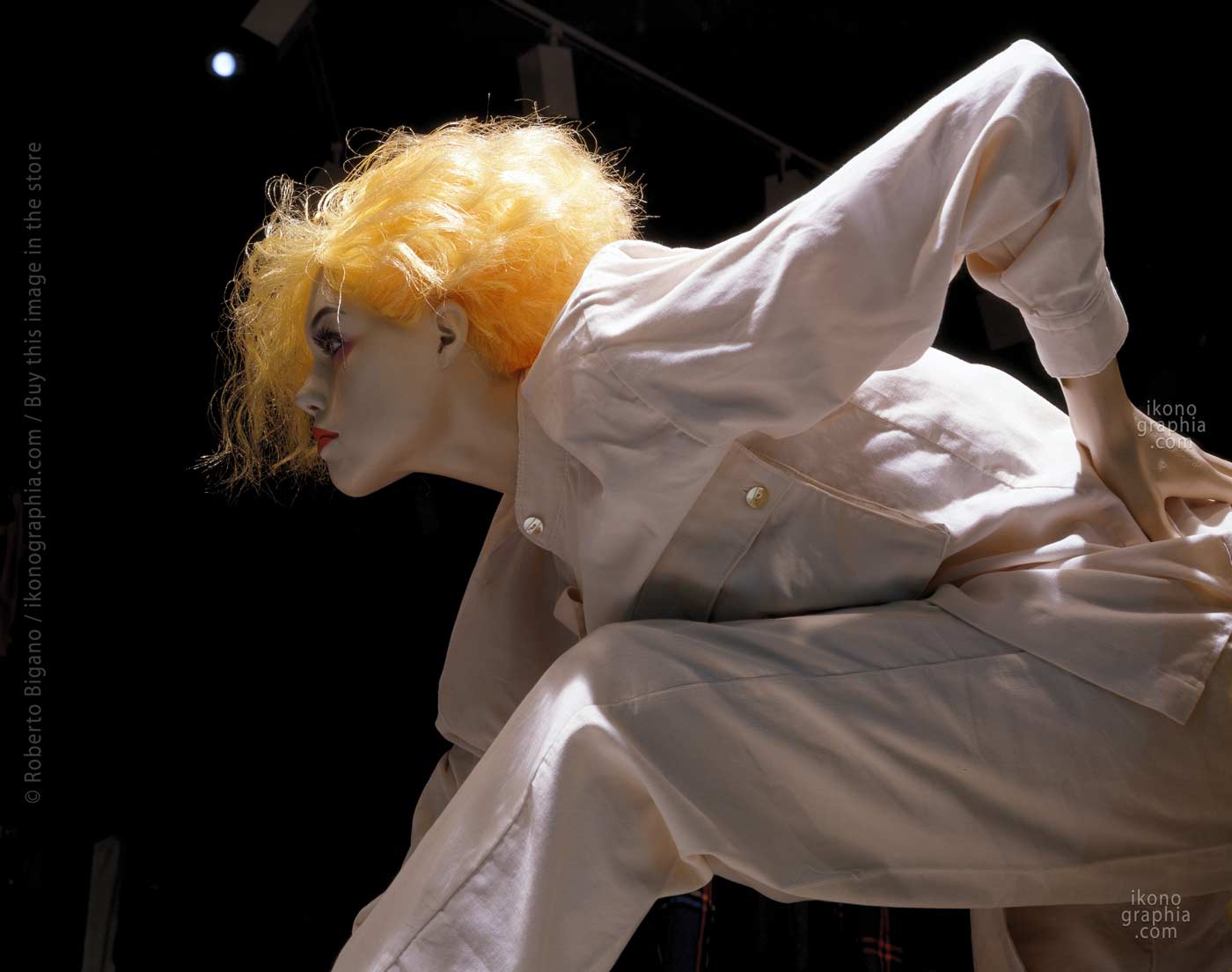
May 1980.
San Sebastian, Spain.
Impudent mannequin in Gitana look.
Provocative pose, and pure pin-up energy. Pink bow, oversized hoop earrings — the full costume assembled with complete conviction.
Artificial femininity at its most playful and deliberate.

May 1980.
San Sebastian, Spain.
Naturalistic posture and coordinated styling suggest ease and approachability rather than confrontation. At this stage, display favors balance and coherence, with realism serving persuasion without yet turning aggressive.
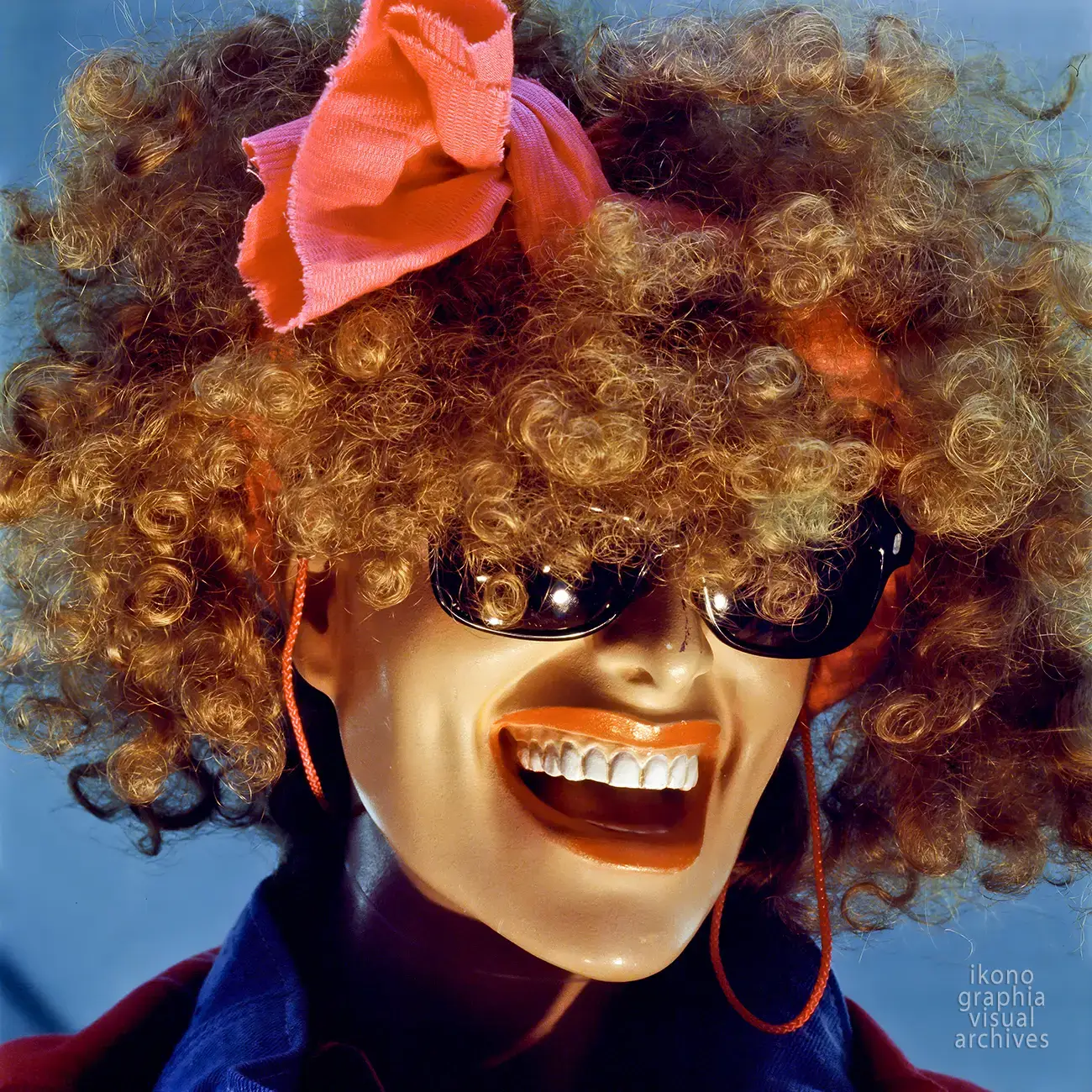
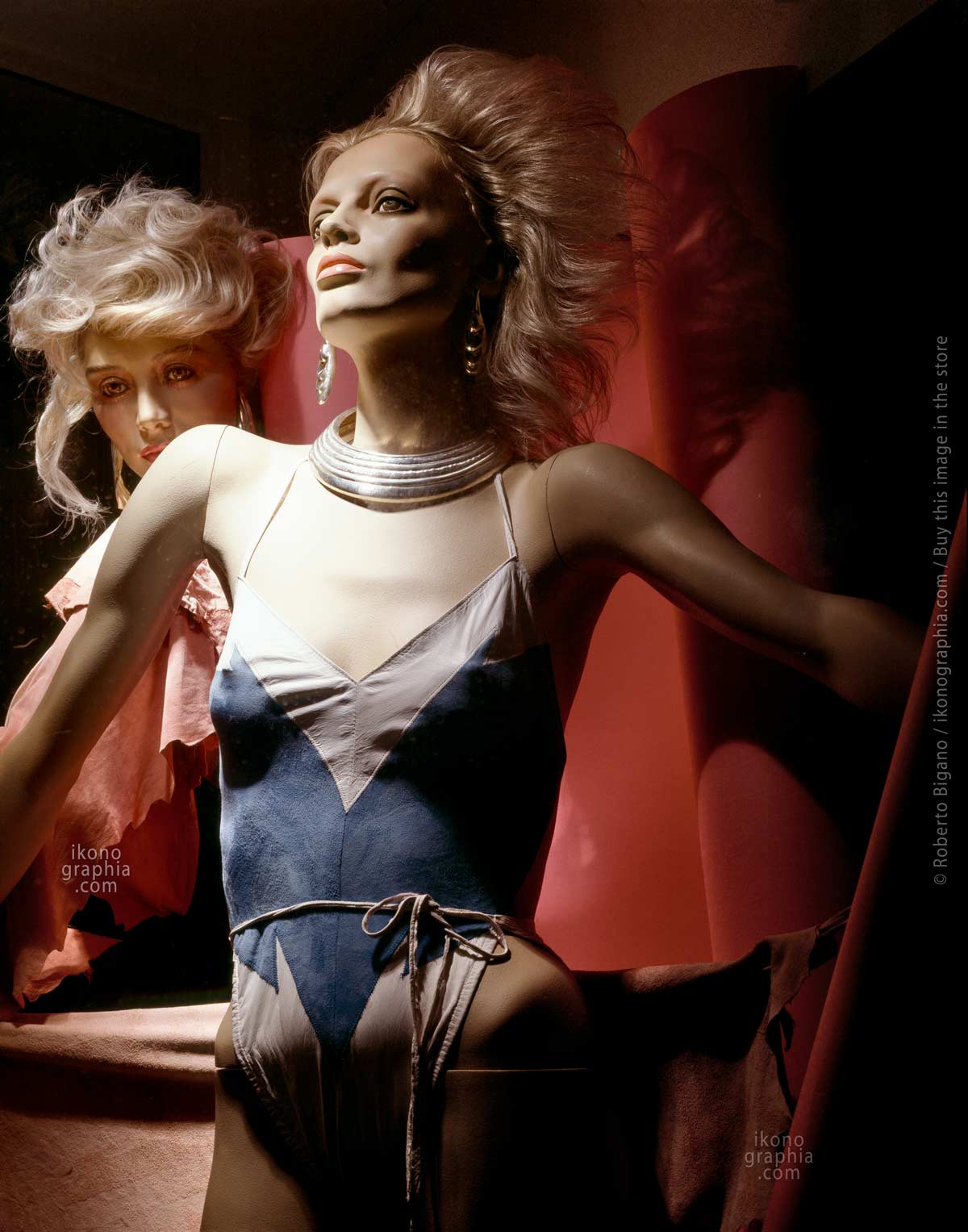
August 1986.
Copenhagen, Denmark.
Fixed smile, exposed teeth, and dark lenses produce a hypnotic and surreal effect, holding the viewer’s attention while withholding emotional response.
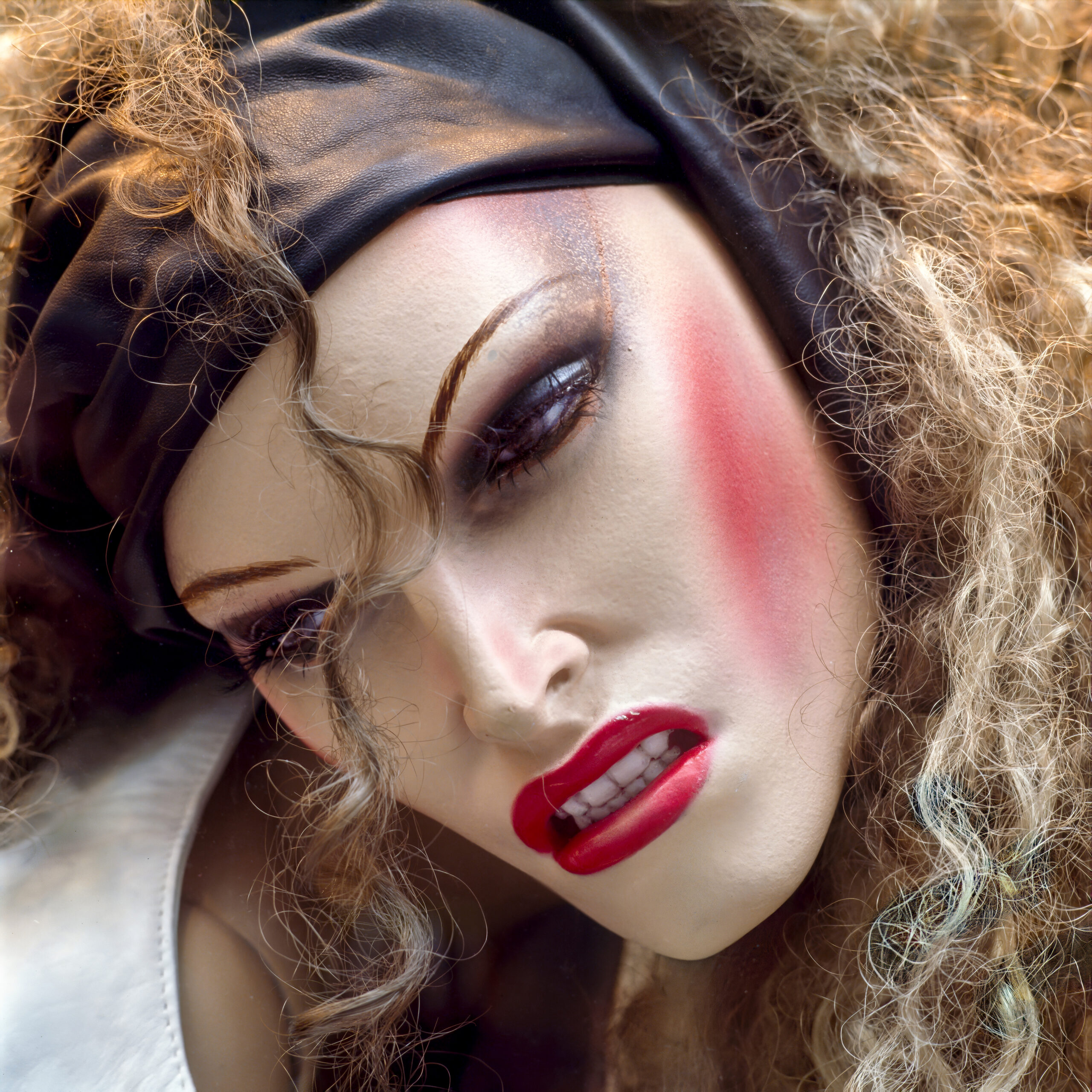
August 1986.
Copenhagen, Denmark — Graziano Boutique.
Cosmetics, costume, and posture collapse into a single surface of exposure.
Here, realism is pushed toward theatrical excess, reflecting a broader mid-1980s Scandinavian shift toward confrontational display, where mannequins abandon neutrality and assert presence through visual aggression.
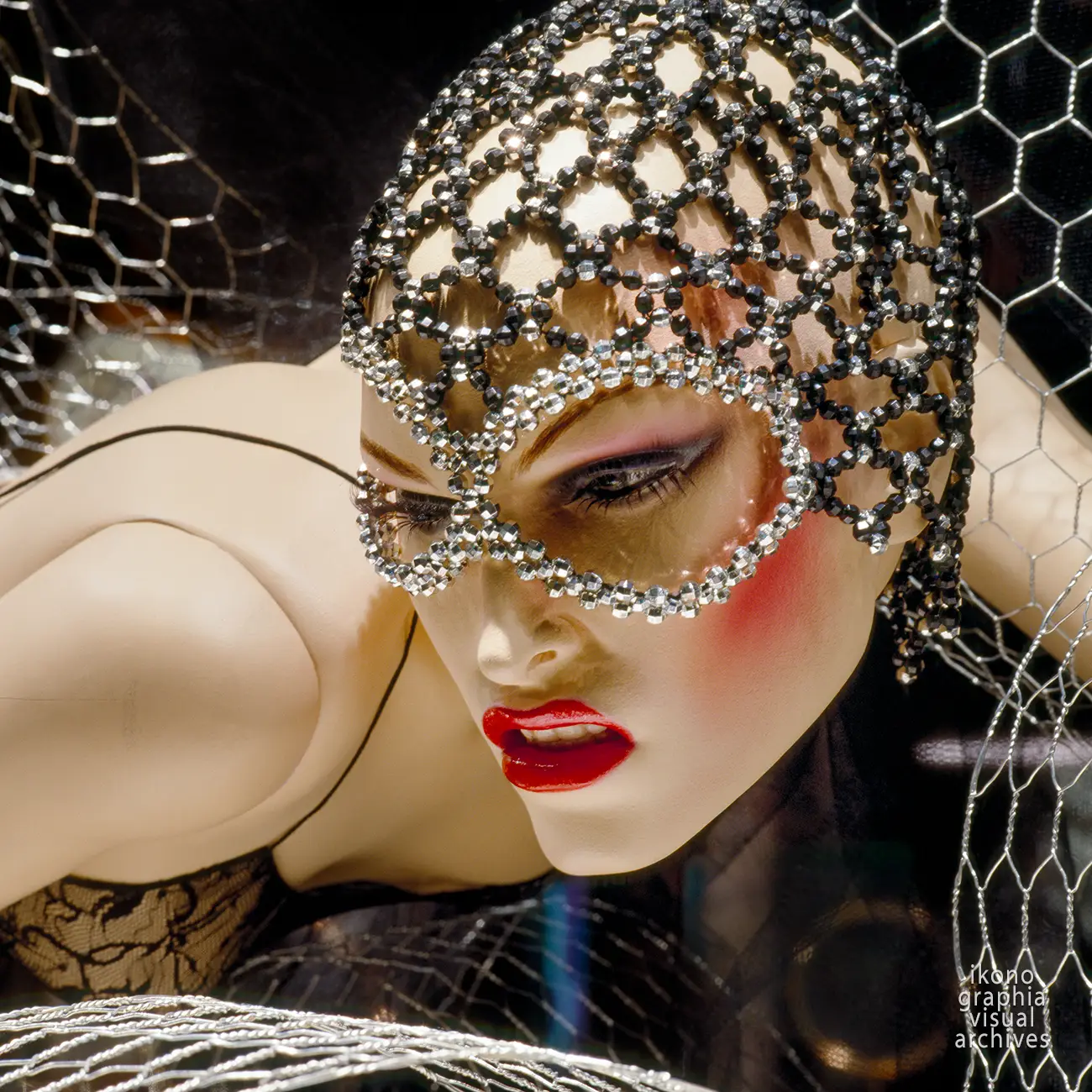
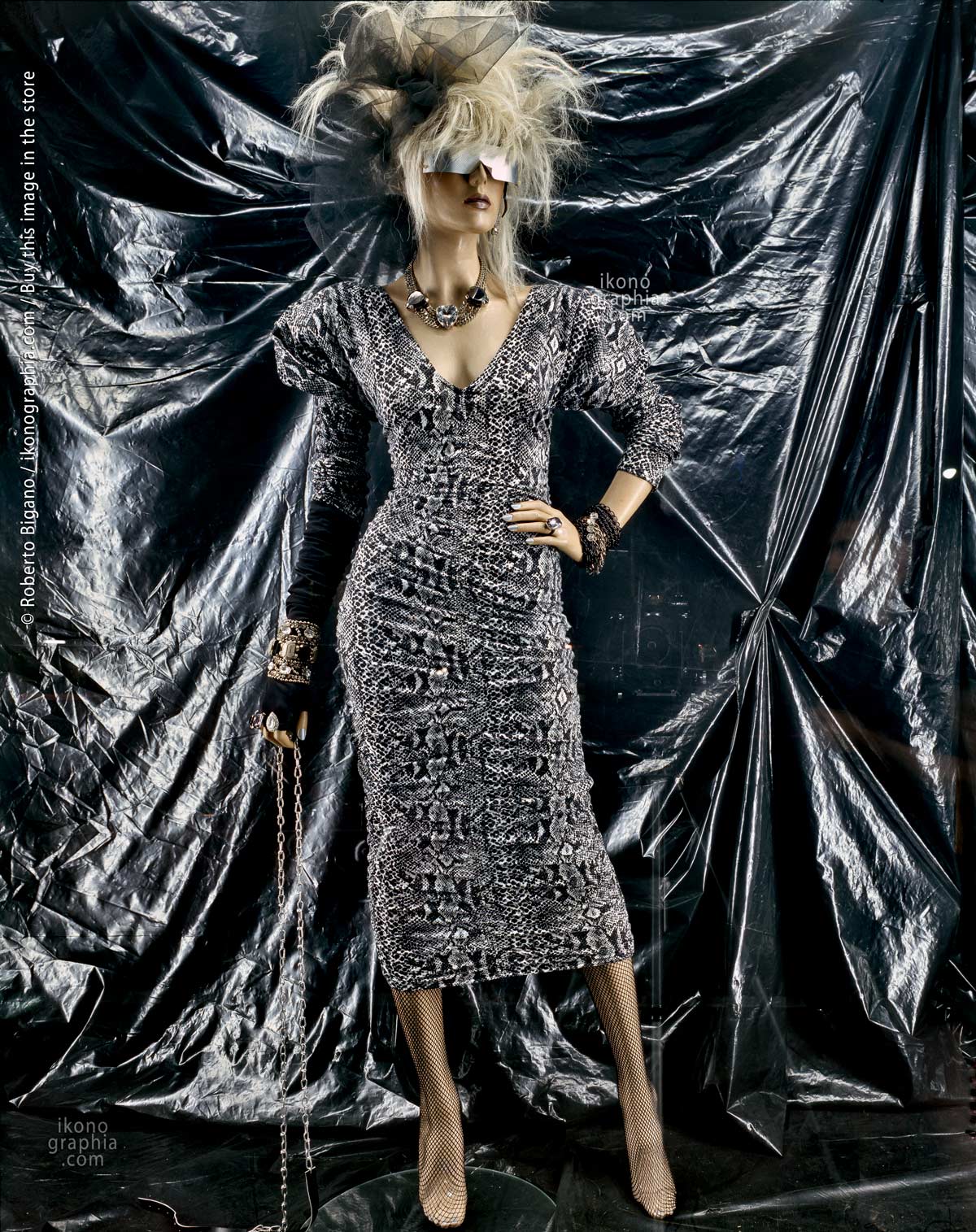
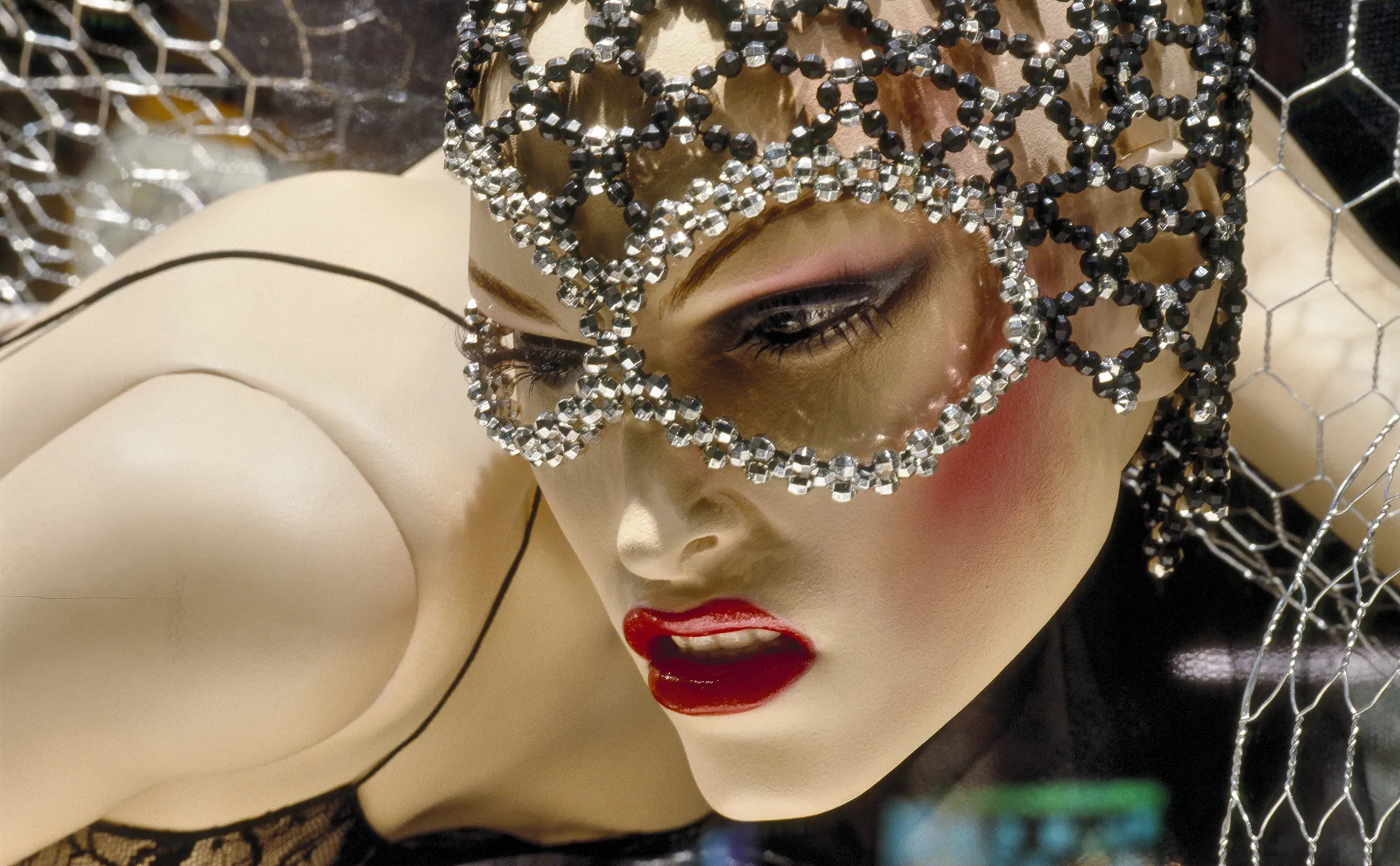
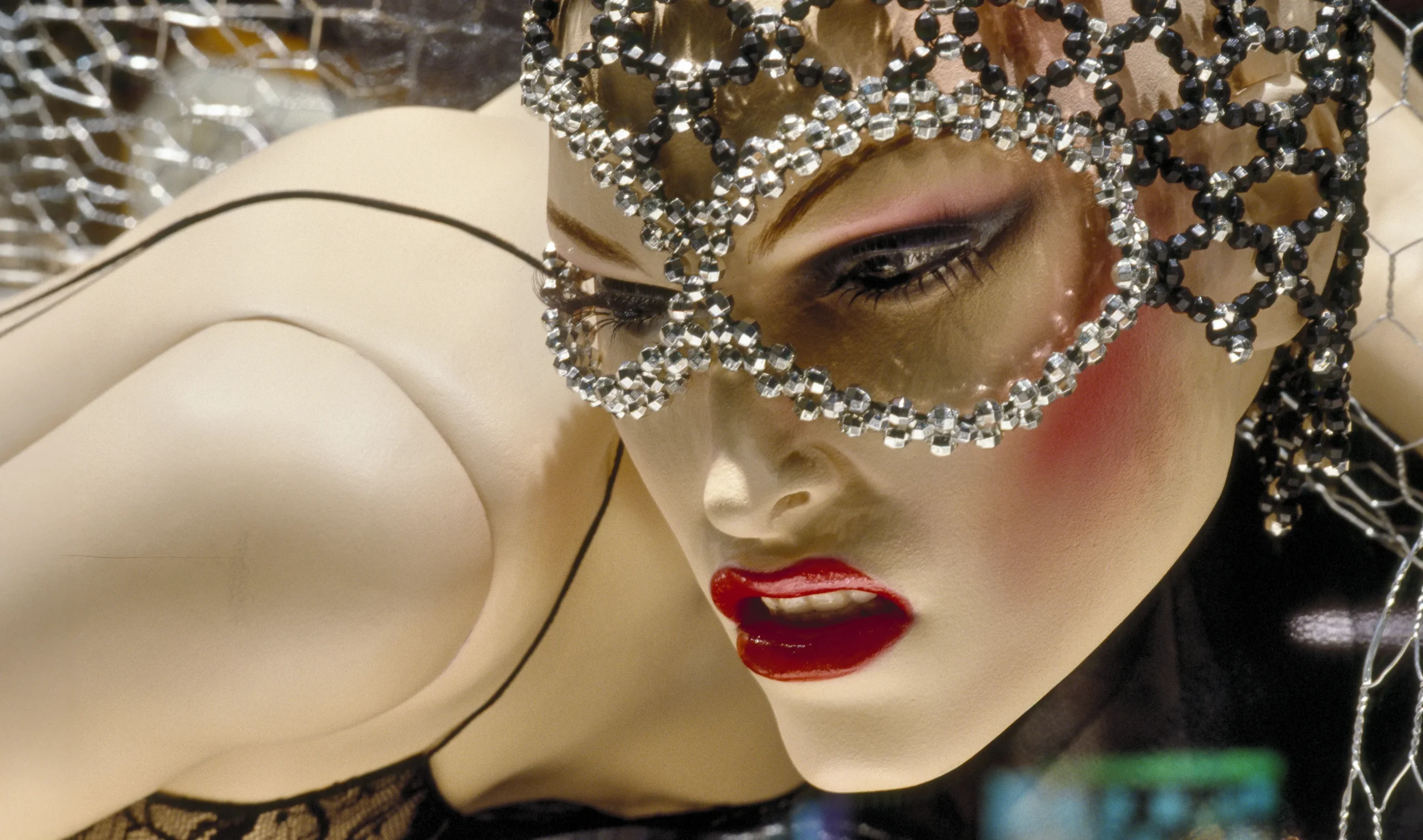
August 1986.
Copenhagen, Denmark — Annabell Boutique
Aggression becomes fully articulated.
Makeup, gesture, and facial tension no longer simulate life but enforce confrontation, confirming a local display language where artificial bodies are designed to provoke, not attract, and excess replaces illusion as the dominant strategy.
Spain (1997) — Glamorous Brides
Ritual, spectacle, and artificial femininity in Andalusian display culture
Within this broader escalation, bridal mannequins occupy a specific role. Ritual costume does not temper display, but intensifies it. Lace, veils, makeup, and carefully staged expressions turn the bridal figure into a concentrated surface of glamour, where idealization slips into exposure and display becomes explicit.

March 1997.
Sevilla, Spain — Fetishized doll in a wedding shop.
In Andalusian culture, the bride carries the full weight of ceremony, tradition, and social identity.
This mannequin discards all of it. Exaggerated makeup, sculpted lips, and theatrical pose transform the ceremonial figure into a fetishized doll — artificial femininity shifted from cultural symbol to erotic object.

March 1997.
Sevilla, Spain — Wedding dress shop.
Heavy makeup and sculpted features intensify the bridal figure beyond ceremony. Here, glamour operates as pressure, transforming the ritual costume into a vehicle for visual exposure rather than restraint.

March 1997.
Sevilla, Spain — Wedding dress shop.
The mannequin’s face is modeled with extreme smoothness and precision: porcelain skin, sharply defined lips, and a distant upward gaze.
The bridal figure is isolated as a sculpted surface of desire, where makeup, hair, and veil function as visual intensifiers rather than cultural markers.

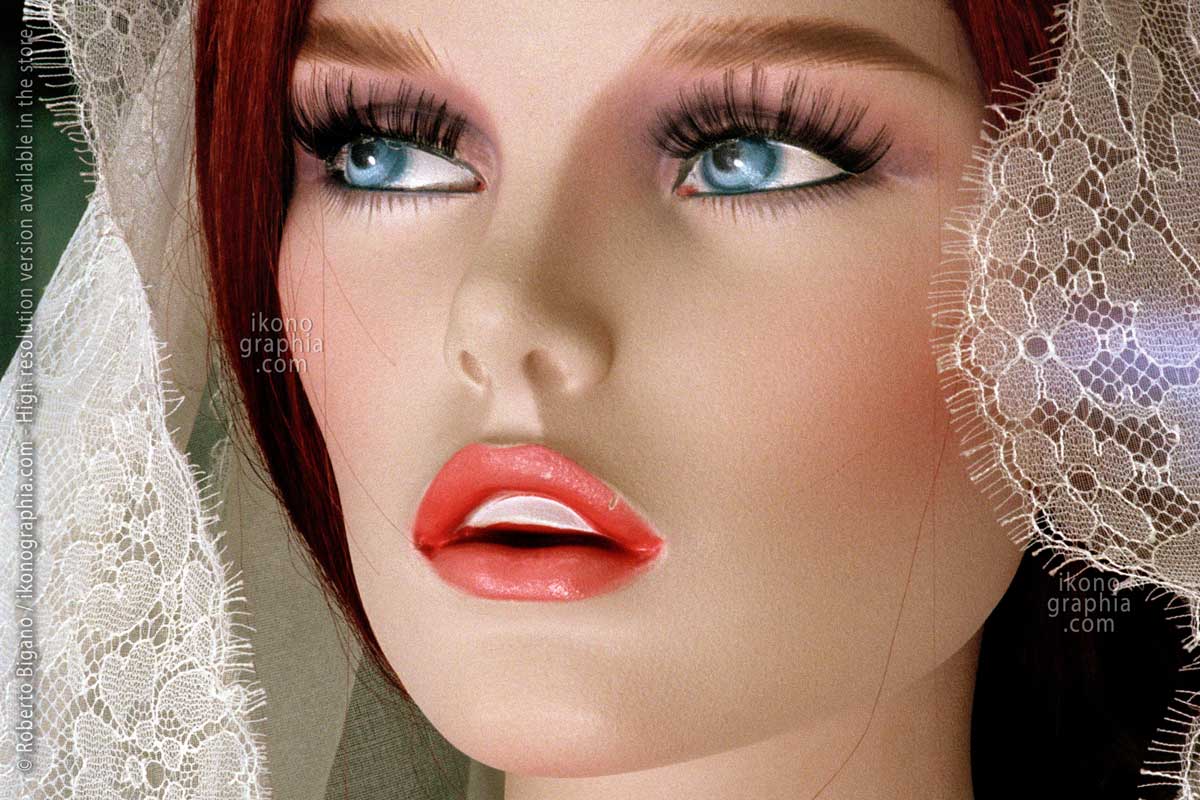
March 1997.
Sevilla, Spain — Wedding dress shop.
The gaze holds. Red hair, blue eyes, lips barely parted — everything assembled for maximum presence. The veil and lace are bridal convention; the face beneath them is something else entirely.
This is the sequence's most direct confrontation — artificial femininity that neither withdraws nor performs, but simply arrests.
Copyright, Links And Credits
Photography, Copyright & Credits
All photographs © Ikonographia / Roberto Bigano — All Rights Reserved.
These images are part of the Ikonographia Visual Archives: — Plastic Girls: 50 Years of Artificial Beauty — Plastic Girls / Mannequins Archive (1978–2026).
⸻
Terms of Use (Summary)
The images presented in this archive are copyrighted and available for licensed use only through Ikonographia Visual Archives.
You may not download, reproduce, publish, or distribute these images without a valid license. For commercial or editorial licensing, please refer to the product pages or contact Ikonographia directly. A full explanation of licensing terms is available in the Shop / Licensing Information section under "Ikonographia — Standard License" and "Ikonographia — Merchandising & Product Use Licenses"
⸻
Ikonographia Mission Statement
Ikonographia is committed to the accurate documentation, preservation, and ethical dissemination of twentieth-century visual culture.
⸻
Archival Notes — Plastic Girls: 50 Years of Artificial Beauty
This archive began in 1978 as a street photography project and is still ongoing.
All images were taken from public streets through shop-window glass without special access, permissions, or staging.
The archive's coherence was recognized retrospectively—only years later, during high-resolution digitization, did isolated images reveal themselves as a continuous visual record spanning nearly fifty years. The project documents mannequins as cultural artifacts: their evolving materials, poses, facial treatments, and display contexts across changing urban and commercial landscapes.
All images follow Ikonographia's internal archival standards for resolution, color accuracy, and metadata structure to ensure long-term consistency across the collection.
⸻
Further Reading — Selected Sources
- Plastic Girls (1978-2011), by Roberto Bigano — A photographic monograph collecting earlier phases of this archive, published as a limited edition on Blurb.