Bugatti Catalogs and Literature — 1920s and 1930s
Bugatti Catalogs and Literature — 1920s and 1930s
Sales literature from Molsheim — spare, original, and entirely their own.
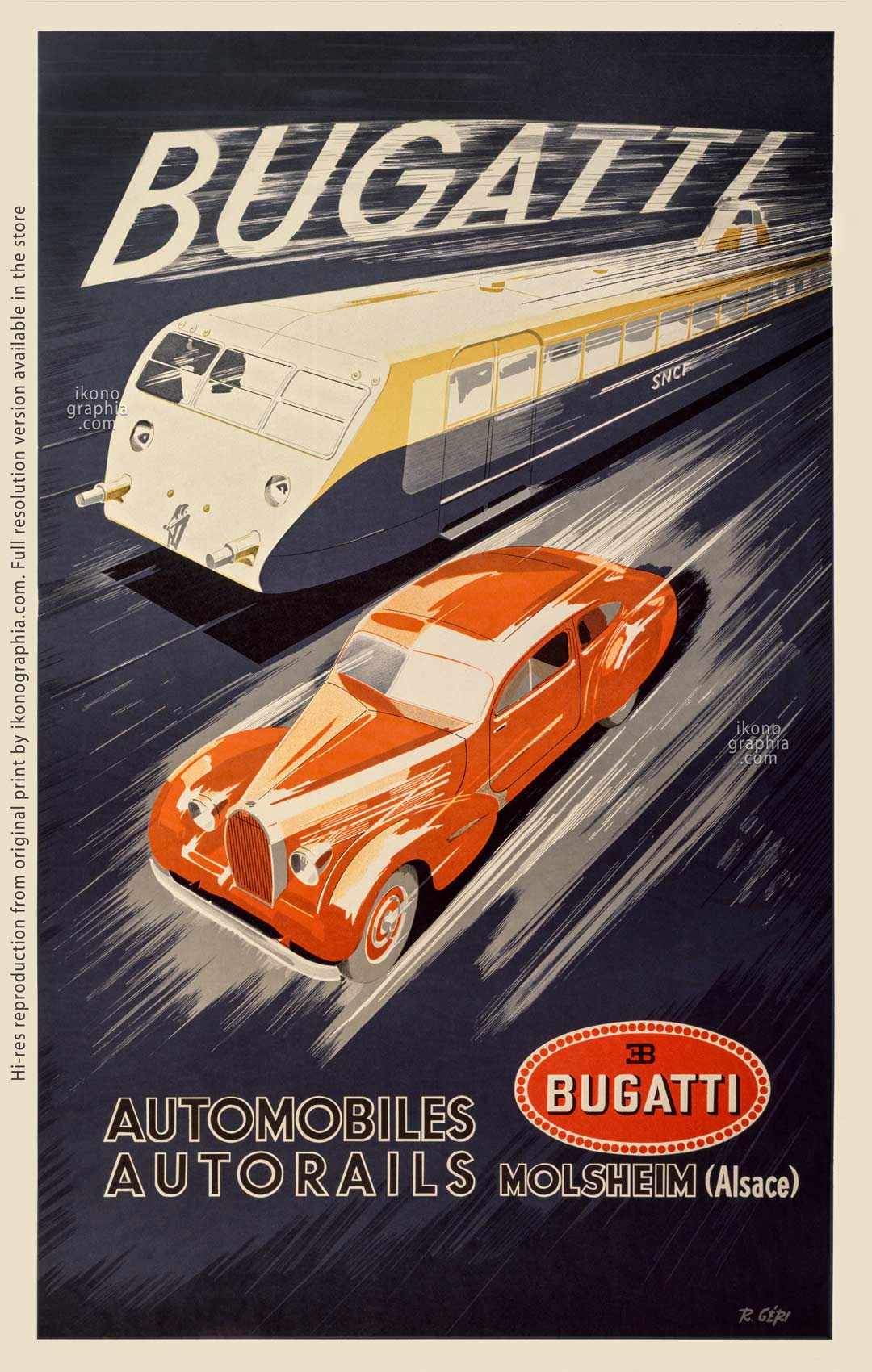
Bugatti's catalogs and brochures were rarely credited to outside agencies. With limited budgets and no inherited house style, the results reflect the same standards applied to the cars — functional, precise, occasionally brilliant. The 1937 Type 57 range catalog is the centerpiece: Alexis Kow's cover, the only signed work in the catalog, pairs the Le Mans-winning Type 57 Sport with Ettore's streamlined Autorail — the locomotive he designed in a week to keep his workforce employed.
Ettore, Jean and the Bugatti Literature
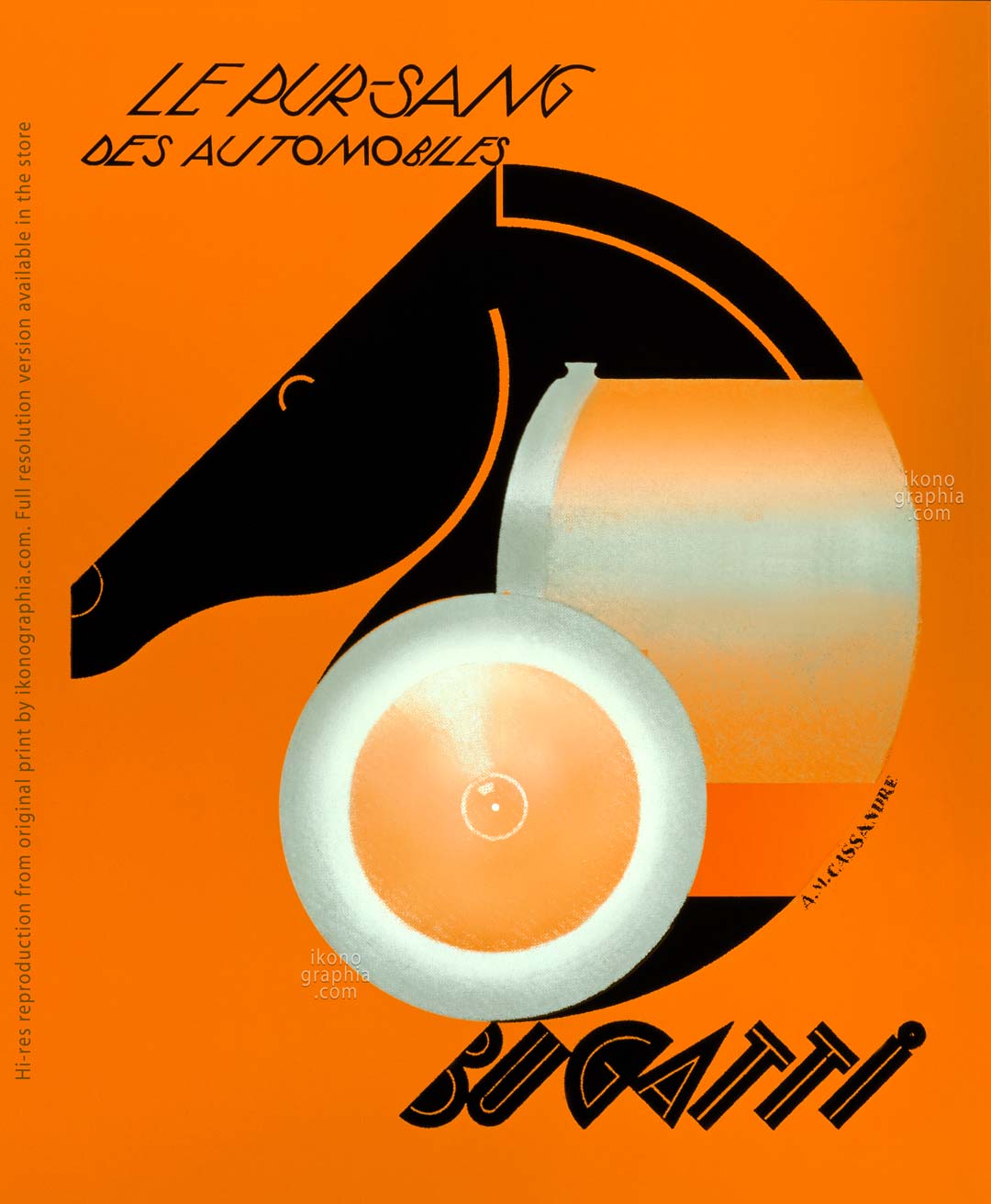
Most people know the Bugatti posters — Cassandre, Dudovich, René Vincent, Géo Ham. The catalogs are less studied, and less understood. They should not be.
Ettore Bugatti trained at the Brera School of Art in Milan before he built his first engine. That formation never left him. Everything Bugatti produced — the cars, the furniture, the factory buildings, the printed literature — was subject to the same standard: nothing without necessity, nothing without form. The catalogs were not marketing material handed to an agency. They were made inside Molsheim, under the same scrutiny as the chassis.
From 1930, Ettore progressively passed the design pen to his son Jean, who had grown up inside the factory and understood its logic from the inside. The catalogs changed with him — leaner, more confident, the typography tightened, the illustrations more willing to let the car speak without explanation.

Bugatti Type 44, Nouvelle 3 litres 8 cylindres 17 CV. Double spread with three body variants by Weissman, circa 1925.
Three coachwork interpretations of the same chassis on a single spread. The layout is spare — photograph, body designation, nothing more.
Weissman's bodywork is presented as a catalogue of possibilities rather than a hierarchy. The customer chose. The chassis was already resolved.

Dépliant Bugatti Type 44, 3 litres — Centerfold, 1929.
The centerfold of the Type 44 folder places the car in front of Château Saint-Jean — Bugatti's headquarters in Molsheim.
The two figures beside it are Lidia and Michel Bugatti, two of Ettore's children. The photograph is not incidental. Molsheim was not a factory with a family attached. It was a domain, and the catalog knew it.
A Literature Without Credits
Bugatti brochures were almost never signed. The company had no advertising department in the modern sense. Ettore and Jean directed everything, and the people who executed their directions worked without attribution.
Two exceptions: Alexis Kow, the leading French automobile illustrator of the period, signed the 1937 Type 57 catalog drawings. And the company photographer, Mr. Carabin, is credited on several of the 1928 brochure photographs. Everyone else remains anonymous — which, in Molsheim, was the norm rather than the exception.
The budget was modest by the standards of the major manufacturers. It never showed.

Bugatti Type 57, 3 litres engine specifications. Double spread from the 1937 catalog.
Left: Artist Joseph Low pulling an impression on his hand press. Below: Low inside his rural New Jersey studio-print shop with its old-fashioned stove (bottom), a linoleum block locked up in a printing form, and the finished print. Right page: An enlarged detail from the same linoleum print displays the vigor and fantasy of Low’s engraving style. Photographs by Ed Feingersh. Pages 64-65
The 1928 Brochures and the Carriage Argument
The 1928 catalogs make an argument that no other car manufacturer would have dared. On the cover: a vintage carriage, drawn by Marcel Jacques Hemjic — an eighteenth-century chaise, or a mid-nineteenth century coupé à huit ressorts, rendered with the precision of a period engraving. Inside: Carabin's photographs of the current Bugatti model, the Type 44 or the Berline, sitting on its chassis in studio light.
The pairing was Ettore's idea. He collected carriages. He believed the Bugatti, in its proportions and its attention to coachwork, was the direct heir to the finest horse-drawn vehicles — not a rupture with that tradition but its continuation in a new material. The catalogs said so without a word of explanation.

Bugatti Coupé Berline 2-3 places avec spider sur chassis 3 litres — Central double spread.
Photo Carabin.
Carabin was the company photographer — one of two people credited by name in the entire Bugatti catalog archive. The studio light is controlled and neutral. The car requires no setting.

Bugatti Berline 3 places avec spider sur chassis 3 litres — Cover.
Vintage carriage artwork by Marcel Jacques Hemjic.
The cover did not show the car being sold. It showed an eighteenth-century coupé à huit ressorts — an eight-spring carriage from the mid-nineteenth century, drawn with the precision of a period engraving. Ettore collected carriages. He believed the Bugatti was their direct heir, and the catalog said so without explanation.

Bugatti Berline 3 places avec spider sur chassis 3 litres. — Central double spread.
Photo Carabin.
The second body variant in the same 1928 brochure series. Same photographer, same studio discipline.
The two Carabin photographs and the two Hemjic covers were designed as pairs — the machine and its ancestry, facing each other across the fold.

Bugatti Berline 3 places avec spider sur chassis 3 litres — Cover — Chaise montée sur son train, XVIIe siècle.
Vintage carriage artwork by Marcel Jacques Hemjic.
A seventeenth-century travelling chaise, suspended on its carriage frame. The argument is the same as the facing cover — lineage rather than novelty.
In 1928, every other car manufacturer was selling the future. Bugatti was selling continuity with the finest things ever built on wheels.
The 1936 Blueprint Brochure
The Type 57 range brochure of 1936 took a different approach entirely. Four fold-out leaflets, each presenting one body version in blueprint-style line drawings: the Galibier, the Ventoux, the Atalante, the Stelvio. The drawing method borrowed from the factory floor — technical authority applied to a commercial document.
Two models were missing: the Atlantic and the Roadster. No explanation was given then or since.

Bugatti Type 57 range brochure, 1936 — Four fold-out leaflets in blueprint-style drawings: Galibier, Ventoux, Atalante, Stelvio.
The drawing method came from the factory floor — technical authority applied to a commercial document. Each model received its own leaflet, its own set of lines.
Two variants in the range were not included: the Atlantic and the Roadster. No explanation was given then or since.
The 1937 Catalog and Alexis Kow
The 1937 Type 57 range catalog is the most complete statement of Jean's commercial vision. Kow's illustrations stretch the car slightly — the proportions are pushed toward elegance, the shadow work emphasizes speed over mass. It is illustration rather than technical record, and it reads as Jean would have wanted: the car as an object of desire, not a specification sheet.
The cover pairs the Type 57 Sport — winner at Le Mans, holder of the 218 km/h speed record — with the streamlined Bugatti Autorail. Two worlds Bugatti occupied simultaneously: the road and the railway, both made faster than they had any right to be.

Bugatti Type 57 catalog, 1937 — Cover drawing by Alexis Kow.
The cover pairs two Bugatti worlds: the Type 57 Sport, winner at Le Mans and holder of the 218 km/h speed record, and the streamlined Autorail — the locomotive Ettore designed in a week to save his workforce.
Kow's illustration was the only signed work in the catalog. Everything else was Molsheim's.

Bugatti Type 57, 3 litres engine. "Vainqueur." From the 1937 Type 57 range catalog.
Vainqueur — winner.
The 1936 season: Grand Prix de l'ACF, de La Marne, de Deauville, du Comminges, and the speed record at 218 km/h.
In 1937, Jean-Pierre Wimille and Robert Benoist won the 24 Hours of Le Mans and covered 3,287 kilometres in 24 hours. The catalog did not need to say more.

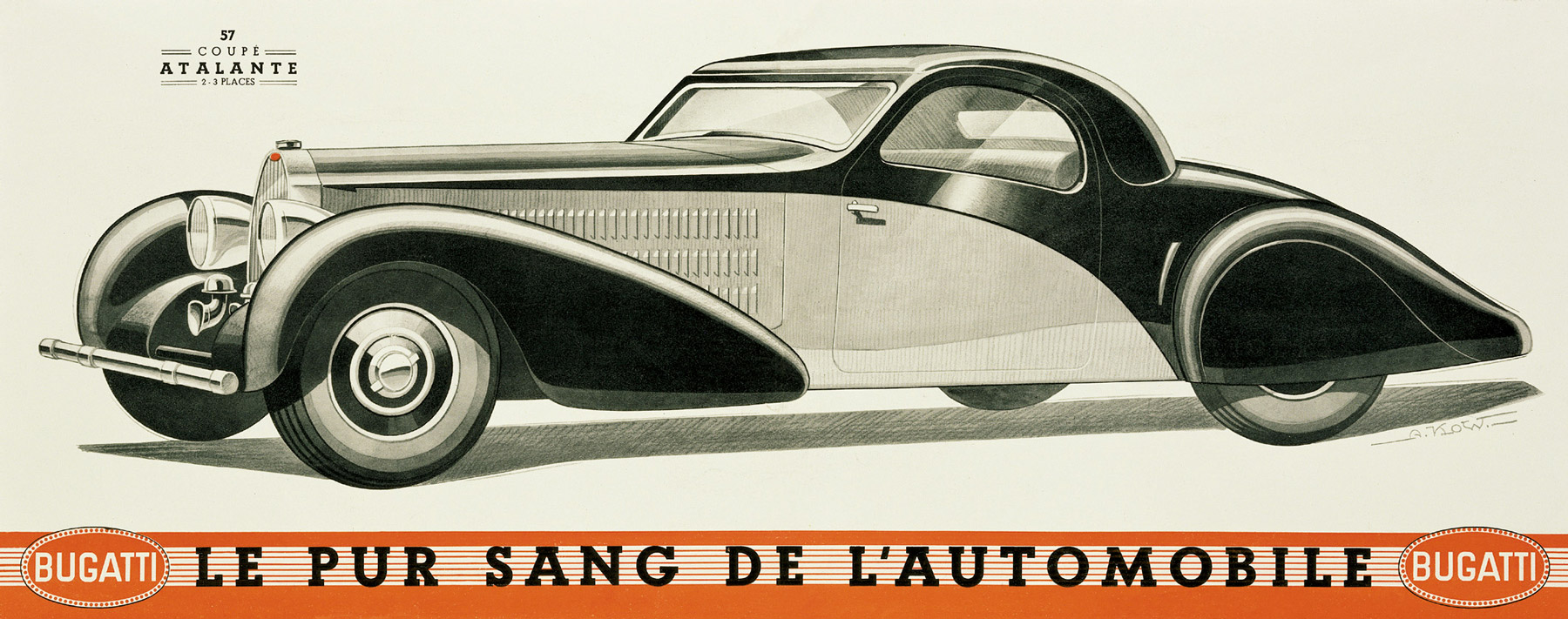
Bugatti Type 57 Coupé Atalante. Double spread from the 1937 catalog. Drawing by Alexis Kow.
The Atalante roofline resolves in a single continuous arc from windshield to tail — a curve that Jean drew once and never needed to revise. Kow understood that the illustration's job was to follow the line, not interpret it.

Bugatti Type 57S Coupé Atlantic. From the 1937 catalog. Drawing by Alexis Kow.
The Atlantic was built in four examples. Its body was riveted along the spine — the seam running from nose to tail — because the magnesium alloy panels could not be welded without risk of fire.
A constraint became the most recognizable detail in the car's history.

Bugatti Type 57S Roadster Sport 2 places. From the 1937 catalog. Drawing by Alexis Kow.
The lightest body in the Type 57 range. Ultra-light alloy construction, competition-type profiling.
Kow gave it the longest shadow of any car in the catalog — the one concession to drama in an otherwise disciplined set of drawings.

Bugatti Type 57 Coach Ventoux 4-5 places. From the 1937 catalog. Drawing by Alexis Kow.
The Ventoux was the family car in the Type 57 range — four to five seats, the most practical body Jean designed. It carried the same name logic as the Stelvio and the Aravis: a mountain pass, a road with a reason to be driven.
From Ettore to Jean — The 1939 Catalog
The cover of the 1939 Type 57 Modèles brochure is the last major statement in Bugatti's pre-war literature. Jean designed it, or directed its design, with the same compression he brought to the cars themselves. The typography is spare. The image carries everything.
Jean died in a car crash a few months after this catalog appeared. The brochure had no way of knowing it was a conclusion.

Bugatti Type 57 Modèles 1939. Brochure cover.
Jean designed this cover, or directed its design, with the same compression he brought to the cars.
The typography is spare. The image carries everything.
He died in a car crash a few months after it appeared.
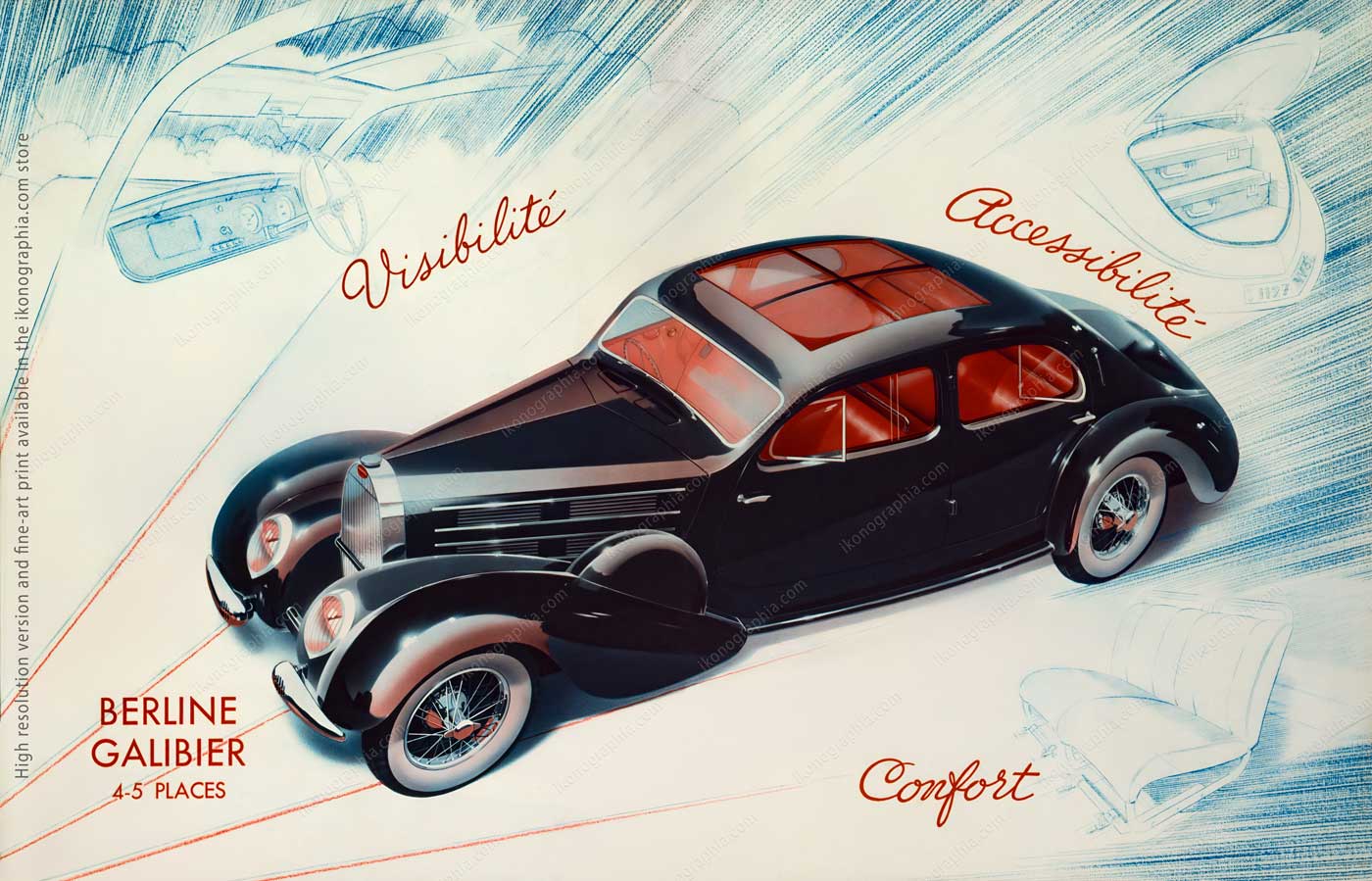
Bugatti Type 57 Modèles 1939. Berline Galibier 4-5 places. Visibilité. Accessibilité. Confort.reet and Regent Street series.
The three words beneath the model name are the brochure's argument in miniature — the same logic that organized the 1936 catalog, compressed into a single line.
The Galibier was the largest body in the Type 57 range. The claims are precise and in the correct order.

Bugatti Type 57 Modèles 1939. Cabriolet Stelvio 3 places. Cabriolet Aravis 2-3 places.
Two open bodies on the same page, the Stelvio and the Aravis distinguished by seating capacity and hood treatment.
The mountain names were Jean's choice — the Stelvio Pass, the Col de l'Aravis. He named his cars after roads worth driving.
Carrosserie Gangloff, 1935
Before Jean's body designs became the standard, Bugatti's principal coachbuilder was Carrosserie Gangloff in Colmar, Alsace.
The 1935 Gangloff catalog documents six Type 57 and 57SC body variants — the Coach Aérodynamique, the Cabriolet, the Roadster, the Double Cabriolet, the Coach, the Faux Cabriolet. The photography is monochrome and functional. The cars do not need flattery.
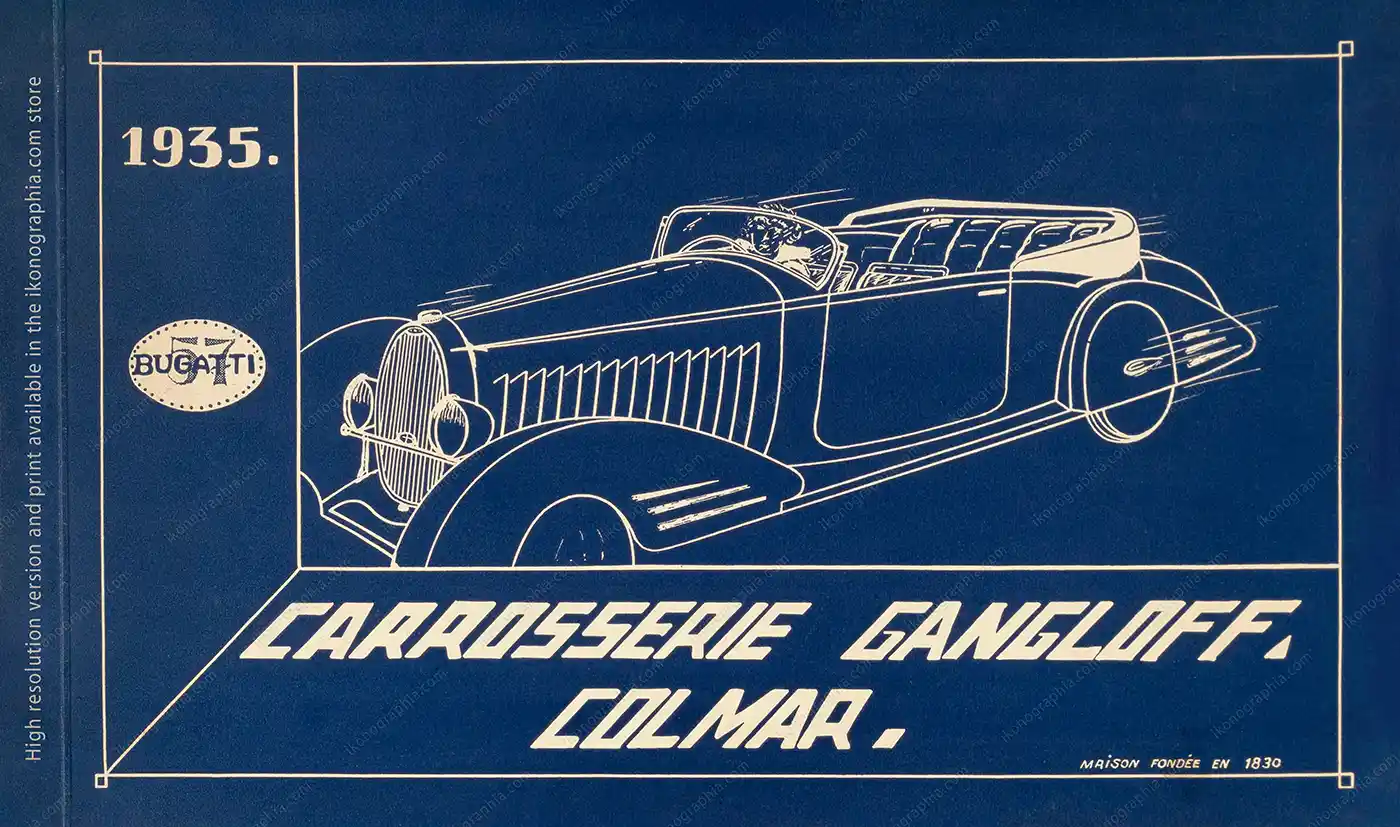
Carrosserie Gangloff, Colmar. Cover of the 1935 catalog for the Bugatti Type 57.
Gangloff of Colmar was Bugatti's principal coachbuilder before Jean's body designs became the standard.
The 1935 catalog documented what was available before the Atalante, the Atlantic, and the Stelvio existed. A world about to be replaced.
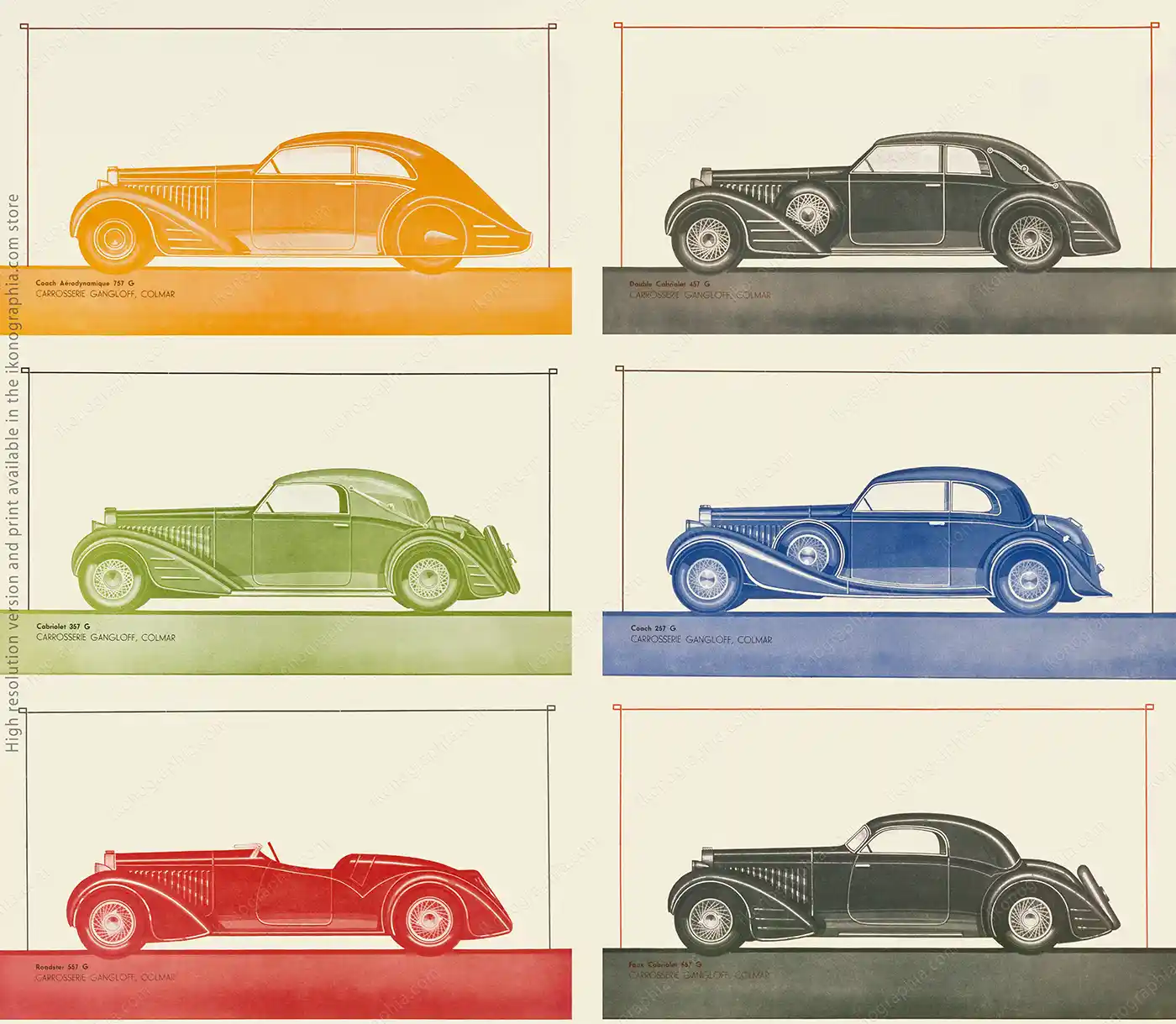
Carrosserie Gangloff, Colmar — Six pages from the 1935 catalog: Coach Aérodynamique 757G, Cabriolet 357G, Roadster 557G, Double Cabriolet 147G, Coach 257G, Faux Cabriolet 657G.
Six body variants, each assigned a Gangloff reference number.
The Coach Aérodynamique — 757G — was the most forward-looking of the six, the one that acknowledged where design was heading. Within two years, Jean had taken it further than Gangloff had imagined.
The Trains
In the early 1930s, Bugatti faced a financial crisis serious enough that the company's accountant presented the only rational solution: reduce the workforce by at least a third.
Ettore did not respond. He disappeared for a week.
When he came back, he gathered the entire workforce and told them to move all equipment into the smaller building. When they asked why, the answer was short: they would build trains.
In that week alone he had already designed the program. Within two years, the Bugatti Autorail existed: a streamlined railcar unlike anything running on European tracks. Ettore designed ergonomic seats that reversed direction so passengers always faced forward, with fold-out tables built into the backrest. To power the locomotives he used four modified engines from the Type 41 Royale — 12,763cc each, the largest production car engine ever built, now repurposed for rail.
The Autorail set the world rail speed record: 196 km/h, electrically timed over 10 kilometres. The previous record was around 122. He didn't improve it. He erased it.
The French national railway bought the trains. Nobody was let go.
The brochure that documents all of this is printed in blue monochrome — the same controlled hand as every other piece of Bugatti literature. At the bottom, three words: Vitesse. Confort. Sécurité. Not a promise. A statement of fact from a man who had just proved all three.
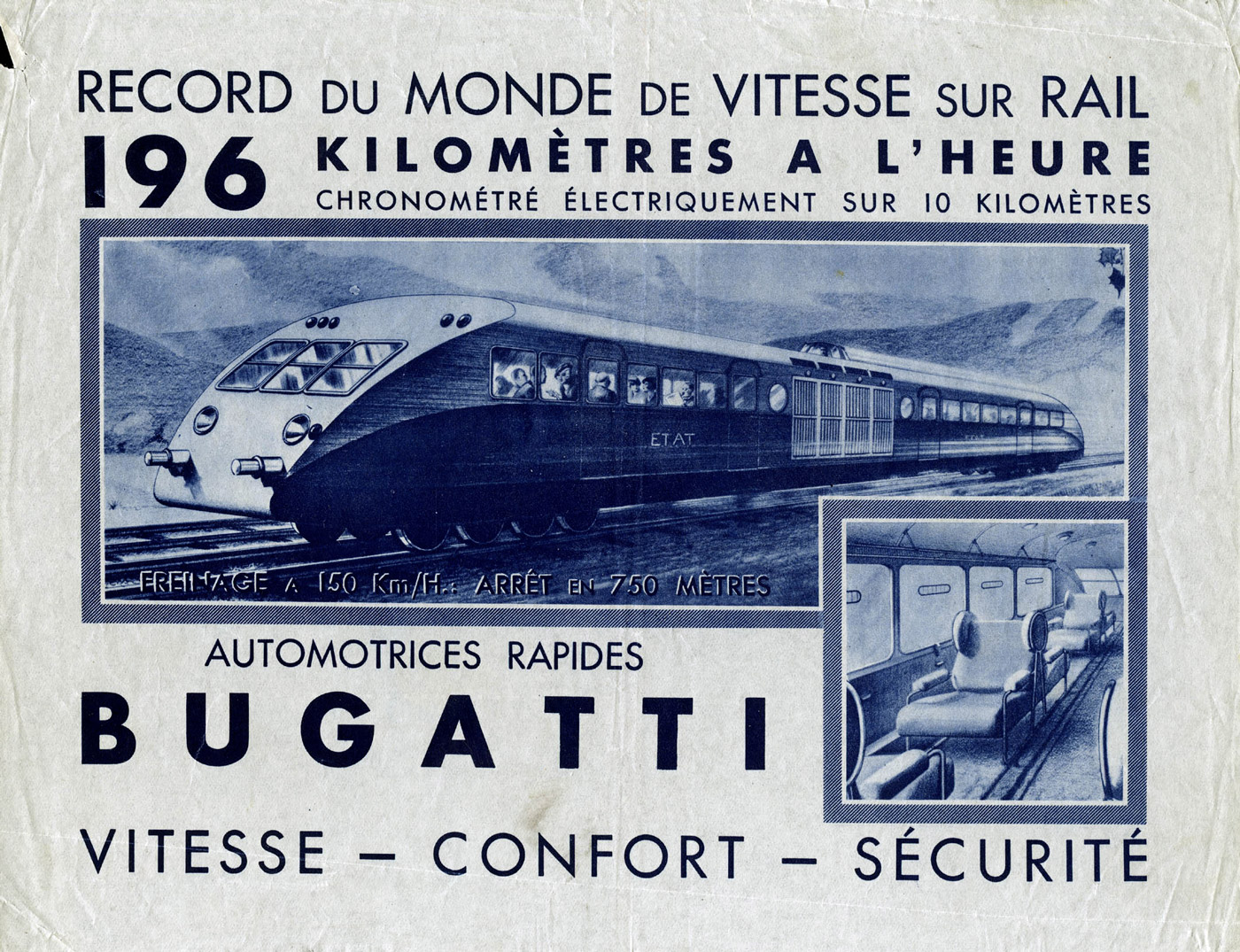
Automotive rapides Bugatti — Vitesse — Confort - Sécurité.
Advertisement Sheet 1934.
Record du monde de vitesse sur rail — 196 Kilomètres a l'heure — Chronométreé électriquement sur 10 kilomètres.
October 24, 1934.
Copyright, Links And Credits
Photography, Copyright & Credits
These images are part of the Ikonographia Visual Archives: — Bugatti Heritage Collection — Bugatti Factory Drawings Archive.
All drawings reproduced by Roberto Bigano in 1990 from originals held in the Bugatti factory archive. The current location of the originals is unknown.
All photographs © Ikonographia / Roberto Bigano — All Rights Reserved.
⸻
Terms of Use (Summary)
The images presented in this archive are copyrighted and available for licensed use only through Ikonographia Visual Archives.
You may not download, reproduce, publish, or distribute these images without a valid license. For commercial or editorial licensing, please refer to the product pages or contact Ikonographia directly. A full explanation of licensing terms is available in the Shop / Licensing Information section under "Ikonographia — Standard License" and "Ikonographia — Merchandising & Product Use Licenses"
⸻
The Ikonographia Bugatti Heritage Archive
Between 1990 and 2009, photographer Roberto Bigano documented Bugatti with a level of access that no longer exists and cannot be replicated. The relationship began with Romano Artioli — the Italian entrepreneur who had just acquired the Bugatti name and was preparing its revival at Campogalliano — who gave Roberto carte blanche to work inside the factory, the archive, and every event that followed. No brief. No restrictions. No supervision.
What resulted is not a single project but five distinct bodies of work: the factory technical drawings reproduced before they disappeared, two major photographic commissions on the historic cars, a complete documentary record of the Bugatti International Centenary Meeting in Tuscany, and an Alsatian reportage made inside Molsheim before the restoration began. Together they form one of the most complete private archives of Bugatti heritage in existence — most of it unpublished until now, some of it available nowhere else.
The archive is not a celebration of the marque. It is a record made by someone who was trusted enough to be inside it, at the precise moment when its past and its future were in the same room.
⸻
Credits & Acknowledgments
Ikonographia gratefully acknowledges the fundamental contribution of Romano Artioli, founder of Bugatti Automobili, without whose trust and unrestricted access this archive would not exist.
⸻
Ikonographia Mission Statement
Ikonographia is committed to the accurate documentation, preservation, and ethical dissemination of twentieth-century visual culture.
⸻
Archival Notes
These drawings were reproduced by Roberto Bigano in 1990, during the preparation for the revival of Bugatti Automobili at Campogalliano. Access to the Bugatti factory archive was granted by Romano Artioli. The drawings document the original Molsheim factory production.
⸻
Further Reading (Selected Sources)
- Romano Artioli, Bugatti & Lotus Thriller — A first-person account of the Bugatti Automobili project by its founder: the dream, the factory, the cars, and the dramatic events that brought it all to an end. Available in English — Amazon US · Italian — Amazon IT
- Romano Artioli — Official Website The story of a boy with a big four-wheel dream.
⸻