Plastic Girls — The Age of Plastic Innocence (1977–1980)
Early Works – Shop-window mannequins before the rise of performative display.
This chapter marks the earliest phase of the Plastic Girls project, a photographic inquiry begun by Roberto Bigano in 1977.
Mannequins of this period are defined by restraint: controlled gestures, balanced poses, and composure rather than spectacle. Before display became theatrical, figures remained poised and neutral, simply presenting clothing.
Seen today, these images record the final moment of an “innocent” artificial body—quietly entering public space, unburdened by performance.

All photographs were taken from the street, through shop-window glass, without special access or permissions. Nothing is staged or arranged for the camera: the images record what is openly visible yet rarely observed with sustained attention.
Over time, this accumulation exposes patterns no single moment could reveal—recurring gestures, evolving materials, racial and anatomical codifications, and a gradual movement from abstraction to hyper-realism. The project seeks neither irony nor nostalgia, but sustained looking.

September 1979.
Braunschweig, West Germany — Delmod Department Store.
The hyper-detailed facial modeling and naturalistic stance collapse the distance between mannequin and living figure. The pose signals an early movement toward simulated presence, where realism begins to replace display as the dominant visual language.
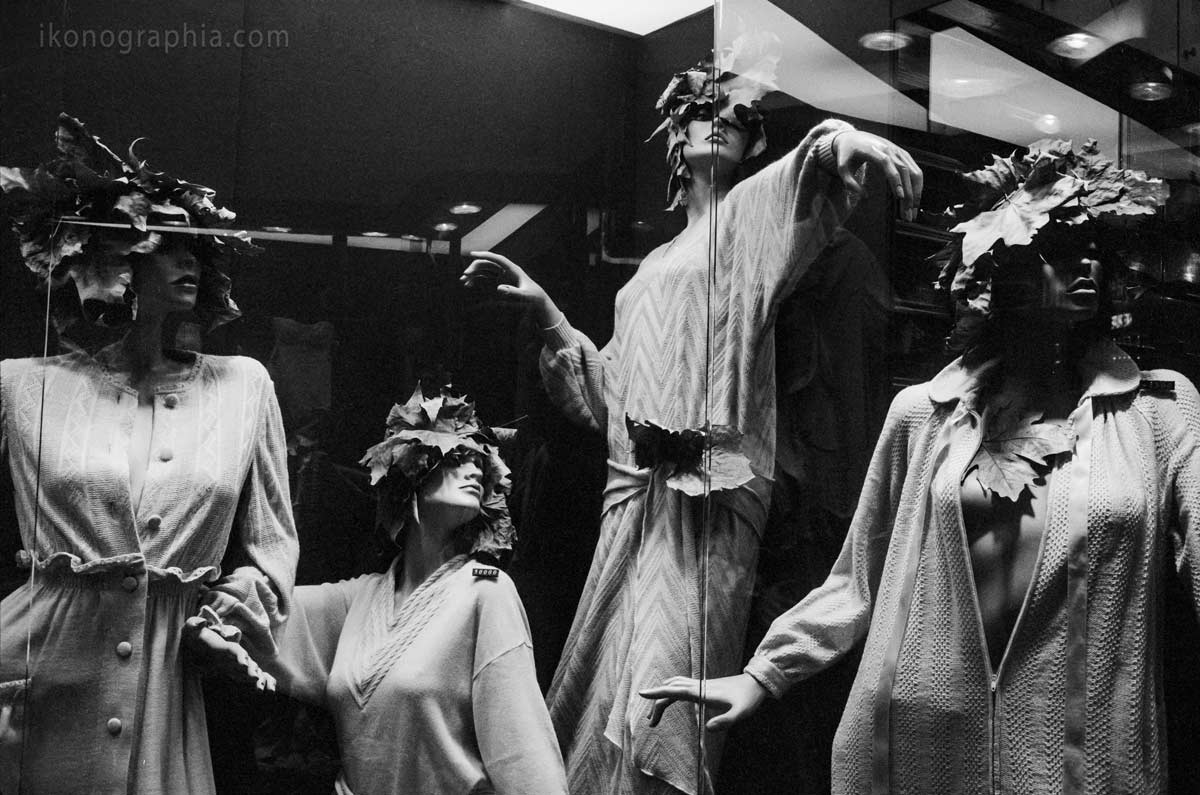
November 1978 — Rome, Italy.
A shop-window ensemble staged around a grape-harvest motif, with mannequins arranged in a shallow theatrical space. The restrained gestures and lowered gazes temper the decorative theme, shifting emphasis from seasonal display toward a composed study of collective presence and controlled femininity.
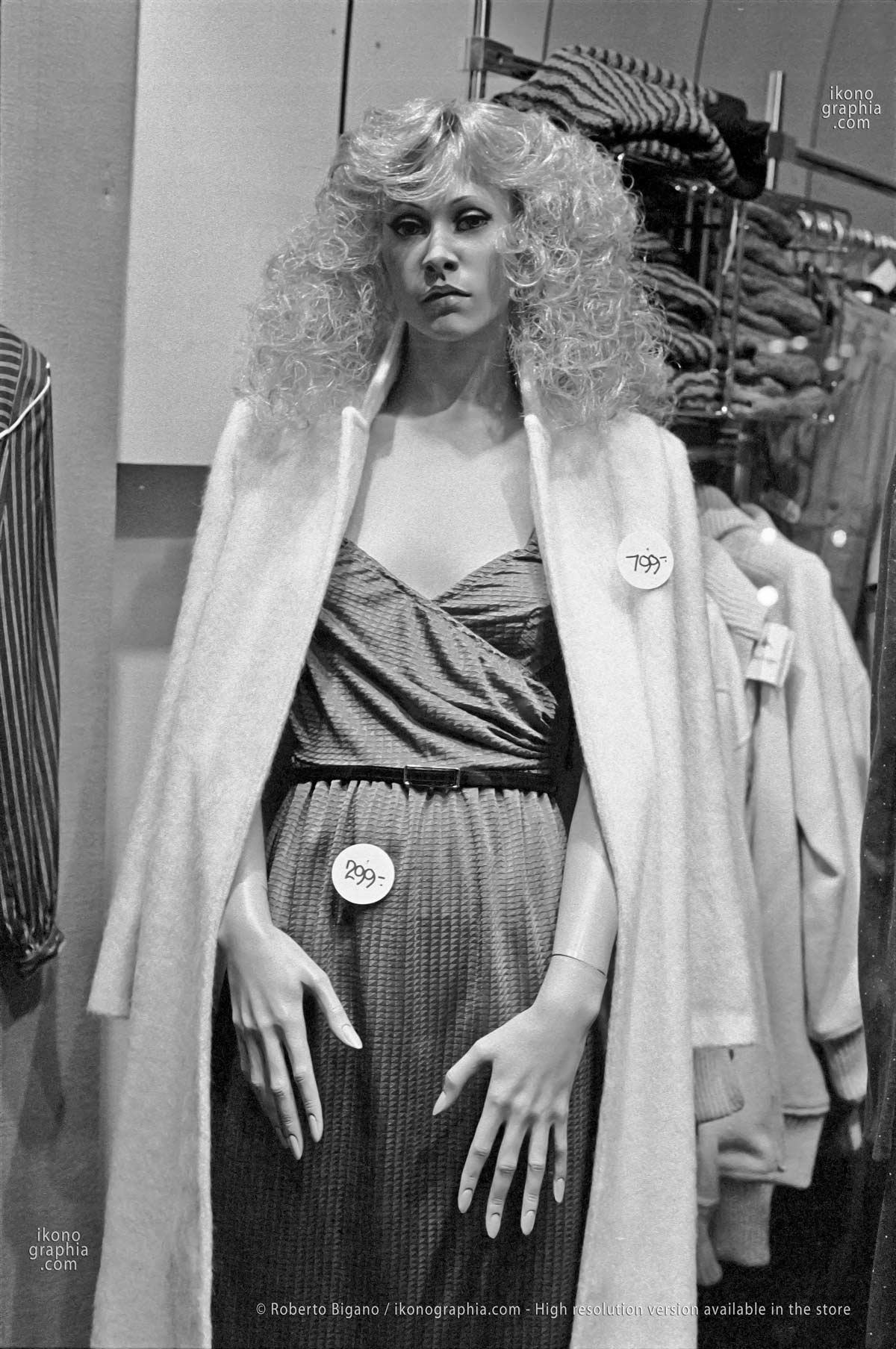
November 1978.
Copenhagen, Denmark
The mannequin stands frontally, its posture defined by balance and containment rather than display.
Soft facial modeling and elongated hands, held low and inactive, suppress theatricality, anticipating a late-1970s turn toward understated realism in Northern European shop-window design.

September 1979.
Braunschweig, Germany — Strick Fabrics Store.
The figure’s elongated pose and sharply articulated headpiece introduce a heightened sense of stylization within an otherwise restrained stance. Here, realism and display coexist: naturalistic body proportions support an emerging language of visual impact driven by accessories and controlled exaggeration.
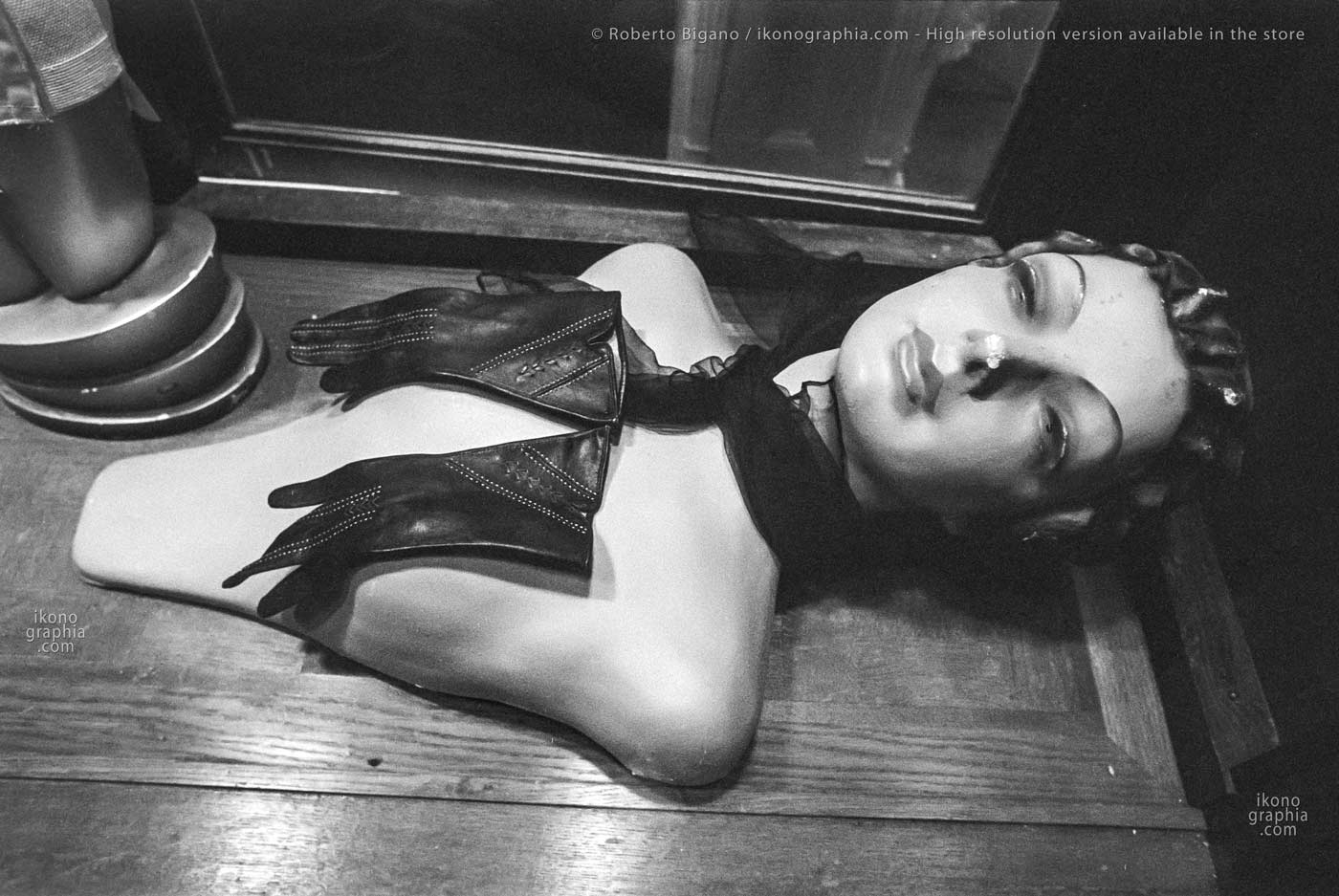
September 1979 — Stockholm, Sweden.
A retro mannequin displayed in an upscale vintage second-hand boutique in Gamla Stan, where curated accessories and restrained presentation reflect a refined approach to reuse rather, than mass-market thrift.

February 1980 — Berlin, East Germany — Frauentag (Woman’s Day).
A shop-window staged for International Women’s Day. Despite its central location, the display is marked by modest clothing, limited materials, and restrained gesture. The female figure is defined less by individuality than by role, reduced to a symbolic recipient of flowers rather than an active presence.
February 1980 — KaDeWe (Kaufhaus des Westens) — Berlin, West Germany — Streisen Design
In sharp contrast to contemporary East Berlin displays, this avant-garde shop-window introduces a performative fashion language at the dawn of the 1980s. Angular poses, rotated heads, and controlled tension transform the mannequins into sculptural forms, projecting modernity through abstraction rather than realism.

February 1980.
KaDeWe Luxury Dept. Store — Berlin, West Germany — Streisen Design
Berlin shop-window display embracing avant-garde fashion language at the start of the 1980s. Sculptural silhouettes, exaggerated headwear, and graphic layering reflect the city’s long-standing role as a laboratory for experimental design, were already being absorbed into commercial presentation, blurring the boundary between fashion display and performative gesture.

February 1980 — Berlin, West Germany
A conventional fashion display grounded in late-1970s aesthetics. Naturalistic poses, familiar styling, and decorative restraint prioritize wearability and continuity over experimentation, presenting fashion as product rather than performance.

February 1980.
Berlin, West Germany.
A shop-window tableau staged around intimacy and domestic fantasy rather than fashion display. The mannequin’s reclining posture, lingerie-like styling, and surrounding household objects collapse the boundary between private interior and commercial spectacle, anticipating a late-twentieth-century shift toward lifestyle-driven retail narratives.
February 1980.
Berlin, West Germany.
A shop-window tableau staged around intimacy and domestic fantasy rather than fashion display. The mannequin’s reclining posture, lingerie-like styling, and surrounding household objects collapse the boundary between private interior and commercial spectacle, anticipating a late-twentieth-century shift toward lifestyle-driven retail narratives.

February 1980.
Berlin, WestvGermany.
A contact sheet documenting a moment of unusual visual density, in which multiple shop-window scenes cohere into a single exploratory sequence. The concentration of viable images suggests both heightened attention and an environment rich in stimuli, revealing how inspiration can emerge from the convergence of subject, place, and sustained observation.

September 1980.
London, Knightsbridge — United Kingdom.
Oxford Street and Regent Street series.
The hyper-detailed facial modeling and naturalistic stance collapse the distance between mannequin and living figure. The pose signals an early movement toward simulated presence, where realism begins to replace display as the dominant visual language.
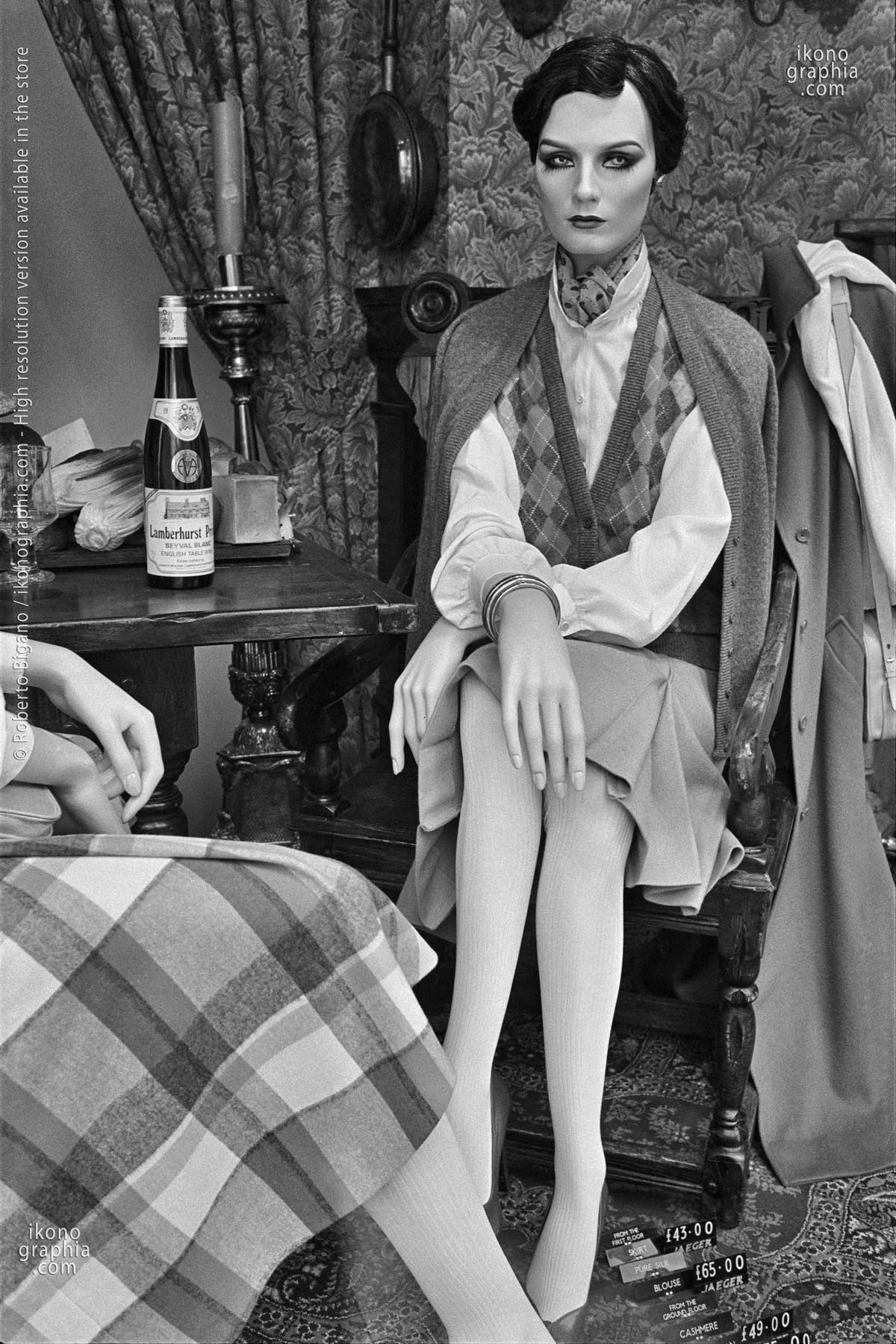
September 1980.
London, United Kingdom.
A seated mannequin presented within a constructed interior, emphasizing composure and psychological presence over display. The restrained posture and carefully layered clothing reflect a moment in which fashion imagery absorbed elements of portraiture, aligning retail presentation with cinematic and editorial conventions.

Two mannequins staged in close proximity, their mirrored gazes and stylized accessories foregrounding attitude rather than garment hierarchy. Set within Soho’s early-1980s cultural milieu—where underground aesthetics, emerging designer fashion, and nightlife intersected—the display privileges image, tension, and identity as primary modes of visual communication.
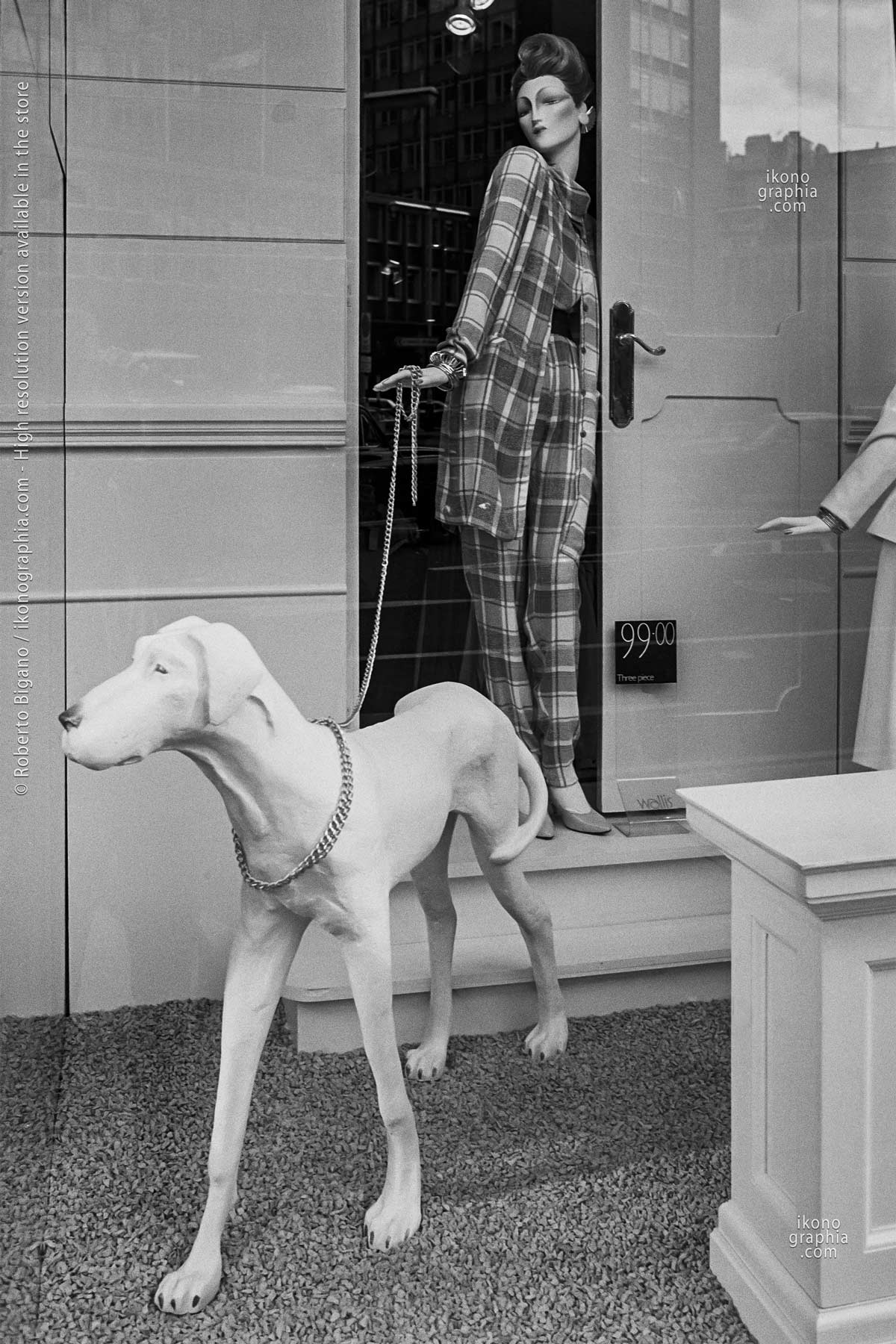
September 1980.
London, United Kingdom — Knightsbridge.
An elegant shop-window composition pairing a poised mannequin with a greyhound, projecting refinement through restraint rather than display. The controlled posture, tailored styling, and classical animal form evoke Knightsbridge’s association with discretion and status, translating luxury into a language of composure and quiet confidence.

September 1980.
London, United Kingdom.
A close-up mannequin portrait that departs from fashion display to embrace a surreal, almost cinematic presence. Framed as an object of identity rather than apparel, the figure aligns with the era’s fascination for artificial femininity, echoing the logic of the Bionic Woman as a cultural symbol suspended between technology, desire, and fantasy.
Copyright and credits
Photographs by Roberto Bigano.
All the images in this post are copyrighted.
Tutte le immagini di questo post sono coperte da copyright.
Browse the Plastic Girls / Mannequin Archive >


1950 — The Turning Point in Magazine Publishing
In 1950, two magazines briefly redefined what editorial publishing could be.
Portfolio, directed by Alexey Brodovitch, and Flair, created by Fleur Cowles, were conceived not as periodicals but as editorial experiments without precedent.
Both rejected conventional formats, budgetary restraint, and commercial compromise.
Both expanded the visual vocabulary of magazines beyond illustration and layout into sequencing, materiality, and authorship.
And both ceased publication after a single year—undone not by failure, but by the cost of radical ambition.
Their lifespan was brief. Their impact permanent.
What followed was not imitation, but a recalibration of what magazines could dare to be.
Browse Plastic Girls Book
Ikonographia is proud to publish “Plastic Girls,” an impressive forty years-long work by the Italian photographer Roberto Bigano