Plastic Girls — Glamour, Aggression, and Display (1980–1997)

Plastic Girls — Glamour, Aggression, and Display (1980–1997)

Plastic Girls — Glamour, Aggression, and Display (1980–1997)

A shared escalation toward excess, beyond style, geography, or chronology.

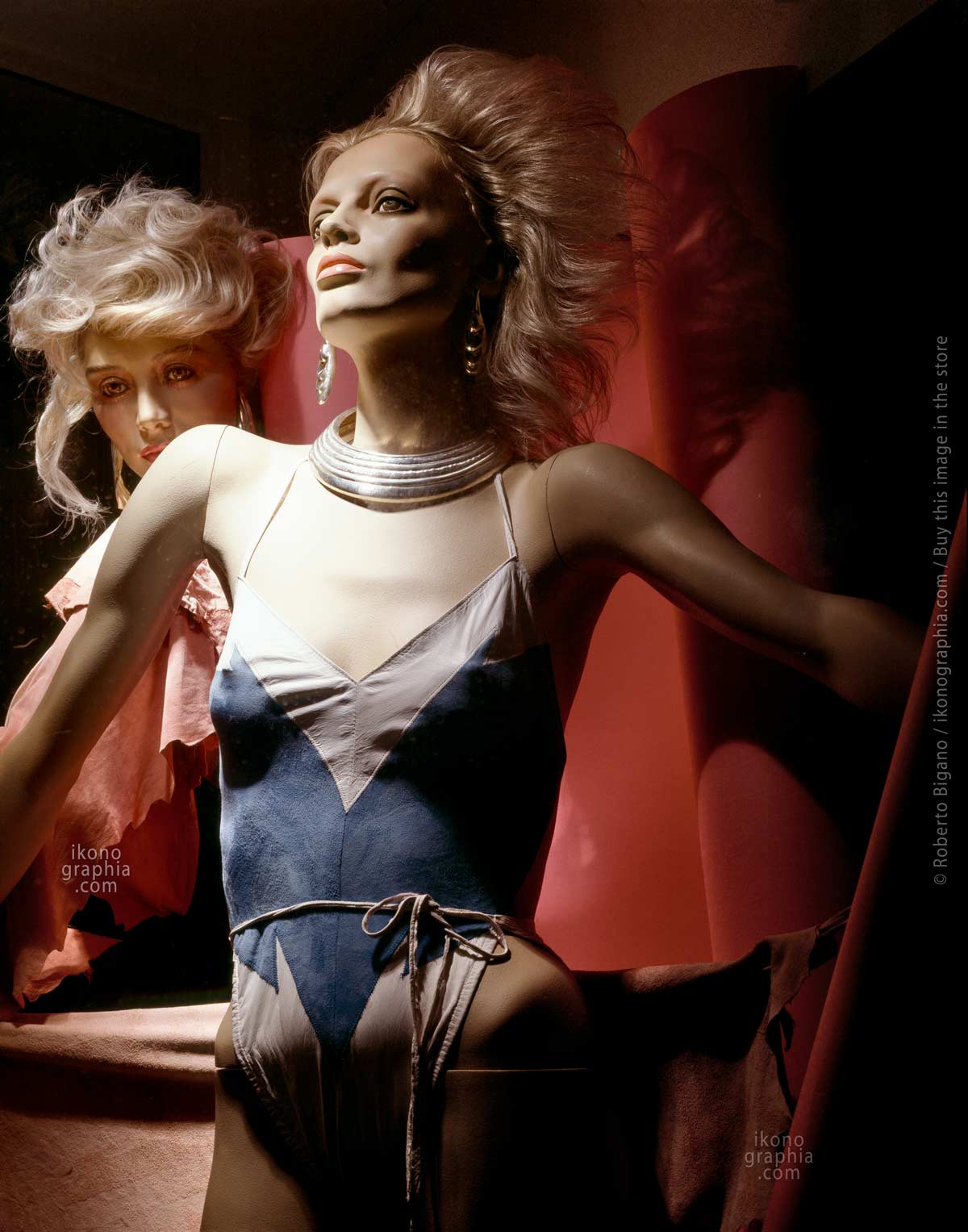
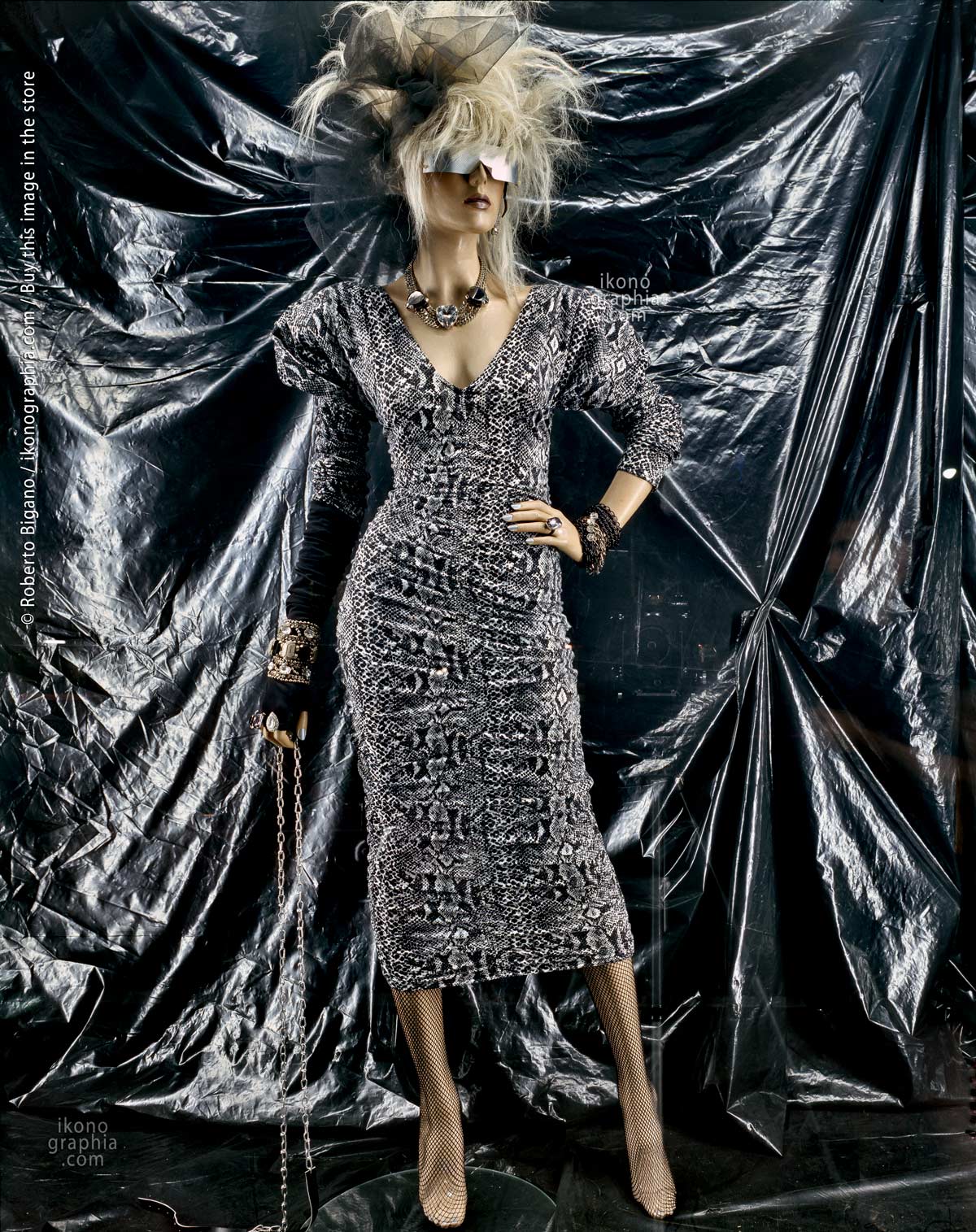
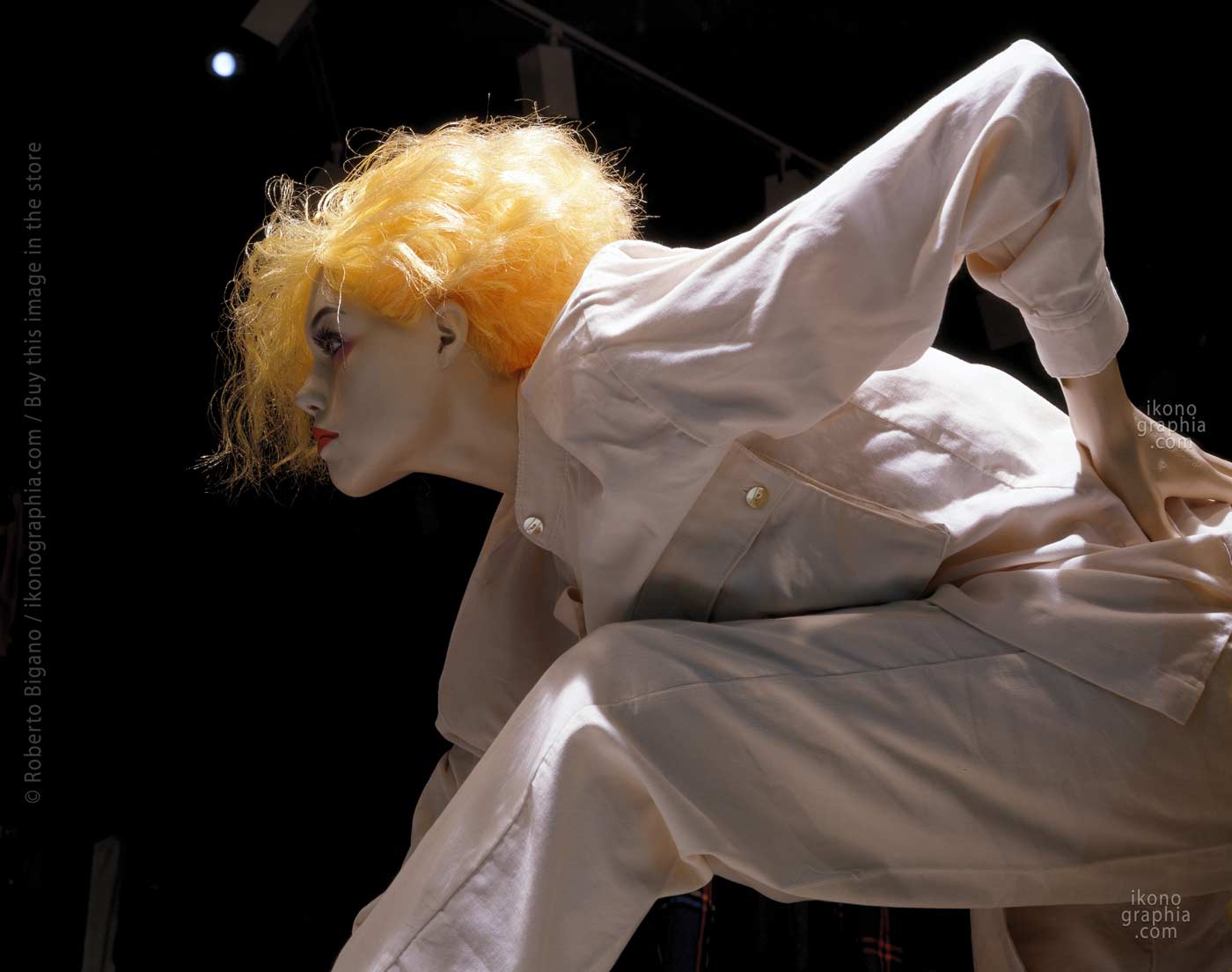
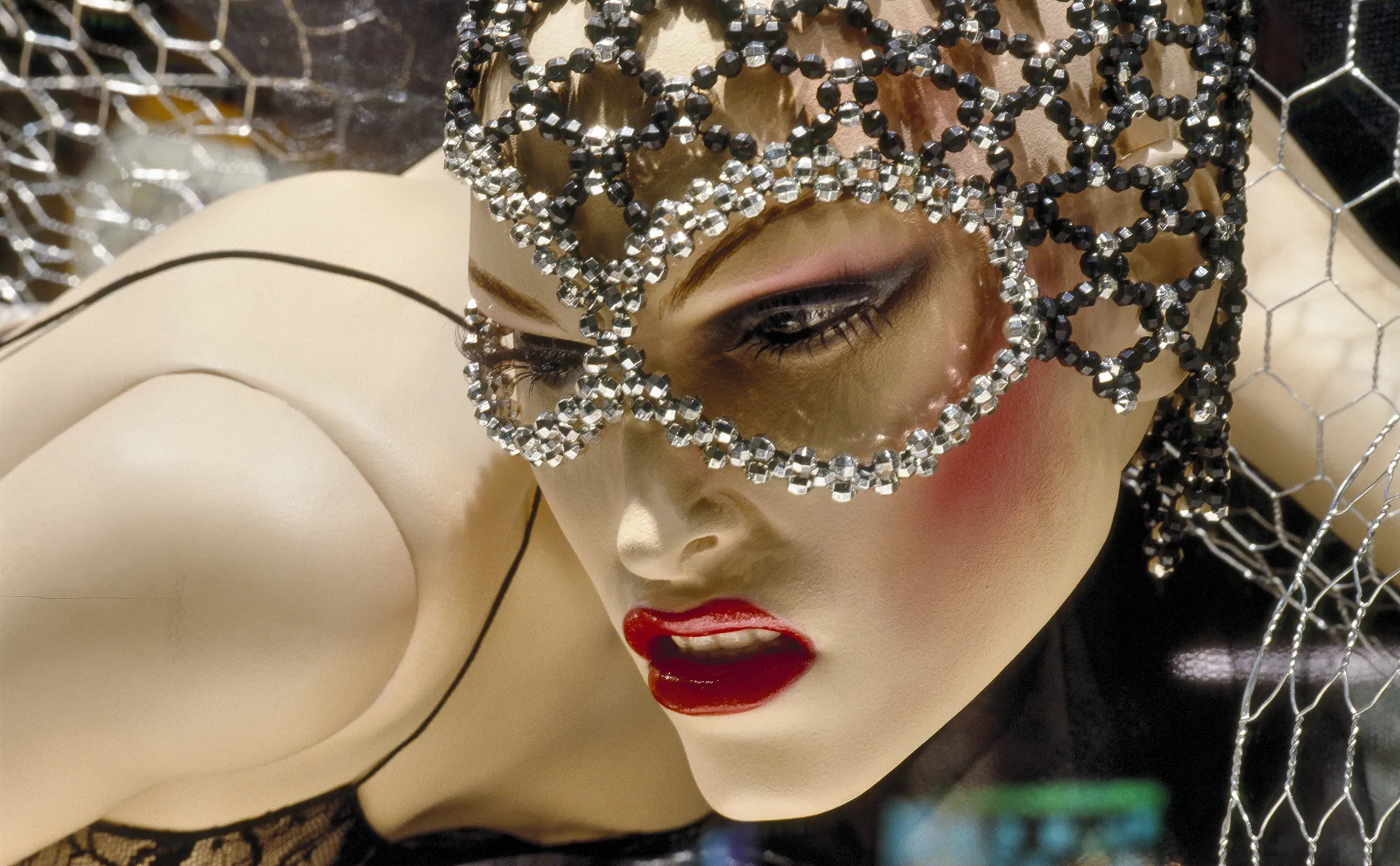
This chapter documents the moment when artificial femininity becomes overtly cosmetic, sexualized, and confrontational. Across different countries and contexts, mannequins adopt exaggerated makeup, exposed poses, and aggressive gazes, turning the female face and body into surfaces of visual pressure rather than neutral display. What unites these images is not style, geography, or chronology, but a shared escalation toward excess as a dominant mode of representation.
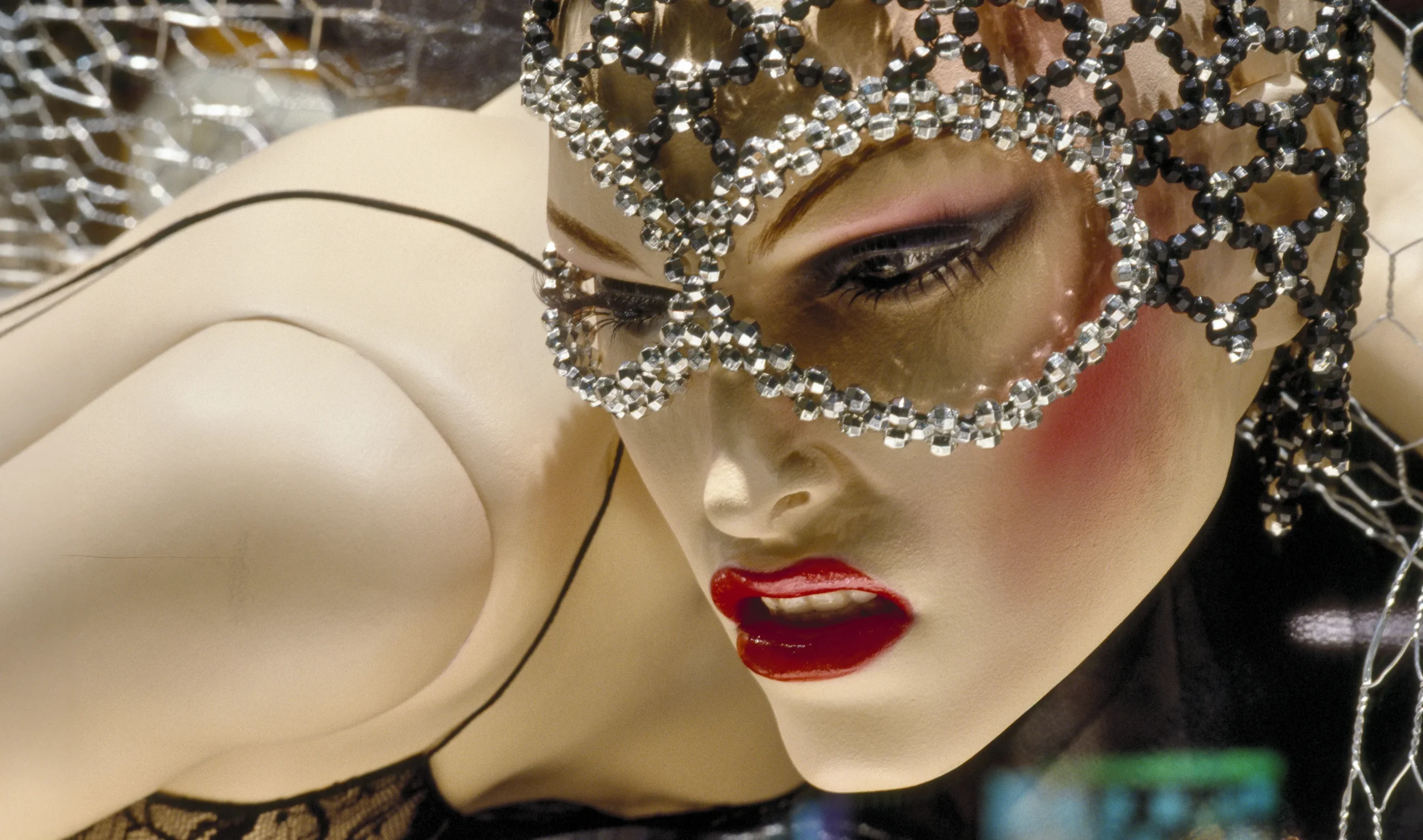
The very first EB110 model made in epowood as designed by Benedini, with the rear wheels covered reminding the Bugatti Atlantic.  Photo Roberto Bigano. Buy this image in the ikonographia.com store.

Photographed from the street, without access or intervention, these images record what shop windows openly displayed at the time. Seen together, they show how exaggerated cosmetics, exposed poses, and confrontational gazes accumulated across different contexts, forming a shared visual condition rather than isolated stylistic choices.

These photographs belong to "Plastic Girls: 50 Years of Artificial Beauty", a long-term photographic project developed over nearly five decades, in which shop windows are approached as a continuous site of cultural observation.
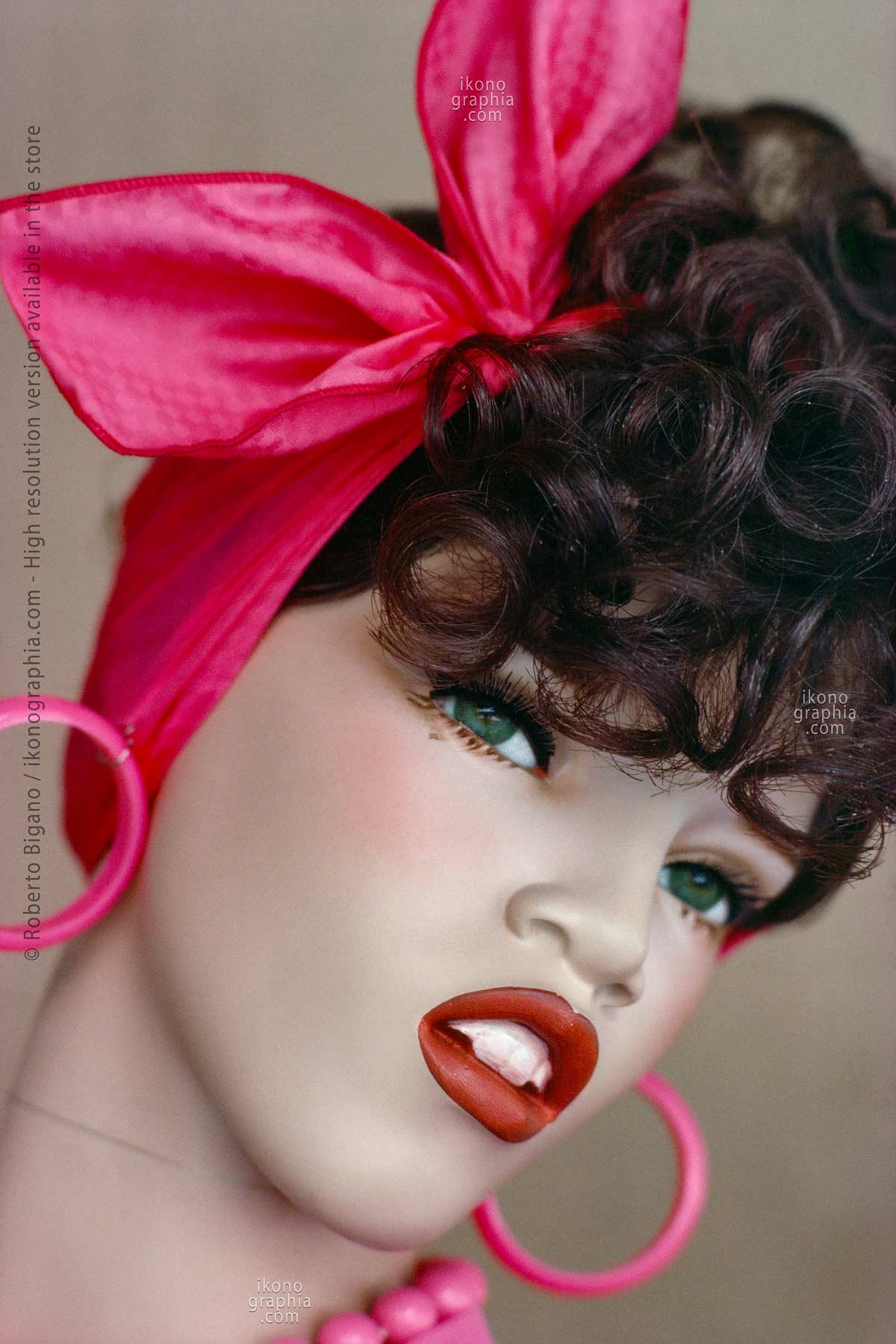
0462_38 Dummy in San Sebastian, Spain. 1980. Photo Roberto Bigano. Buy this image in the ikonographia.com store.

May 1980.
San Sebastian, Spain.
Impudent mannequin in Gitana look.

Provocative pose, and pure pin-up energy. Pink bow, oversized hoop earrings — the full costume assembled with complete conviction.

Artificial femininity at its most playful and deliberate.

0462_38 Dummy in San Sebastian, Spain. 1980. Photo Roberto Bigano. Buy this image in the ikonographia.com store.

May 1980.
San Sebastian, Spain.

Naturalistic posture and coordinated styling suggest ease and approachability rather than confrontation. At this stage, display favors balance and coherence, with realism serving persuasion without yet turning aggressive.
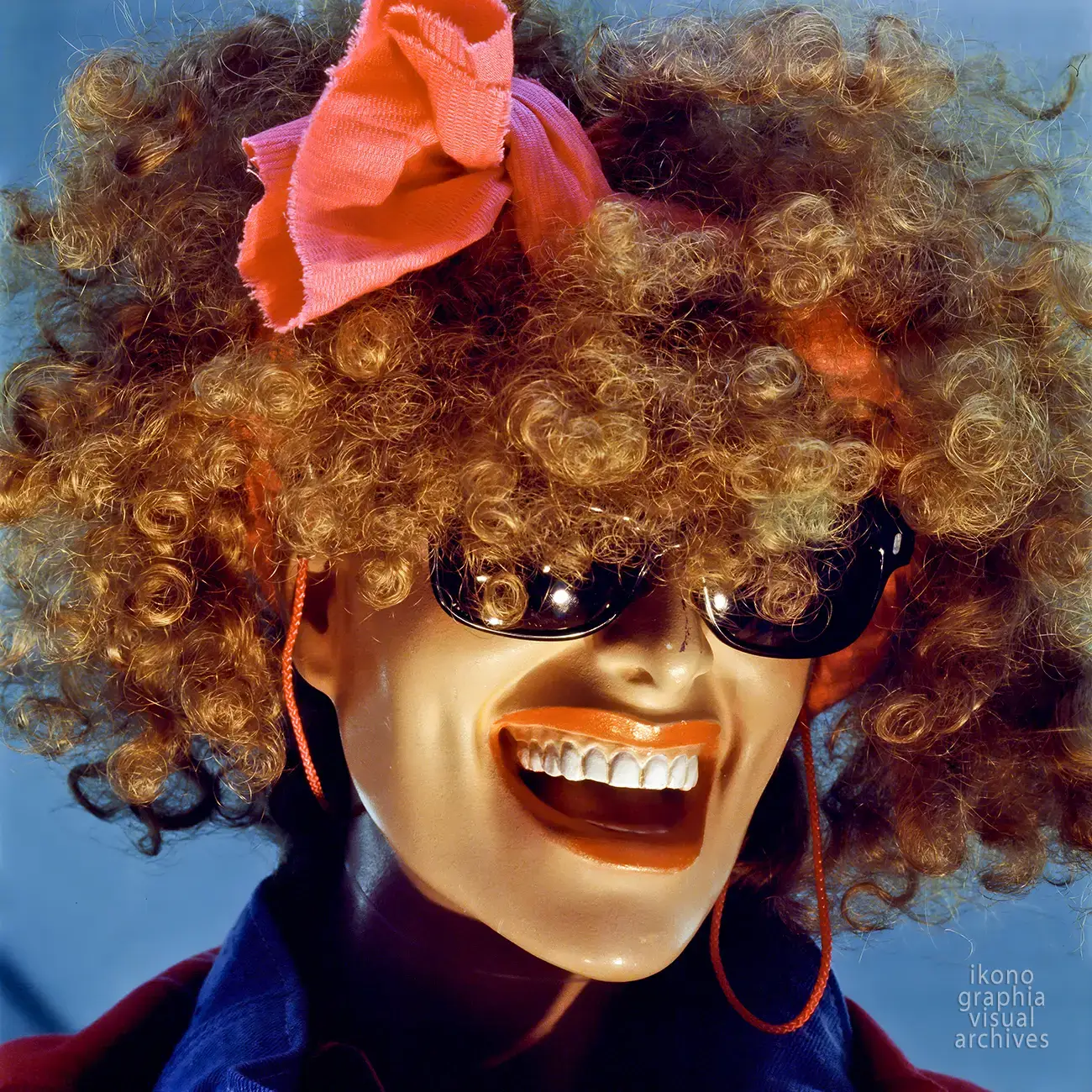
Fixed smile, exposed teeth, and dark lenses produce a hypnotic and surreal effect, holding the viewer’s attention while withholding emotional response.

August 1986.
Copenhagen, Denmark.

Fixed smile, exposed teeth, and dark lenses produce a hypnotic and surreal effect, holding the viewer’s attention while withholding emotional response.

Shop-window mannequin with dramatic makeup and confrontational pose in Copenhagen boutique window, Denmark, 1986.

August 1986.
Copenhagen, Denmark — Graziano Boutique.

Cosmetics, costume, and posture collapse into a single surface of exposure.
Here, realism is pushed toward theatrical excess, reflecting a broader mid-1980s Scandinavian shift toward confrontational display, where mannequins abandon neutrality and assert presence through visual aggression.
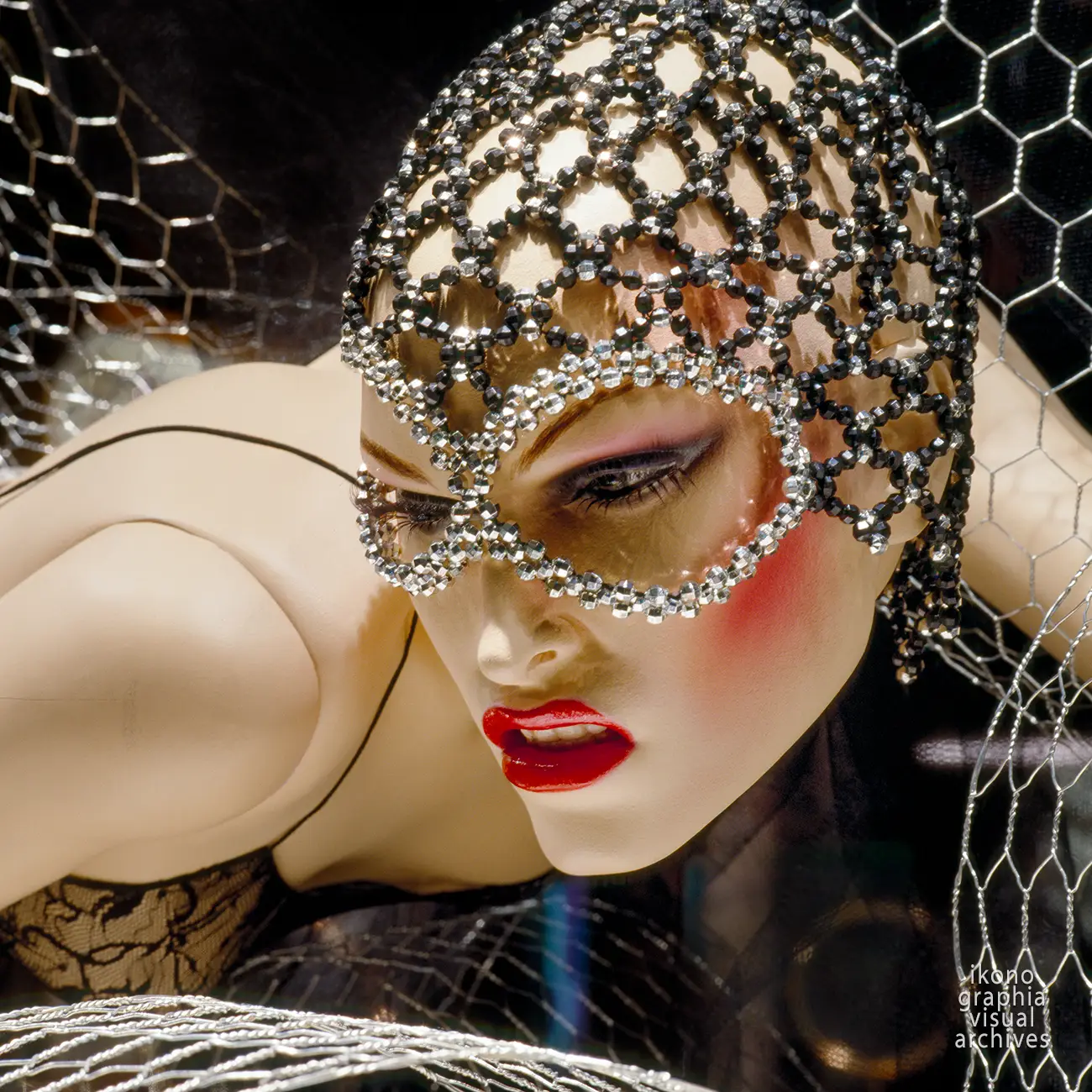
Shop-window aggressive mannequin at Annabell Boutique, Copenhagen, 1986

August 1986.
Copenhagen, Denmark — Annabell Boutique

Aggression becomes fully articulated.
Makeup, gesture, and facial tension no longer simulate life but enforce confrontation, confirming a local display language where artificial bodies are designed to provoke, not attract, and excess replaces illusion as the dominant strategy.

Spain (1997) — Glamorous Brides

Ritual, spectacle, and artificial femininity in Andalusian display culture

Within this broader escalation, bridal mannequins occupy a specific role. Ritual costume does not temper display, but intensifies it. Lace, veils, makeup, and carefully staged expressions turn the bridal figure into a concentrated surface of glamour, where idealization slips into exposure and display becomes explicit.

2588_01 Sexy mannequin in wedding dress, in Seville Spain. Photo Roberto Bigano. Buy this image in the ikonographia.com store.

March 1997.
Sevilla, Spain — Fetishized doll in a wedding shop.

In Andalusian culture, the bride carries the full weight of ceremony, tradition, and social identity.

This mannequin discards all of it. Exaggerated makeup, sculpted lips, and theatrical pose transform the ceremonial figure into a fetishized doll — artificial femininity shifted from cultural symbol to erotic object.

2587_37 Mannequin in wedding dress in Seville, Spain 1997. Photo Roberto Bigano. Buy this image in the ikonographia.com store.

March 1997.
Sevilla, Spain — Wedding dress shop.

Heavy makeup and sculpted features intensify the bridal figure beyond ceremony. Here, glamour operates as pressure, transforming the ritual costume into a vehicle for visual exposure rather than restraint.

2588_18 Charming mannequin in a wedding dress in Seville, Spain. Photo Roberto Bigano. Buy this image in the ikonographia.com store.

March 1997.
Sevilla, Spain — Wedding dress shop.

The mannequin’s face is modeled with extreme smoothness and precision: porcelain skin, sharply defined lips, and a distant upward gaze.

The bridal figure is isolated as a sculpted surface of desire, where makeup, hair, and veil function as visual intensifiers rather than cultural markers.

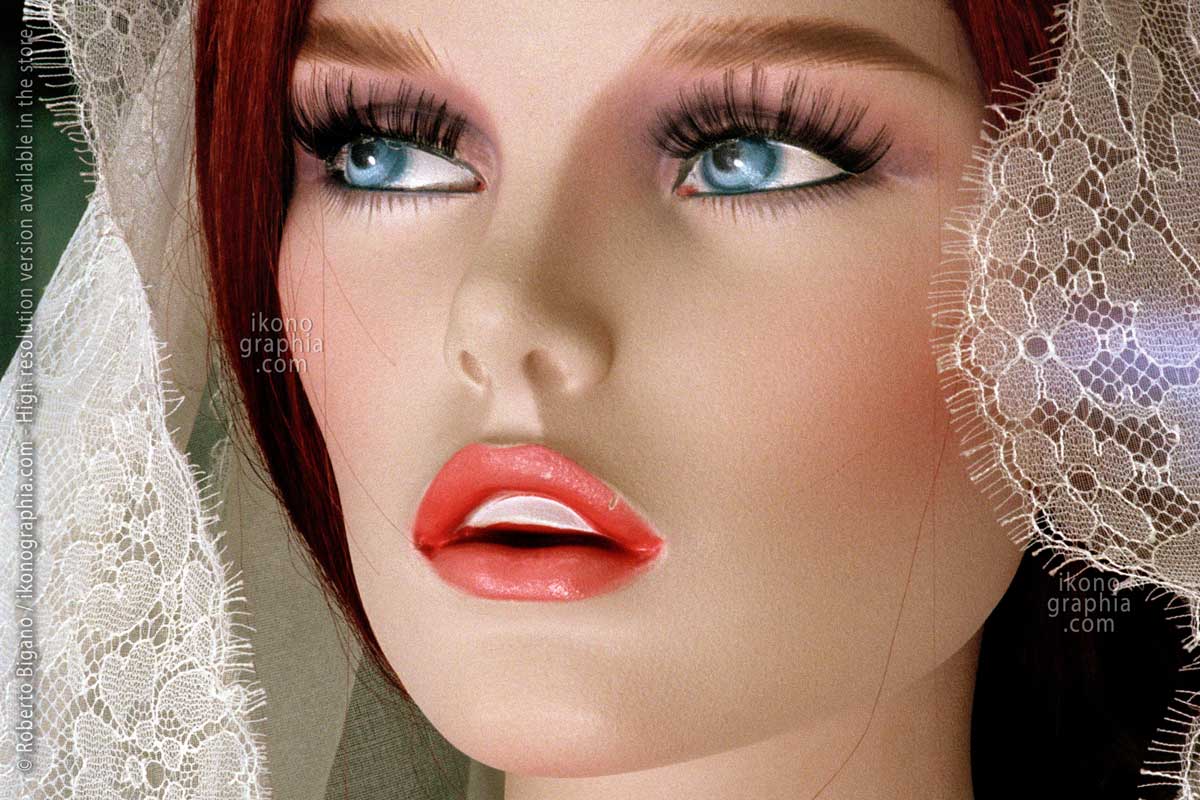
2587_27 Alluring Andalusian mannequin in Seville, Spain 1997. Photo Roberto Bigano. Buy this image in the ikonographia.com store.

March 1997.
Sevilla, Spain — Wedding dress shop.

The gaze holds. Red hair, blue eyes, lips barely parted — everything assembled for maximum presence. The veil and lace are bridal convention; the face beneath them is something else entirely.

This is the sequence's most direct confrontation — artificial femininity that neither withdraws nor performs, but simply arrests.

Copyright, Links And Credits

Photography, Copyright & Credits

All photographs © Ikonographia / Roberto Bigano — All Rights Reserved.
These images are part of the Ikonographia Visual Archives: — Plastic Girls: 50 Years of Artificial Beauty —  Plastic Girls / Mannequins Archive (1978–2026).

Terms of Use (Summary)

The images presented in this archive are copyrighted and available for licensed use only through Ikonographia Visual Archives.

You may not download, reproduce, publish, or distribute these images without a valid license. For commercial or editorial licensing, please refer to the product pages or contact Ikonographia directly. A full explanation of licensing terms is available in the Shop / Licensing Information section under "Ikonographia — Standard License" and "Ikonographia — Merchandising & Product Use Licenses"

Ikonographia Mission Statement

Ikonographia is committed to the accurate documentation, preservation, and ethical dissemination of twentieth-century visual culture.

Archival Notes — Plastic Girls: 50 Years of Artificial Beauty

This archive began in 1978 as a street photography project and is still ongoing.
All images were taken from public streets through shop-window glass without special access, permissions, or staging.

The archive's coherence was recognized retrospectively—only years later, during high-resolution digitization, did isolated images reveal themselves as a continuous visual record spanning nearly fifty years. The project documents mannequins as cultural artifacts: their evolving materials, poses, facial treatments, and display contexts across changing urban and commercial landscapes.

All images follow Ikonographia's internal archival standards for resolution, color accuracy, and metadata structure to ensure long-term consistency across the collection.

Further Reading — Selected Sources

  • Plastic Girls (1978-2011), by Roberto Bigano — A photographic monograph collecting earlier phases of this archive, published as a limited edition on Blurb.
Bugatti EB110, First Model, Prototype, EB110 Supersport, EB112

Bugatti EB110, First Model, Prototype, EB110 Supersport, EB112

Bugatti EB110, First Model, Prototype, EB110 Supersport, EB112

Design evolution from the first working EB110 to Bugatti’s final Italian concept.

Before becoming a series of models, the EB110 was a clear idea. What follows is the evolution of that idea—from the first working prototype to the final EB112—guided by Romano Artioli’s original vision and reshaped, in its final form, by Gianpaolo Benedini.
The complete development sequence of the EB110 — from the Epowood model to the EB112.

The very first EB110 model made in epowood as designed by Benedini, with the rear wheels covered reminding the Bugatti Atlantic.  Photo Roberto Bigano. Buy this image in the ikonographia.com store.

Bugatti Granturismo, as imagined by Romano Artioli.

"This was the project.
The reborn Bugatti had to be the most brilliant Gran Turismo ever built: the most powerful, the fastest, most beautiful, and safest. It had to be a four-wheel drive for the best tractions in all weather conditions and road surfaces.
It had to be lightweight, using superior materials like titanium, magnesium, carbon-fiber, and aluminum for maximum acceleration, shorter braking distance, and best road grip with a lightweight and rigid chassis, for improved safety.

The aerodynamics had to allow optimal penetration and keep the car firmly pressed to the asphalt. Being a Gran Turismo, comfort has to be taken into account. Minimizing noise, designing a well-conditioned and draught-free interior, and a soft and responsive stick shift despite the gears' weight."

Excerpt from Romano Artioli's book "Bugatti & Lotus Thriller."

The very first EB110 model made in epowood as designed by Benedini, with the rear wheels covered reminding the Bugatti Atlantic. Photo Roberto Bigano. Buy this image in the ikonographia.com store.

... and re-designed by Gianpaolo Benedini

Romano Artioli chose Paolo Stanzani as Technical Director, because of his work with Lamborghini and Marcello Gandini as Designer. However, Artioli was not impressed by his angular design. Consequently, the conflict led to the respective departure of Gandini and Stanzani.

The role of Technical Director was filled by Nicola Materazzi, a former Chief Engineer at Ferrari.
Gianpaolo Benedini, who designed the "Blue Factory," was commissioned to redo the design.
Above, the maquette Benedini designed. The design is reminiscent of the classic Bugatti, including the rear-wheel covering.

Leggi in italiano

La Bugatti Granturismo come concepita da Romano Artioli.


Per me la Bugatti della rinascita doveva essere la più brillante Gran Turismo mai costruita: la più potente, la più veloce, la più bella, ma anche la più sicura. Doveva quindi avere quattro ruote motrici, perché mettere su strada un’auto potente e velocissima che non abbia il massimo dell’aderenza in ogni condizione meteorologica e di superficie stradale è un azzardo.

Doveva essere leggera, impiegando materiali speciali come titanio, magnesio, fibra di carbonio, alluminio per favorire la massima accelerazione, il minore spazio di frenata e la massima tenuta di strada. Le sospensioni dovevano garantire la migliore aderenza delle ruote alle strade di qualsiasi tipo.
Inoltre serviva un un telaio rigido, robusto, ma molto leggero, che consentisse una perfetta tenuta di strada.
L’aerodinamica doveva permettere una penetrazione dell’aria ottimale, ma assicurare che l’auto restasse saldamente pressata all’asfalto.

Trattandosi di una GT, anche il comfort era da tenere in considerazione: silenziosità, abitacolo ben condizionato e senza spifferi, condizioni di guida ottimali, una leva del cambio morbidissima e immediata, nonostante il peso degli ingranaggi che dovevano sopportare quelle fortissime pressioni sulla trasmissione e freni che riducessero al minimo le distanze in caso di emergenza.

Questo era il progetto che sottoposi a Oliviero Pedrazzi, e lui partì a razzo…

Estratto da libro di di Romano Artioli "Bugatti & Lotus Thriller."

... e disegnata da Gianpaolo Benedini


All’inizio Romano Artioli scelse Paolo Stanzani come direttore tecnico, per la sua esperienza con Lamborghini e Marcello Gandini per il design. Purtroppo lo stile troppo “rigido” del suo design non si sposava con lo stile classico Bugatti, cui si voleva fare riferimento.
In breve il conflitto s’opinioni divenne insanabile e Stanzani e Gandini se ne andarono.

Il ruolo di direttore tecnico fu assegnato a Nicola Materazzi, già capo ingegnere alla Ferrari (suo il progetto della F40). Gianpaolo Benedini, che già aveva disegnato “La Fabbrica Blu” fu invece incaricato di ridisegnare l’EB 110. Sopra il risultato del suo lavoro nel primo modello in resina Epowood.

Bugatti EB110 — From Prototype to EB112

Design evolution from the first working EB110 to Bugatti’s final Italian concept.

Before becoming a series of models, the EB110 was a clear idea.
What follows is the evolution of that idea—from the first working prototype to the final EB112—guided by Romano Artioli’s original vision and reshaped, in its final form, by Gianpaolo Benedini.

Romano Artioli — The Gran Turismo as Vision

The reborn Bugatti had to be the most brilliant Gran Turismo ever built: the most powerful, the fastest, most beautiful, and safest. It had to be a four-wheel drive for the best tractions in all weather conditions and road surfaces.
It had to be lightweight, using superior materials like titanium, magnesium, carbon-fiber, and aluminum for maximum acceleration, shorter braking distance, and best road grip with a lightweight and rigid chassis, for improved safety.

A Necessary Redesign

The original technical and stylistic direction did not survive unchanged.
After early conflicts, Paolo Stanzani and Marcello Gandini left the project. Nicola Materazzi—formerly Ferrari’s chief engineer—assumed technical leadership, while Gianpaolo Benedini, already responsible for the design of the Fabbrica Blu, was asked to redesign the car itself.

What emerged was a form that reconnected the EB110 to Bugatti’s classical lineage—most visibly in the covered rear wheels—while preparing the ground for its final and most radical expression: the EB112.

The very first EB110 model made in epowood as designed by Benedini, with the rear wheels covered reminding the Bugatti Atlantic.  Photo Roberto Bigano. Buy this image in the ikonographia.com store.

EB110 Epowood Model

Restyled by Gianpaolo Benedini, with the covered rear wheels, a deliberate reference to the Bugatti Atlantic and Aérolithe.

Bugatti EB110 GT Prototipo. The design was very similar to the model shown above, except for the rear wheels. Photo Roberto Bigano. Buy this image in the ikonographia.com store.

EB110 Prototipo

The first fully working EB110, still carrying experimental solutions later revised for technical and thermal reasons.

The final version of the EB 110 Gran Turismo, the fastest production GT in the world, capable of reaching three hundred and forty-two kilometers per hour. Photo Roberto Bigano. Buy this image in the ikonographia.com store.

EB110 Production

The definitive Gran Turismo form, refined for series production while preserving the original technical ambition.

Bugatti EB110 Supersport. This performance-oriented version reached the max speed of 351 km/h. Photo Roberto Bigano. Buy this image in the ikonographia.com store.

EB110 Supersport

A performance-oriented evolution, lighter and more extreme, pushing the EB110 concept to its mechanical limits.

The Bugatti EB 112, designed by Giorgietto Giugiaro, was a retro-style four-door fastback saloon reminiscent of legendary Bugatti models. Only two samples were built. Photo Roberto Bigano. Buy this image in the ikonographia.com store.

EB112

An Italian Bugatti concept designed by Giorgetto Giugiaro: a four-door Grand Tourer that expanded the EB110 vision beyond the supercar.

Romano Artioli about the Bugatti EB110 Supersport

"The speed performance enthusiasts are willing to give up a few accessories and increase running noise to maximize driving pleasure. Boosting power to 612hp, we removed the radio, air conditioning, and electric window. The front design was the same ff the EB110, while the tailgate was equipped with a fixed-wing, and the air intakes were designed for rough use. The newly brake ventilation, which was necessary for the event of prolonged use on the track.
The interior, in high-quality leather, had been revised to improve functional performance. A lighter polycarbonate replaced the doors crystals and rear window. All these changes reduced the weight of two hundred kilos and gave the car an aggressive image."

Leggi in italiano

La versione Supersport ottimizzata per prestazioni superiori erogava una potenza massima di 450 kW/61 cavalli. Grazie anche all sua leggerezza raggiungeva una velocità massima di 251 kmh.
Romano Artioli nel suo libro "Bugatti & Lotus Thriller." ci racconta di più:

Tra gli appassionati d’auto esiste una categoria di cultori delle prestazioni velocistiche che, pur di ottenere sensazioni più forti, è disposta a rinunciare a qualche accessorio e a ridurre la silenziosità di marcia. Per questi è nata la Supersport, che è una EB 110 GT praticamente pronta per la pista.

Incrementata la potenza a 610 CV, eliminammo dalla dotazione di serie radio, condizionatore e vetri elettrici.
Le prese d’aria erano pensate per un uso esasperato della vettura. I cerchi di nuovo disegno consentivano una maggiore ventilazione dei freni, necessaria in caso di uso prolungato in pista. L’interno, sempre in pelle di altissima qualità, era stato rivisto in chiave funzionale alle prestazioni e aveva subito drastici alleggerimenti. I cristalli porta e il lunotto posteriore erano stati sostituiti dal più leggero policarbonato.

Tutti questi interventi, visibili e non, consentirono di diminuire il peso di duecento chili e donarono alla vettura un’immagine aggressiva…

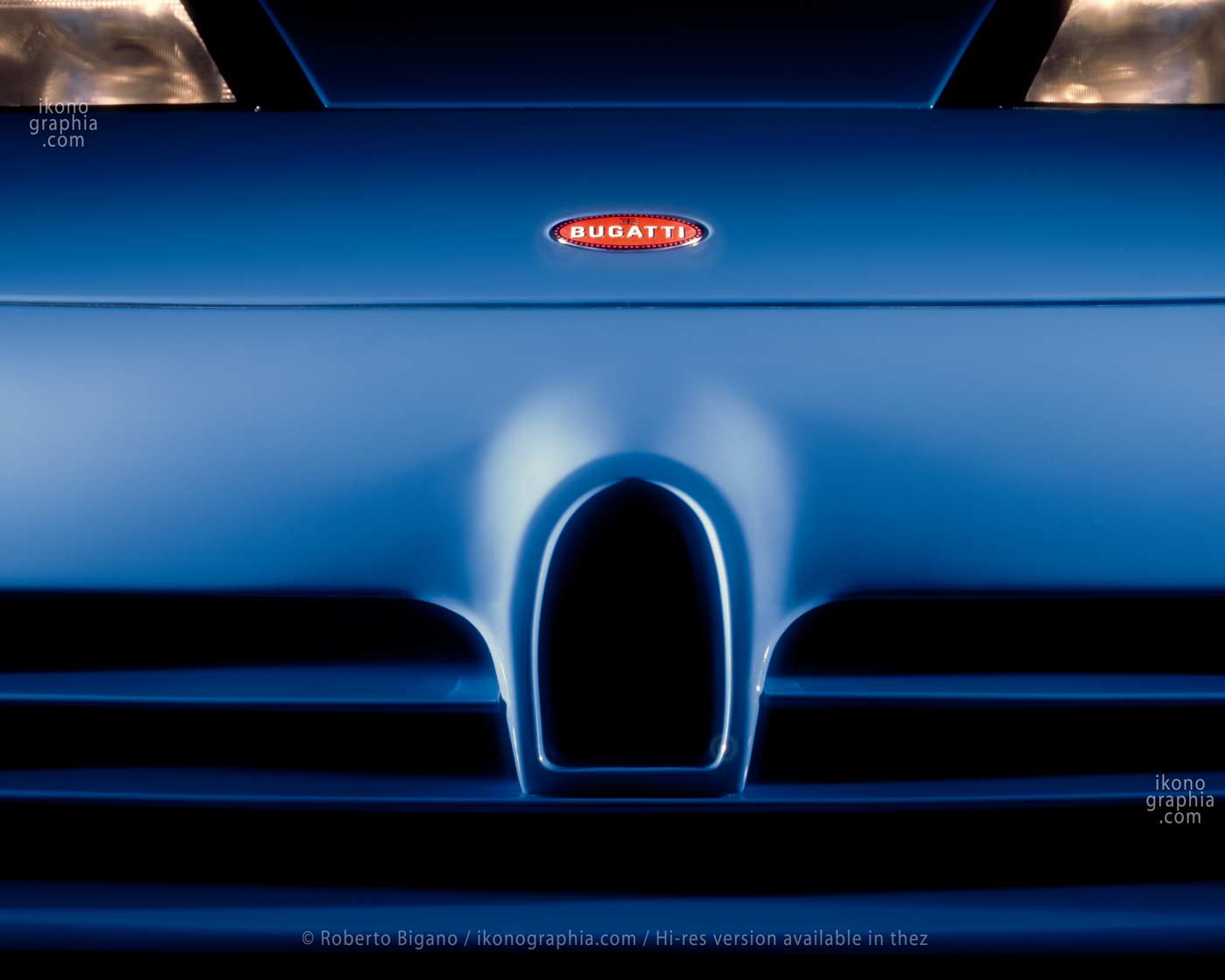
The classic Bugattis had the radiator grill in the front, which was also the symbol of the house. Benedini found this brilliant solution. Photo Roberto Bigano. Buy this image in the ikonographia.com store.

The Bone of Contention.

The classic Bugattis had the radiator grill in the front, which was also the symbol of the house. Romano Artioli believed it essential to include a nod to that grill in the EB 110. Gandini was absolutely against it, arguing that he would harm aesthetics and aerodynamics, but Benedini found a brilliant solution.

L'oggetto della discordia.

Le Bugatti classiche avevano sul frontale il radiatore che era il simbolo della casa. Romano Artioli riteneva indispensabile che, anche nell'EB 110 ci fosse un richiamo a quell'elemento. Gandini era assolutamente contrario, sostenendo che avrebbe inciso negativamente su estetica ed aereodinamica. L'architetto Benedini risolse brillantemente il problema.

 EB110GT — EB110 Supersport — EB112 Images Gallery

Photographs taken by Roberto Bigano from 1990 to 1992.

An impressive view of the Bugatti EB 110 as restyled by Gianpaolo Benedini. Photo Roberto Bigano. Buy this image in the ikonographia.com store.

EB110. 

An impressive view of the Prototype of the Bugatti EB 110 as restyled by Gianpaolo Benedini.

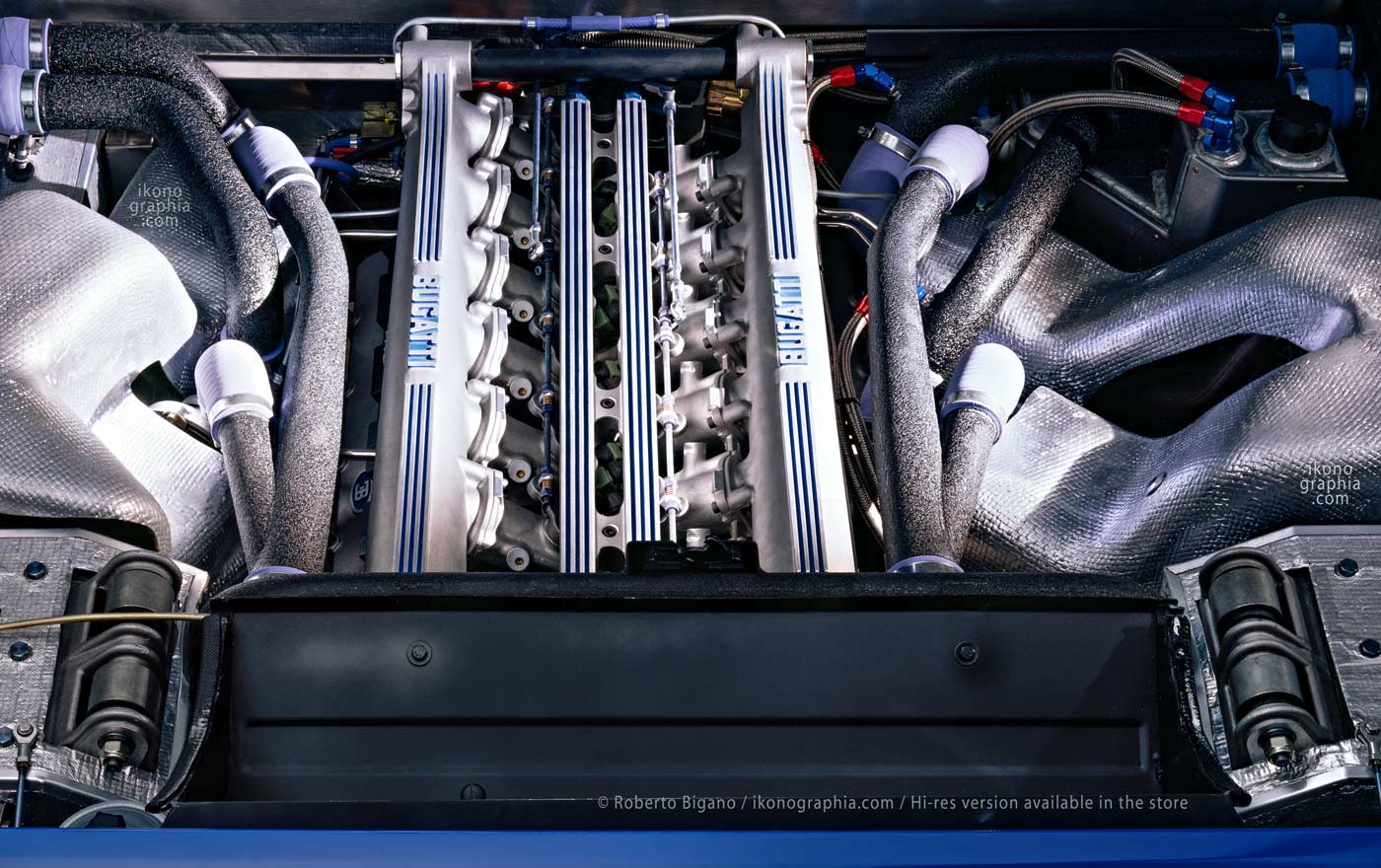
The engine of the Bugatti EB 110. Photo Roberto Bigano. Buy this image in the ikonographia.com store.

EB110. 

The Engine.

The interior of the Bugatti EB110. In the center of the steering wheel, the EB logo. Photo Roberto Bigano. Buy this image in the ikonographia.com store.

EB110. 

The interior of the Bugatti EB110. In the center of the steering wheel, is the EB logo.

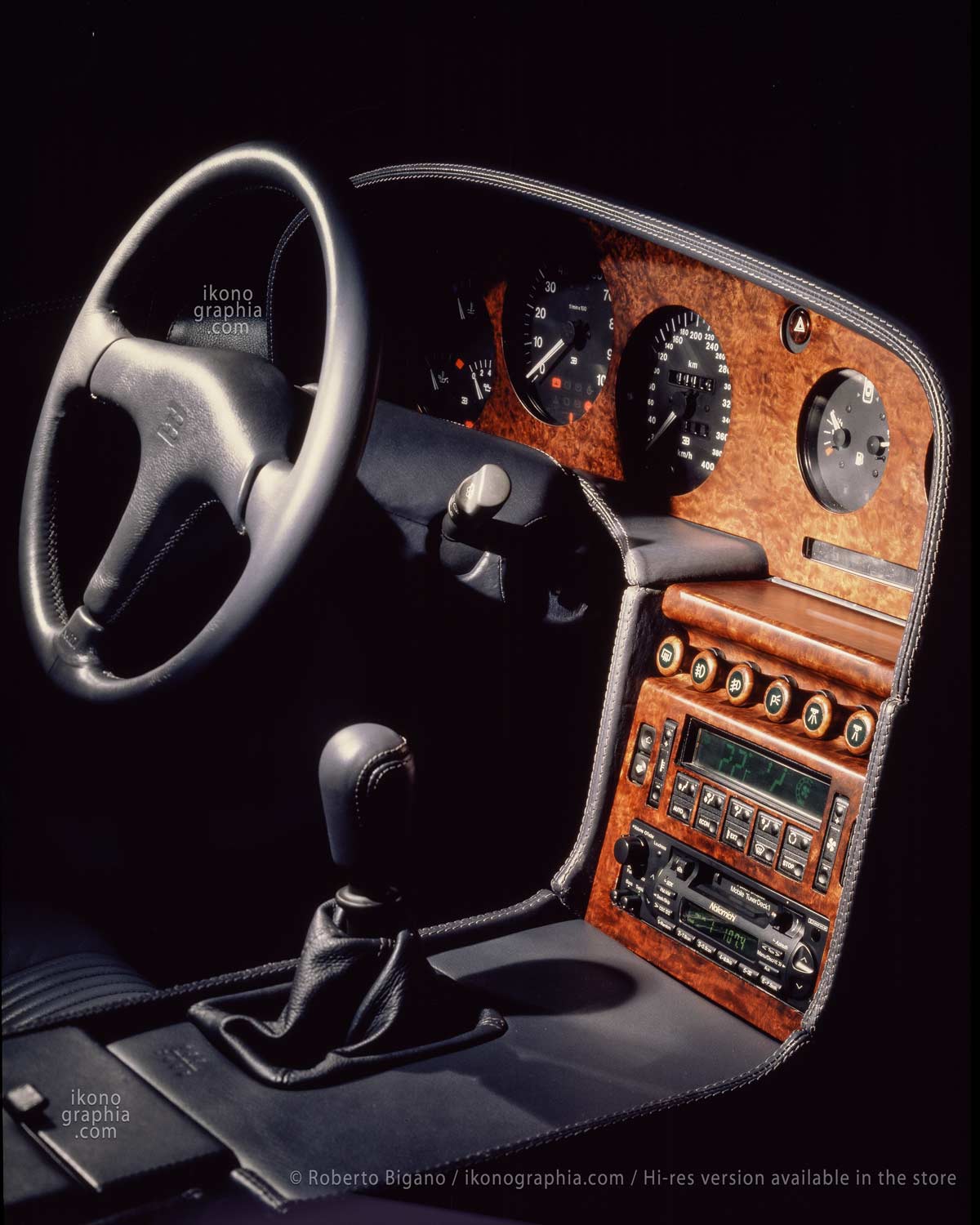
The control panel with the steering wheel with the EB logo and the Nakamichi hi-fi system. Photo Roberto Bigano. Buy this image in the ikonographia.com store.

EB110. 

The control panel with the briar finishes, the steering wheel with the EB logo, and the Nakamichi hi-fi system.

The Bugatti Eb 110 rear wheel. Photo Roberto Bigano. Buy this image in the ikonographia.com store.

The Bugatti Monobloc Cast Aluminum Rear Wheel.

The Cast aluminum wheel was invented by Bugatti and patented in 1924.

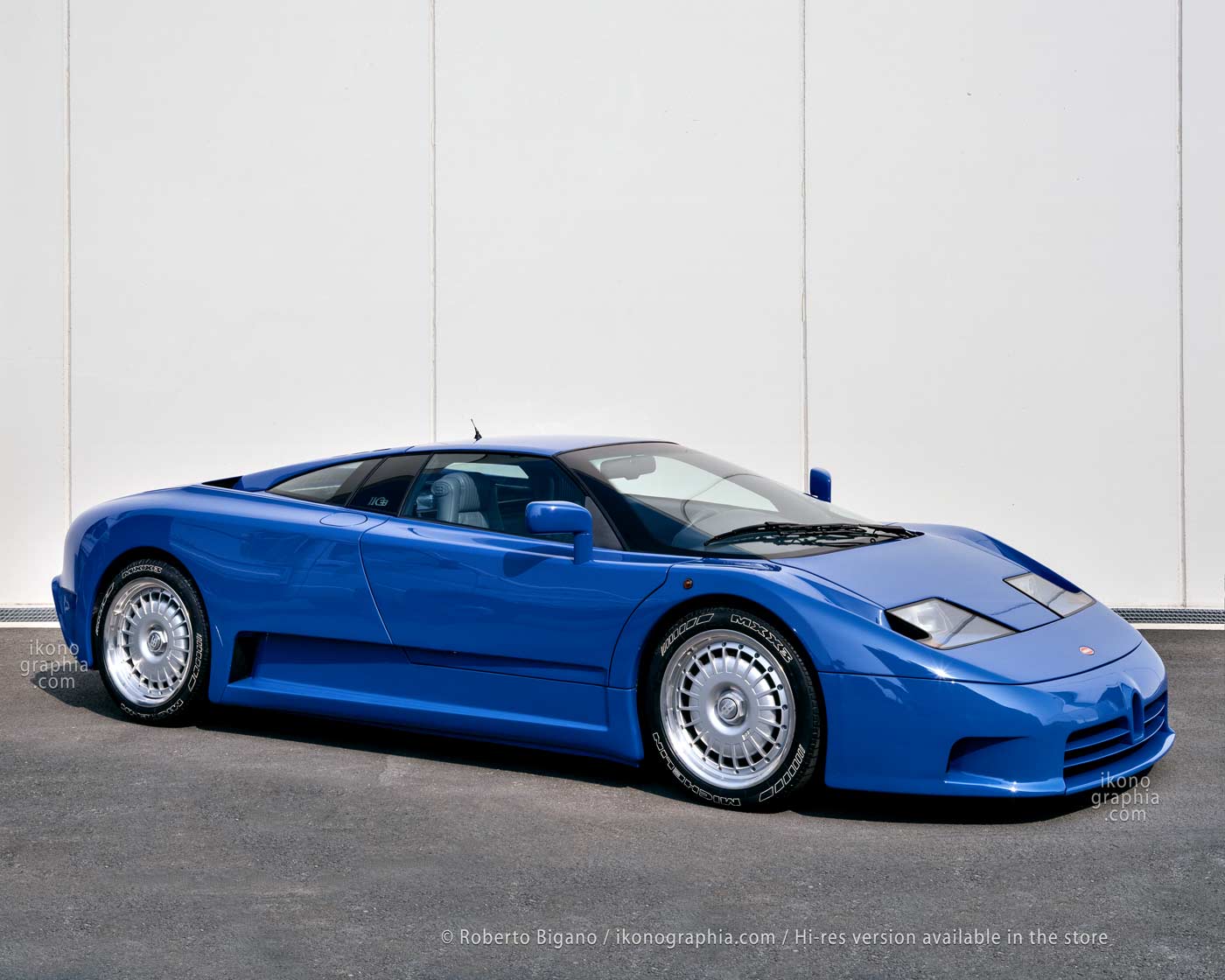
Bugatti EB 110 Gran Turismo. The final version as Restyled by Gianpaolo Benedini. Photo Roberto Bigano. Buy this image in the ikonographia.com store.

Bugatti EB110 GT

Bugatti EB 110 Gran Turismo. The final version as restyled by Gianpaolo Benedini.

Bugatti EB 110 Gran Turismo. The final version as Restyled by Gianpaolo Benedini. Photo Roberto Bigano. Buy this image in the ikonographia.com store.

Bugatti EB110 GT

Bugatti EB 110 Gran Turismo. The final version as restyled by Gianpaolo Benedini.

Coccoi Pintau

Bugatti EB110 GT

Bugatti EB 110 Gran Turismo. The final version as restyled by Gianpaolo Benedini.

Bugatti EB110 Supersport pictured in the futuristic show-room at Campogalliano. Photo Roberto Bigano. Buy this image in the ikonographia.com store.

Bugatti EB110 Supersport.

The Supersport on the rotating platform in the futuristic showroom at Campogalliano.

The front view of the Bugatti EB 112, designed by Giorgetto Giugiaro. Photo Roberto Bigano. Buy this image in the ikonographia.com store.

EB112.

Front view of the Bugatti EB112, designed by Giorgetto Giugiaro, with luxury leather finishes by Poltroon Frau.

Bugatti EB 112. A detail of the striking design by Giorgietto Giugiaro with the catching radiator grill. Photo Roberto Bigano. Buy this image in the ikonographia.com store.

EB112 Horseshoe Grill

A detail of the nose of the EB 112, with the radiator grill taking inspiration from the classic Bugattis.

Copyright Links and Credits

Photography, Copyright & Credits

All photographs © Ikonographia / Roberto Bigano — All Rights Reserved. These images are part of the Ikonographia Visual Archives: Bugatti Automobili & EB110 Archive (1990–1995).

Roberto Bigano served as official photographer for Bugatti Automobili throughout the company's operational years in Campogalliano. This archive was produced from inside the project, with unrestricted access and no editorial constraints. The material is exclusive to Ikonographia and available nowhere else.

Credits & Acknowledgments

Ikonographia gratefully acknowledges the fundamental contribution of Romano Artioli, founder of Bugatti Automobili, and Gianpaolo Benedini, architect and designer of both the Fabbrica Blu and the EB110, without whose vision, trust, and collaboration this archive would not exist.

Excerpts from Romano Artioli's book "Bugatti & Lotus Thriller" are reproduced with the author's authorization.

Terms of Use (Summary)

The images presented in this archive are copyrighted and available for licensed use only through Ikonographia Visual Archives.

You may not download, reproduce, publish, or distribute these images without a valid license. For commercial or editorial licensing, please refer to the product pages or contact Ikonographia directly. A full explanation of licensing terms is available in the Shop / Licensing Information section under "Ikonographia — Standard License" and "Ikonographia — Merchandising & Product Use Licenses."

Ikonographia Mission Statement

Ikonographia is committed to the accurate documentation, preservation, and ethical dissemination of twentieth-century visual culture.

Archival Notes

These photographs were produced between 1990 and 1995 as part of Roberto Bigano's role as official photographer for Bugatti Automobili. The archive documents the factory, the production process, the design evolution, and the people behind one of the most ambitious automotive projects of the late twentieth century.

The story is told from inside: by the founder who initiated the enterprise, the architect-designer who shaped its form, and the photographer who followed the project throughout its development. All images follow Ikonographia's internal archival standards for resolution, color accuracy, and metadata structure to ensure long-term consistency across the collection.

Further Reading (Selected Sources)

EB110GT. The Making of a Dream Car at Bugatti Automobili

EB110GT. The Making of a Dream Car at Bugatti Automobili

EB110GT — The Making of a Dream Car at Bugatti Automobili

Behind the scenes of the EB110 — People, process, and precision

In this second chapter of the Bugatti Automobili story, we move behind the scenes of Bugatti Automobili to follow the making of the EB110 Gran Turismo—from early design decisions to the daily work that transformed an ambitious idea into a functioning automobile.

This was not only a technical process. The workplace had been conceived to place people at the center, encouraging concentration, collaboration, and creative freedom at every stage. Let Romano Artioli tell his story

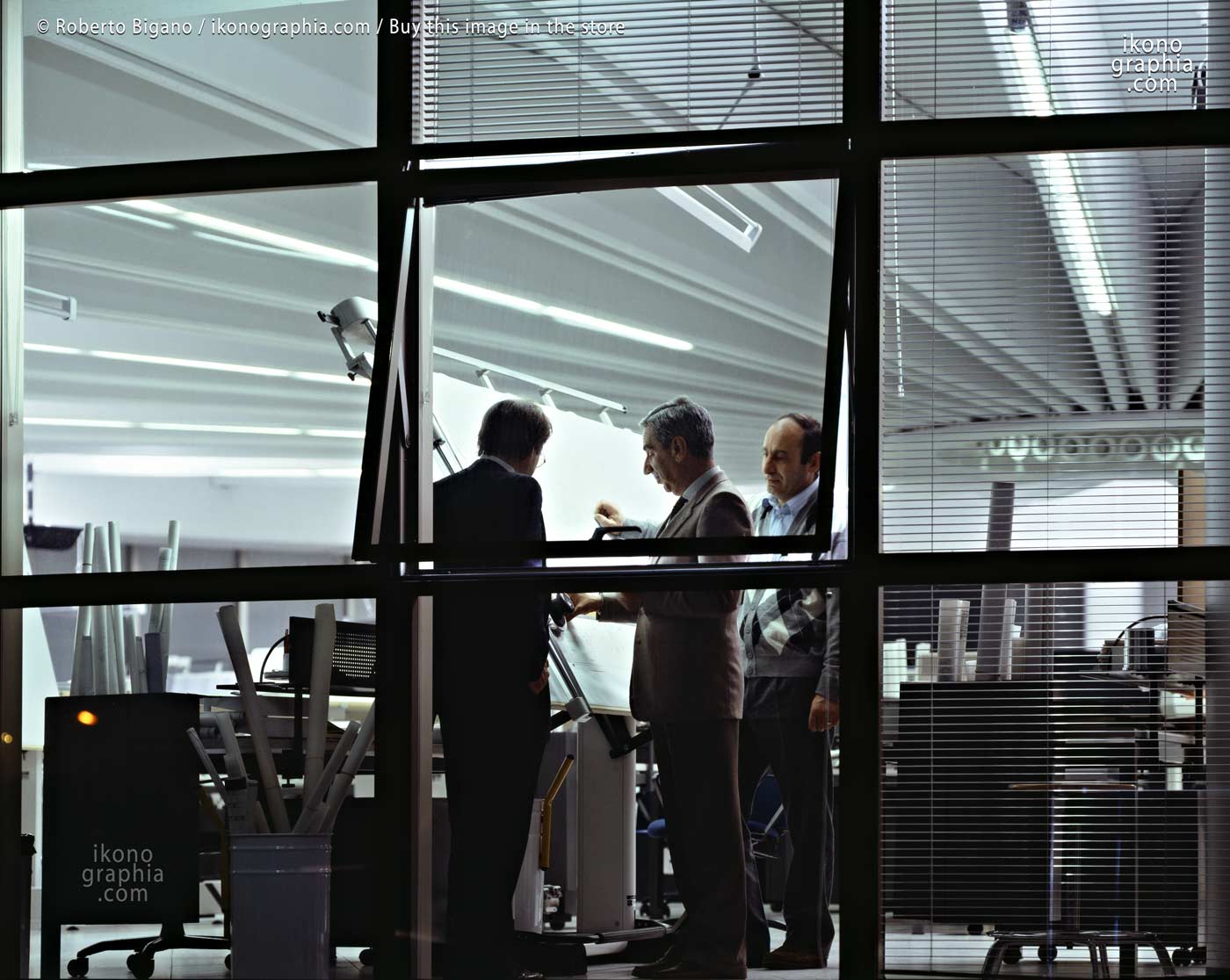
Federico Trombi, Nicola Materazzi and Achille Bevini in the designer’s Building at Bugatti Auromobili. Photo by Roberto Bigano. Buy this image in the ikonographia.com store.

Focusing on the workplace and the human factor

Once the factory was made, the car had to be built.
Follow us in this second episode on Bugatti Automobil, a behind the scene journey in the various design phases that led to the new Gran Turismo’s birth. The human factor was at the center of everything.
Let’s leave it to Romano Artioli to tell the mood that had been created.

Bugatti Automobili was an environment immersed in nature, which stimulated creativity. The entire plant was therefore designed primarily to give technicians maximum comfort and the freedom to express their talent in the best possible way. 

It was exciting to see how everyone was engaged in their work and how carefully they installed or molded the materials with automated equipment. They were a group of engineers who programmed each new process with passion, without any distractions. They took advantage of moments at the lunch table to exchange suggestions and ideas to do better and better. I’d never seen anything like it before: everyone felt privileged because they had the chance to make something unique. They were never tired or stressed. They had entered the world of advanced technology, art and beauty without any pressure.
From Romano Artioli’s book Bugatti & Lotus Thriller.”

Leggi in italiano

Partendo dal fattore umano e ambiente di lavoro.


Fatta la fabbrica, bisognava mettere in atto il sogno di Romano Artioli e costruire la macchina.
Questo è la seconda parte della storia di Bugatti Automobili (qui la prima). E’ un viaggio dietro le quinte sulle varie fasi che hanno creato questa mitica Gran Turismo.
Lasciamo che sia Romano Artioli a raccontare il clima che si era creato.

Questo progetto mi permetteva di coltivare l’attenzione al fattore umano, che per me rimaneva centrale.

Era entusiasmante vedere come tutti si impegnavano nel loro lavoro, con quale attenzione installavano o plasmavano i materiali con le macchine automatiche. Erano un gruppo di tecnici che programmavano con passione ogni nuova lavorazione, senza farsi distrarre da nulla. Approfittavano dei momenti a tavola per scambiarsi suggerimenti e idee per fare sempre meglio. Non avevo mai visto qualcosa di simile: tutti si sentivano privilegiati perché avevano la possibilità di realizzare qualcosa di irripetibile. Non erano mai stanchi o stressati, erano entrati senza alcuna pressione nel mondo della tecnica più avanzata, dell’arte e del bello.

Dallo splendido libro di Romano Artioli: “Bugatti e Lotus thriller”.

Note sulle due immagini di questo capitolo.


1. Il “Reparto Esperienze” al gran completo. Di fronte, il primo prototipo della EB110 disegnato da Marcello Gandini.
2. Lo staff di ingegneri e tecnici: da sinistra Antonio Cesaroni, Oliviero Pedrazzi, Stefano Mion, Federico Trombi, Achille Bevini, Nicola Materazzi, Pavel Reimisch, Tiziano Benedetti.

1936_68 The Bugatti”Reparto Esperienze", Development Divison employees with the first EB110 Prototype as designed by Marcello Gandini. Photo by Roberto Bigano. Buy this image in the ikonographia.com store.

1936_68 The Bugatti ”Reparto Esperienze", Development Divison employees with the first EB110 Prototype as designed by Marcello Gandini. Photo by Roberto Bigano. Buy this image in the ikonographia.com store.

The “Reparto Esperienze” — Development Team and First EB110 Prototype.

Beneath the iconic Bugatti oval and the blue Prove Motori building — the technical and aesthetic heart of Romano Artioli's factory — the entire Reparto Esperienze gathers with the first EB110 prototype, designed by Marcello Gandini.

Engineering staff (left to right): Antonio Cesaroni, Oliviero Pedrazzi, Stefano Mion, Federico Trombi, Achille Bevini, Nicola Materazzi, Pavel Reimisch, Tiziano Benedetti.

The Bugatti Automobili engineering staff. Left to right: Antonio Cesaroni, Oliviero Pedrazzi, Stefano Mion, Federico Trombi, Achille Bevini, Nicola Materazzi, Pavel Reimisch, Tiziano Benedetti. Photo by Roberto Bigano. Buy this image in the ikonographia.com store.

A remarkable concentration of talent in a single frame.

Left to right: Antonio Cesaroni, Oliviero Pedrazzi, Stefano Mion, Federico Trombi, Achille Bevini, Nicola Materazzi, Pavel Reimisch, Tiziano Benedetti.

Working on the Chassis

The chassis was designed by Olivero Pedrazzi and built by the French company Aérospatiale.
It allowed an extremely fast car to grip the road perfectly, but he was also robust to provide improved safety in case of an accident; in other words, the chassis was rigid but also very light.

Pedrazzi, and he alone was the true technical creator of everything in the Bugatti’s bodywork. Pedrazzi was neither an engineer nor a technical expert but a genius with the ability to invent the most effective solutions. He then submitted them to the engineers, who only had to choose the most suitable out of two or three proposals, all impeccably designed.

Leggi in italiano

Il telaio.


Il telaio era una meraviglia. Disegnato da Oliviero Pedrazzi fu costruito dalla famosa azienda francese Aérospatiale.
Rigido ma molto leggero consentiva una perfetta tenuta di strada a un’auto estremamente veloce. Era allo stesso tempo robusto, per maggior sicurezza in caso di incidente.

Il vero artefice di tutto ciò che stava sotto la carrozzeria della Bugatti fu proprio lui, Pedrazzi, non era né ingegnere né perito tecnico, ma era un genio, con la capacità di inventare le soluzioni più efficaci. Le sottoponeva poi agli ingegneri, che dovevano solo scegliere quella più adatta, tra due o tre proposte, tutte disegnate in modo impeccabile.

Note sulle due immagini di questo capitolo.


1. Il banco di prova e misurazione con il telaio disegnato dalla azienda francese Aérospatiale.
2. Al lavoro per collegare telaio e roll-bar con la supervisione di Federico Trombi.

The measurements test-bench with the carbon fiber chassis designed by Bugatti Automobili and built expressly by the French company Aerospatiale. Photo by Roberto Bigano. Buy this image in the ikonographia.com store.

The measurements test-bench with the EB110 carbon fiber chassis built by Aérospatiale

Designed by Bugatti Automobili and built expressly by the French company Aérospatiale.

Such a powerful car required a chassis that would allow an extremely fast car to grip the road perfectly, but which also robust so as to provide improved safety in case of an accident; in other words, the chassis had to be rigid but also very light.

Connecting the roll-cage to the chassis of the Bugatti EB110. Photo by Roberto Bigano. Buy this image in the ikonographia.com store.

Connecting the EB110 roll-cage to the chassis under the supervision of Federico Trombi

A critical assembly step where precision and responsibility converge.

Working on the Engine

With five valves per cylinder, the 12-cylinder aluminum and magnesium engine block was designed in a single piece containing the six-speed transmission and two differentials: a marvel that surprised the engineering departments of all the major car manufacturers.
For the first time in such a powerful car, Pedrazzi was able to create synchronizers that allowed the gears to be changed without the slightest effort, a step forward for all manufacturers. The central differential, which provided a balanced four-wheel drive, driving pleasure, and safety under all conditions, even the most extreme, was another Oliviero invention.

Leggi in italiano

Il motore.


Il blocco del motore di alluminio e magnesio a 12 cilindri, con cinque valvole per cilindro, era stato disegnato in un unico pezzo che conteneva la trasmissione a sei marce e due differenziali: una meraviglia che sorprese tutti gli uffici tecnici delle grandi case automobilistiche. Pedrazzi riuscì a realizzare, per la prima volta in un’auto così potente, dei sincronizzatori che permettevano di cambiare le marce senza il minimo sforzo, un passo avanti per tutti i costruttori. Il differenziale centrale che assicurava trazione bilanciata alle quattro ruote, piacere di guida e sicurezza in tutte le condizioni, anche le più estreme, era un’altra invenzione di Oliviero.

Note sulle quattro immagini di questo capitolo.


1. Il motore della Bugatti EB110, un 12 cilindri a V di 60º, in monoblocco in lega di alluminio e magnesio e testate in alluminio e titanio, è sistemato in posizione posteriore centrale longitudinale che ingloba il cambio e parte della trasmissione.
Distribuzione a due alberi a camme in testa per bancata, con 5 valvole per cilindro. La cilindrata è di 3.500 cm³, l' alesaggio 81,0 mm e  la corsa 56,6 mm. Eroga una potenza di 560 CV a 8.000 giri/min.
2. Il dispositivo per verificare la perfetta esecuzione del supporto degli assi a cammes di azionamento delle trenta valvole per testata.
3 e 4. Testando il motore sotto massimo sforzo.

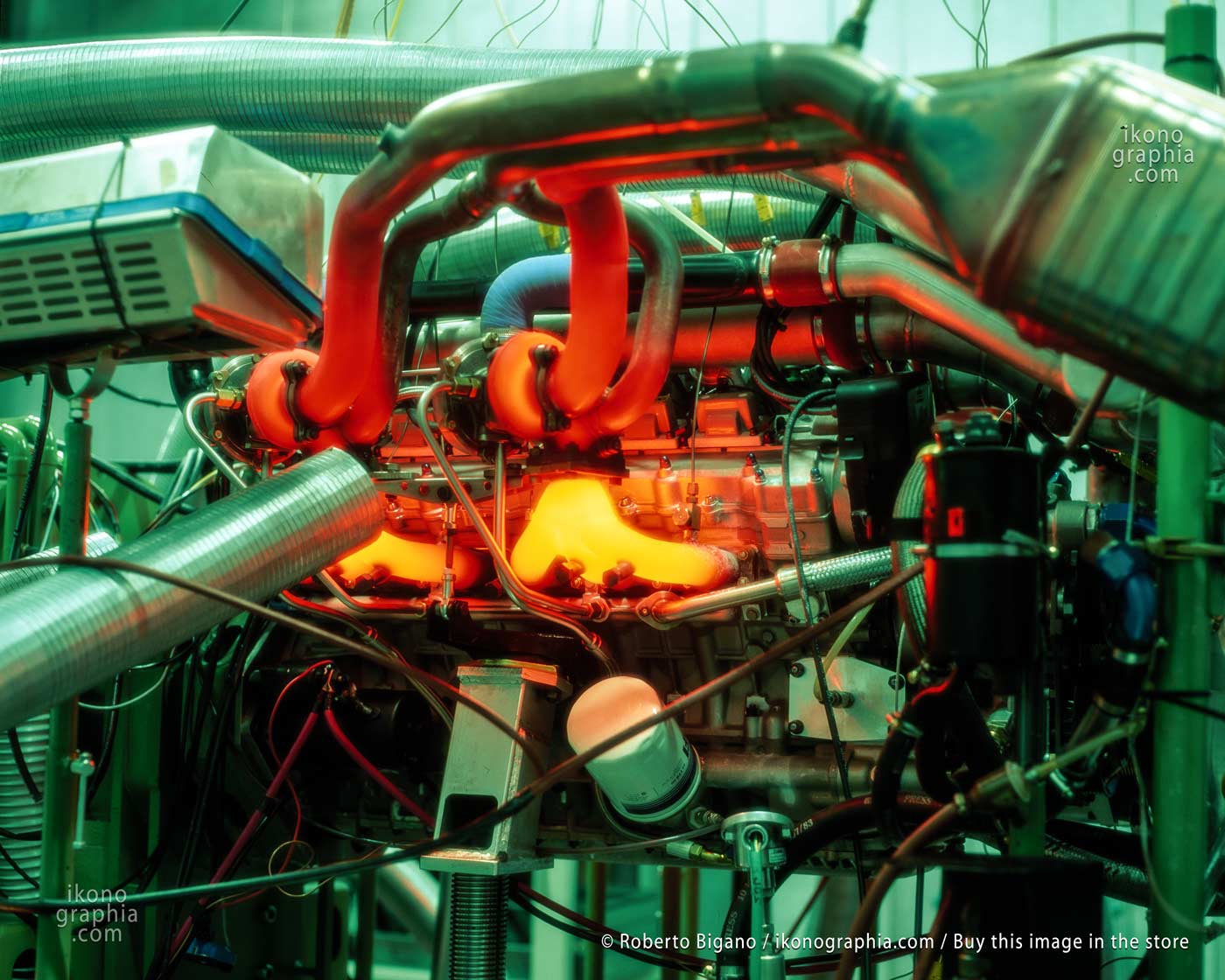
The Bugatti EB110 engine. A 3.5 L Bugatti quad-turbocharged V12. With five valves per cylinder, the 12-cylinder aluminum and magnesium engine block was designed in a single piece containing the six-speed transmission and two differentials: a marvel that surprised all the major car engineering departments, manufacturers. Photo by Roberto Bigano. Buy this image in the ikonographia.com store.

The 3.5 L Bugatti EB110 quad-turbocharged V12 engine

The 3.5 L Bugatti EB110 quad-turbocharged V12 engine. With five valves per cylinder, the 12-cylinder aluminum and magnesium engine block was designed in a single piece containing the six-speed transmission and two differentials.

This marvel surprised the engineering departments of all the major car manufacturers.

1936_76 Verifying the perfect execution of the support of the cam axes driving the thirty valves per head. Photo by Roberto Bigano. Buy this image in the ikonographia.com store.

Verifying camshaft support for the thirty valves per head — Bugatti EB110

A level of control pushed to extremes.

Verifying the perfect execution of the support of the cam axes driving the thirty valves per head.

1936_75 Testing the Bugatti EB1100 engine under maximum effort. Photo by Roberto Bigano. Buy this image in the ikonographia.com store.

Testing the Bugatti EB 110 engine under maximum effort.

Engineering pushed to its breaking point — by design.

1936_73 Testing the Bugatti EB1100 engine under maximum effort. Photo by Roberto Bigano. Buy this image in the ikonographia.com store.

Testing endurance under extreme thermal and mechanical stress.

Engineering pushed to its breaking point — by design.

Working on the Body

The birth was long and complicated. The first version was designed by Marcello Gandini. Still his bodywork proposal did not satisfy Romano Artioli. The front and tail were very wide and flat, as dictated by the fashion of the time, which for me was already largely outdated. Unfortunately, Gandini refused to modify it.

I asked Giampaolo Benedini to intervene and work quickly with the model designers to create a new and pleasing shape. He was very good with this as well, even though he was an architect and not a car designer. I think it was the first and only time that an architect has even attempted to create the style for a Gran Turismo car-not to mention the Bugatti rebirth!

Leggi in italiano

Il design della carrozzeria


Il parto fu lungo e complicato. La prima versione fu disegnata da Marcello Gandini. Potete vederla nella foto di gruppo con il reparto esperienze. La sua proposta però non soddisfala Romano Artioli. Muso e retro erano “piatti”, come di moda a quel tempo, che “secondo me erano largamente datati”. Sfortunatamente Gandini rifiuto di effettuare modifiche sostanziali.

“Pregai quindi Giampaolo Benedini di intervenire e di lavorare velocemente con i modellisti per realizzare una nuova e bella forma. Fu molto bravo anche in questo caso, nonostante fosse architetto e non stilista d’auto. Credo che sia stata la prima e unica volta che un architetto si sia cimentato anche a realizzare lo stile di un’auto Gran Turismo, per giunta della Bugatti della rinascita! Benedini fu capace di ammorbidire la linea e di rifinire la carrozzeria molto bene, inserendo anche la famosa calandra Bugatti, in versione ridotta. Anche l’aerodinamica era perfetta, senza turbolenze laterali e con le giuste pressioni sugli assi, grazie all’alettone retrattile.

Note sulle quattro immagini di questo capitolo.


1. Gandini, Benedini ed Artioli discutono animatamente sulle modifiche richieste.
2. Al lavoro per le ultime rifiniture del modello in legno.
3. Il modello visto di tre quarti da dietro.
4. Vista posteriore

Marcello Gandini, Romano Artioli, and Gianpaolo Benedini heatedly discussing the design with the wooden model of the EB110. Photo by Roberto Bigano. Buy this image in the ikonographia.com store.

Design Debate Around the EB110 Wooden Model.

Marcello Gandini, Romano Artioli, and Gianpaolo Benedini gathered around the full-scale wooden model of the EB110 during an intense design review at Campogalliano.

The image captures a decisive moment in the project’s development, when vision, engineering, and architecture confronted one another directly—revealing both the creative energy and the underlying tensions that shaped the car’s final form.

1937_37 The last refinements to the wooden model of the Bugatti EB110 at Campogalliano. Photo by Roberto Bigano. Buy this image in the ikonographia.com store.

Form adjusted in real time under deadline pressure — Wooden model side view

Campogalliano. Final surface refinements underway on the full-scale wooden model during the last phase of the EB110’s development.

The blurred figure records active work in progress, marking the urgency and intensity of the final design phase.

1936_64 The final version of the wooden model of the EB1110. Three-quarter rear view. Photo by Roberto Bigano. Buy this image in the ikonographia.com store.

The moment when design decisions become fixed — Wooden model three-quarter rear view.

Campogalliano. The completed wooden model of the Bugatti EB110 photographed after the final refinements.

This view documents the definitive rear proportions and surface transitions that guided the subsequent engineering and production phases.

1936_65 The wooden model of the EB1110. Rear view. Photo by Roberto Bigano. Buy this image in the ikonographia.com store.

Symmetry, balance, and final verification — Wooden model rear view.

Captured after completion, this image records the resolved geometry of the rear fascia, exhaust layout, and overall stance before translation into functional prototypes.

Optimizing Aerodynamics at Pininfarina Wind Tunnel

The birth was long and complicated. The first version was designed by Marcello Gandini. Still his bodywork proposal did not satisfy Romano Artioli. The front and tail were very wide and flat, as dictated by the fashion of the time, which for me was already largely outdated. Unfortunately, Gandini refused to modify it.

I asked Giampaolo Benedini to intervene and work quickly with the model designers to create a new and pleasing shape. He was very good with this as well, even though he was an architect and not a car designer. I think it was the first and only time that an architect has even attempted to create the style for a Gran Turismo car-not to mention the Bugatti rebirth!

Leggi in italiano

Ottimizzando l’aerodinamica alla Galleria del vento di Pininfarina.


Tutte le migliorie della carrozzeria furono realizzate nella più nota delle gallerie del vento. Pininfarina è, sino dal 1972 un Centro di eccellenza nella ricerca e sviluppo nel campo della aerodinamica e aeroacustica.

Note sulle cinque immagini di questo capitolo.


1-5.  Al lavoro per rifinire la carrozzeria alla Galleria del Vento di Pininfarina.

1937_10 Optimizing the EB110 aerodynamics in the Pininfarina Wind Gallery. Photo by Roberto Bigano. Buy this image in the ikonographia.com store.

The full-scale model of the Bugatti EB110 positioned inside the Pininfarina Wind Tunnel during aerodynamic testing.

Active since 1972, the facility was a recognized center of excellence for research in aerodynamics and aeroacoustic.

1937_10 Optimizing the EB110 aerodynamics in the Pininfarina Wind Gallery. Photo by Roberto Bigano. Buy this image in the ikonographia.com store.

Engineering decisions made in real time.

Engineers working around the Bugatti EB110 model during aerodynamic testing at the Pininfarina Wind Tunnel. Human presence and motion reflect the adjustment phase of the process, where measurements, corrections, and refinements converge.

1937_08 The EB110 Model in the Pininfarina Wind Gallery, side view. Photo by Roberto Bigano. Buy this image in the ikonographia.com store.

Side view of the Bugatti EB110 model undergoing aerodynamic evaluation at the Pininfarina Wind Tunnel.

This configuration highlights the car’s proportions, surface continuity, and airflow behavior along the body and lower sections.

1937_12 The EB110 Model in the Pininfarina Wind Gallery rear view. Photo by Roberto Bigano. Buy this image in the ikonographia.com store.

Rear view analyzing wake, turbulence, and rear aerodynamic efficiency at the Pininfarina Wind Tunnel.

The test focuses on airflow separation, rear turbulence, and the aerodynamic behavior of the exhaust and diffuser area.

Work in progress backstage

Peeking during works. A random backstage reportage.

Leggi in italiano

Lavori in corso.


Sbirciando dietro le quinte durante i lavori.

1937_60 Works in progress at Bugatti Automobili. . Photo by Roberto Bigano. Buy this image in the ikonographia.com store.

Mechanical layout exposed before final integration.

Rear view of the EB110 prototype raised on a workshop lift, with body panels removed to allow access to drivetrain and cooling components.

This stage reveals the provisional nature of early assemblies, where systems remained accessible for adjustment and testing.

1937_59 Works in progress at Bugatti Automobili. Photo by Roberto Bigano. Buy this image in the ikonographia.com store.

Form, structure, and mechanics aligned.

Technicians working beneath the raised body and open doors of the EB110 prototype designed by Marcello Gandini.

The photograph captures a transitional moment in which structural elements, bodywork, and mechanical systems were refined simultaneously.

1937_58 Works in progress at Bugatti Automobili. Photo by Roberto Bigano. Buy this image in the ikonographia.com store.

Early Assembly of the EB110 Prototype.

Technicians working on the chassis.

1937_56 Works in progress at Bugatti Automobili. Photo by Roberto Bigano. Buy this image in the ikonographia.com store.

Raw EB110 Body Under Inspection.

The unfinished aluminum body of the EB110 prototype during manual inspection and fitting.

At this stage, surface treatment and final detailing had not yet begun, allowing direct evaluation of form, tolerances, and construction quality.

1937_61 Works in progress at Bugatti Automobili. Photo by Roberto Bigano. Buy this image in the ikonographia.com store.

Parallel development of a singular vision.

Two EB110 prototypes representing Marcello Gandini’s original design version seen simultaneously inside the workshop.

The presence of multiple bodies illustrates the iterative nature of the project, where alternative solutions were developed and compared side by side.

1936_97 The EB110 ready to be revealed in the futuristic Circular Building’s showroom. Photo by Roberto Bigano. Buy this image in the ikonographia.com store.

Bugatti EB110, First Model, Prototype, EB110 Supersport, EB11

Unveiling the EB110 — EB110 Supersport - EB112

The development of the car, from the Epowood model with cover wheel to the production model of the EB110, the EB110 Supersport and the Giugiaro EB112.

Caption for the image above — Anticipation staged as spectacle.

The EB110 fully veiled inside the futuristic Circular Building showroom, moments before its public presentation. The controlled lighting and theatrical setting emphasized suspense and symbolism, framing the car as an event rather than a product.

The official unveiling took place on September 15, 1991, simultaneously at Versailles and in front of the Grande Arche de La Défense in Paris, exactly 110 years after Ettore Bugatti’s birth.

Caption for the featured Image — Engineers Working Late at Bugatti Automobili

Federico Trombi, Nicola Materazzi, and Achille Bevini working late inside the futuristic designers’ building at Bugatti Automobili.

Tight development deadlines often extended work well beyond regular hours, reflecting the intensity and ambition driving the EB110 project.

Copyright Links and Credits

Photography, Copyright & Credits

All photographs © Ikonographia / Roberto Bigano — All Rights Reserved. These images are part of the Ikonographia Visual Archives: Bugatti Automobili & EB110 Archive (1990–1995).

Roberto Bigano served as official photographer for Bugatti Automobili throughout the company's operational years in Campogalliano. This archive was produced from inside the project, with unrestricted access and no editorial constraints. The material is exclusive to Ikonographia and available nowhere else.

Credits & Acknowledgments

Ikonographia gratefully acknowledges the fundamental contribution of Romano Artioli, founder of Bugatti Automobili, and Gianpaolo Benedini, architect and designer of both the Fabbrica Blu and the EB110, without whose vision, trust, and collaboration this archive would not exist.

Excerpts from Romano Artioli's book "Bugatti & Lotus Thriller" are reproduced with the author's authorization.

Terms of Use (Summary)

The images presented in this archive are copyrighted and available for licensed use only through Ikonographia Visual Archives.

You may not download, reproduce, publish, or distribute these images without a valid license. For commercial or editorial licensing, please refer to the product pages or contact Ikonographia directly. A full explanation of licensing terms is available in the Shop / Licensing Information section under "Ikonographia — Standard License" and "Ikonographia — Merchandising & Product Use Licenses."

Ikonographia Mission Statement

Ikonographia is committed to the accurate documentation, preservation, and ethical dissemination of twentieth-century visual culture.

Archival Notes

These photographs were produced between 1990 and 1995 as part of Roberto Bigano's role as official photographer for Bugatti Automobili. The archive documents the factory, the production process, the design evolution, and the people behind one of the most ambitious automotive projects of the late twentieth century.

The story is told from inside: by the founder who initiated the enterprise, the architect-designer who shaped its form, and the photographer who followed the project throughout its development. All images follow Ikonographia's internal archival standards for resolution, color accuracy, and metadata structure to ensure long-term consistency across the collection.

Further Reading (Selected Sources)

American Mannequins — Journey into Hyperreality (1982–1988)

American Mannequins — Journey into Hyperreality (1982–1988)

American Mannequins — Journey into Hyperreality (1982–1988)

Artificial bodies and performative realism in American retail display.

Between 1982 and 1988, American shop windows increasingly adopted mannequins modeled for presence rather than display. Lifelike faces, controlled gestures, and carefully staged interiors transformed retail figures into instruments of visual persuasion, occupying a space where realism no longer represented reality but actively produced it.

August 1984 - Beverly Hills, California - From "Plastic Girls" series. A forty-year project by the Italian photographer Roberto Bigano documenting mannequins.

Photographed from the street without staged intervention, the images were made using a 4×5 view camera, a process that imposed slowness, distance, and sustained attention. In this context, mannequins emerge not as neutral supports for clothing, but as performative bodies through which American hyperreality takes shape.

These photographs belong to "Plastic Girls: 50 Years of Artificial Beauty", a long-term photographic project developed over nearly five decades, in which shop windows are approached as a continuous site of cultural observation.

August 1982 - Rodeo Drive, Beverly Hills, California. - From "Plastic Girls" series. Photo Roberto Bigano.

August 1982
Beverly Hills, United States — Rodeo Drive.

The hyper-detailed facial modeling and naturalistic stance collapse the distance between mannequin and living figure. The pose signals an early movement toward simulated presence, where realism begins to replace display as the dominant visual language.

 Featured  image above:


August 1984 — Rodeo Drive — Beverly Hills, United States.

An earlier generation of mannequin carving, distinguished by sculpted features rather than molded realism.
The face—particularly the mouth and eyes—retains a hand-shaped expressiveness, poised between elegance and emotional distance.

Set against the quiet intrusion of national symbolism, the tilted head and relaxed arm introduce a note of vulnerability, transforming the display into a composed study of desire and aspiration.

August 1984 - Melrose Ave. Hollywood, California - From "Plastic Girls" series. Photo Roberto Bigano

August 1982.
Hollywood, United States — Melrose Avenue.

Here the mannequin recedes into light and shadow, its presence shaped more by illumination than form. The body becomes a graphic element within the window, signaling a shift toward cinematic display and atmospheric staging rather than direct representation.

August 1984 - Santa Monica Blvd. Hollywood, California - From "Plastic Girls" series. Photo Roberto Bigano

August 1984.
Los Angeles, United States — Santa Monica Blvd.

High-contrast materials, confrontational styling, and rigid posture define a form of West Coast display that flirts with provocation rather than elegance.

Set against industrial plastic backdrops, the mannequin stages the body as surface and attitude—borrowing visual cues from underground fashion, fetish aesthetics, and club culture.

August 1984 - Santa Monica Blvd. Los Angeles, California - From "Plastic Girls" series. Photo Roberto Bigano.

August 1982
Los Angeles, United States — Santa Monica Blvd.

Bold chromatic contrasts and graphic styling echo the visual optimism surrounding the Los Angeles Olympics.

Commercial display mirrors a broader corporate aesthetic, where color signals confidence and spectacle.

August 1983 - Boca Raton, Florida. - From "Plastic Girls" series..Photo Roberto Bigano.

August 1983 — Boca Raton, Florida

Close-up with glasses and red lips, photographed on 4×5" film with a 45-minute exposure.

The view camera required carefully balanced composition on the ground glass—even more critical with such a challenging long exposure.

August 1985 - Sunset Strip, Hollywood, California - From "Plastic Girls" series.. Photo Roberto Bigano.

August 1985.
Suset Strip — Hollywood, United States

An elongated posture and stylized expression detach the mannequin from narrative context.
Reduced in scale, the figure reads as an object of study rather than a theatrical presence.

August 1985 - Beverly Hills, California - From "Plastic Girls" series. Photo Roberto Bigano.

August 1985 —Two Cowgilrs, Beverly Hills, United States

Two identical mannequins in cowboy costume, arms raised. Artificial femininity performing a national identity.

August 1985 - Sunset Strip, Hollywood, California - From "Plastic Girls" series. Photo Roberto Bigano.

August 1985
Hollywood, United States — Elegant shop on Sunset Strip.

The hyperreal modeling of the face and the restrained, naturalistic pose collapse the distance between mannequin and living figure. Rather than theatrical display, the figure conveys a quiet, inward presence, signaling the rise of psychological realism in mid-1980s American shop-window design.

August 1985 - J. Magnin Dept. Store, Beverly Hills, California - From "Plastic Girls" series. Photo Roberto Bigano.

August 1985
Beverly Hills, United States — J. Magnin Dept Store

Hyperreal facial modeling, refined posture, and controlled lighting elevate the mannequin beyond display into a near-portrait.
Luxury retail adopts the visual language of high fashion photography, collapsing the distance between artificial figure and idealized reality.

August 1988. Senter & Crunes Dept Store. Rockland, Maine. From "Plastic Girls" series. Photo Roberto Bigano.

August 1988 — Rockland, Maine, United States — Senter & Crunes Dept. Store.

The contrast between photographic portrait and mannequin construction foregrounds the tension between lived presence and manufactured realism.

August 1988. A Calvin Klein Window at Lord & Taylor. New York City. Photo Roberto Bigano.

August 1988 — New York City — Lord & Taylor.

The display aligns American fashion with institutional recognition, as Lord & Taylor applauds American design through the work of Calvin Klein, presenting fashion as cultural achievement rather than seasonal novelty.

August 1988. Altman's Dept. Store. New York City. From "Plastic Girls" series. Photo Roberto Bigano.

August 1988 —  Beverly Hills, California — Altman’s Dept. Store

The extended tonal range—from luminous silk highlights to dense, articulated blacks—supports precise chromatic balance and compositional clarity.
Technical fidelity becomes inseparable from the image’s aesthetic authority, reinforcing realism as a constructed visual language.

0419-13 Trendy dummies, West Berlin 1980, Germany, February 1980 | From "Plastic Girls" series. Photo by Roberto Bigano. Buy this image in the ikonographia.com

Plastic Girls — Glamour, Aggression, and Display (1980–1997)

A shared escalation toward excess, beyond style, geography, or chronology.

This chapter documents the moment when artificial femininity becomes overtly cosmetic, sexualized, and confrontational. .

Copyright, Links And Credits

Photography, Copyright & Credits

All photographs © Ikonographia / Roberto Bigano — All Rights Reserved.
These images are part of the Ikonographia Visual Archives: — Plastic Girls: 50 Years of Artificial Beauty —  Plastic Girls / Mannequins Archive (1978–2026).

Terms of Use (Summary)

The images presented in this archive are copyrighted and available for licensed use only through Ikonographia Visual Archives.

You may not download, reproduce, publish, or distribute these images without a valid license. For commercial or editorial licensing, please refer to the product pages or contact Ikonographia directly. A full explanation of licensing terms is available in the Shop / Licensing Information section under "Ikonographia — Standard License" and "Ikonographia — Merchandising & Product Use Licenses"

Ikonographia Mission Statement

Ikonographia is committed to the accurate documentation, preservation, and ethical dissemination of twentieth-century visual culture.

Archival Notes — Plastic Girls: 50 Years of Artificial Beauty

This archive began in 1978 as a street photography project and is still ongoing.
All images were taken from public streets through shop-window glass without special access, permissions, or staging.

The archive's coherence was recognized retrospectively—only years later, during high-resolution digitization, did isolated images reveal themselves as a continuous visual record spanning nearly fifty years. The project documents mannequins as cultural artifacts: their evolving materials, poses, facial treatments, and display contexts across changing urban and commercial landscapes.

All images follow Ikonographia's internal archival standards for resolution, color accuracy, and metadata structure to ensure long-term consistency across the collection.

Further Reading — Selected Sources

  • Plastic Girls (1978-2011), by Roberto Bigano — A photographic monograph collecting earlier phases of this archive, published as a limited edition on Blurb.
US Bald Eagle Emblem in 1930s Art Deco Architecture

US Bald Eagle Emblem in 1930s Art Deco Architecture

Roberto Bigano

Apr 19, 2021

Art Deco Bald Eagle - U.S. Courthouse, El Paso, Texas 1922 - Carol M. Highsmith

1936 U.S. Courthouse Eagle Detail, El Paso, Texas. Neoclassical, Art Deco designed by architect McGhee Fraser Lippencott. BUY A FINE ART PRINT

The US Emblem in the Art Deco architecture. By Carol M. Highsmith


Here an impressive selection of clean and essential pictures on the U.S. Symbol in US Courthouses and public buildings built from 1929 to 1939. All pictures, by Carol M. Highsmith are taken with a large-format view camera and the most recent with the finest professional digital equipment.

Art Deco Bald Eagle - Art Deco Bald Eagle - U.S. Courthouse, El Paso, Texas 1922 - Carol M. Highsmith

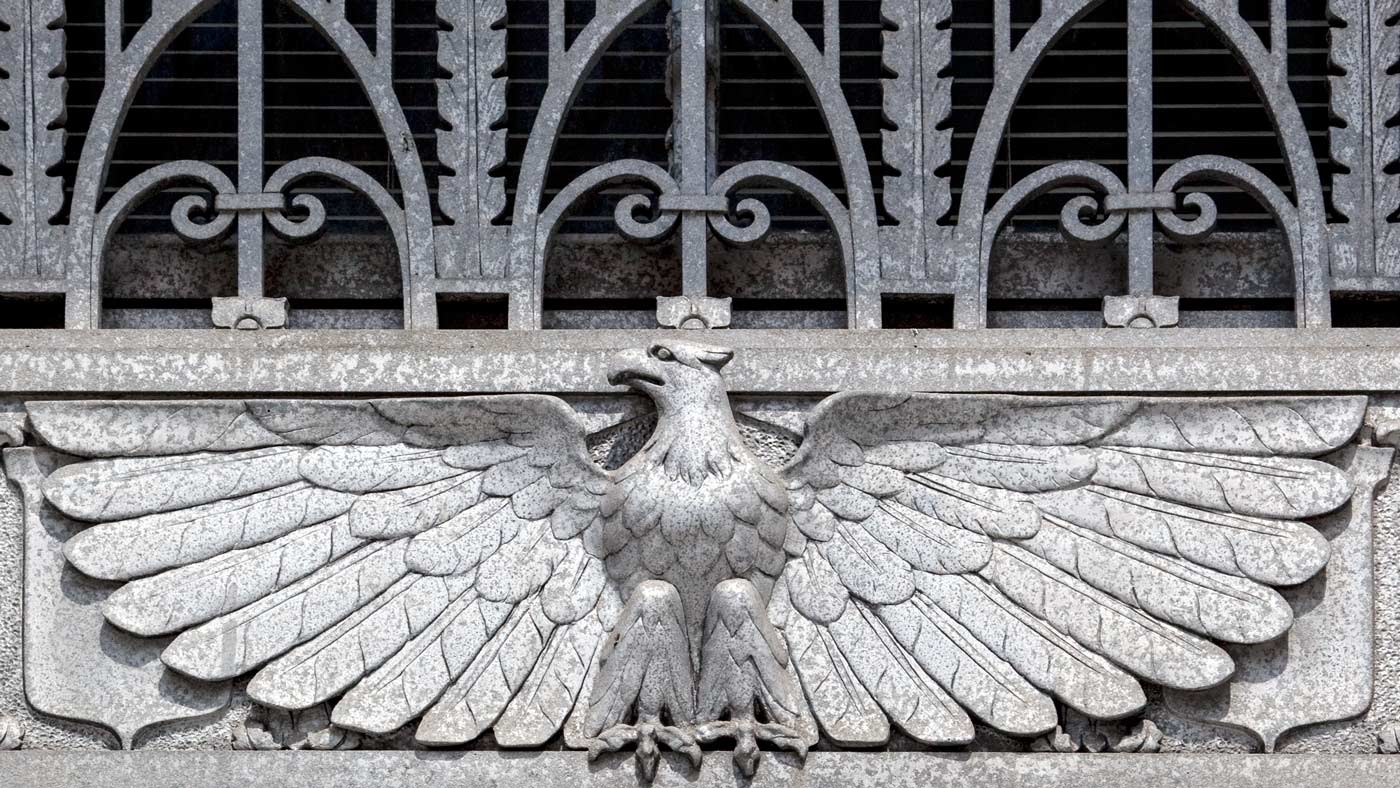
1931. Eagle detail on the Colorado Building, Washington, D.C. Designed by architect Ralph S. Townsend.

BUY FINE-ART PRINT

Interior grill detail, James T. Foley U.S. Post Office and Court

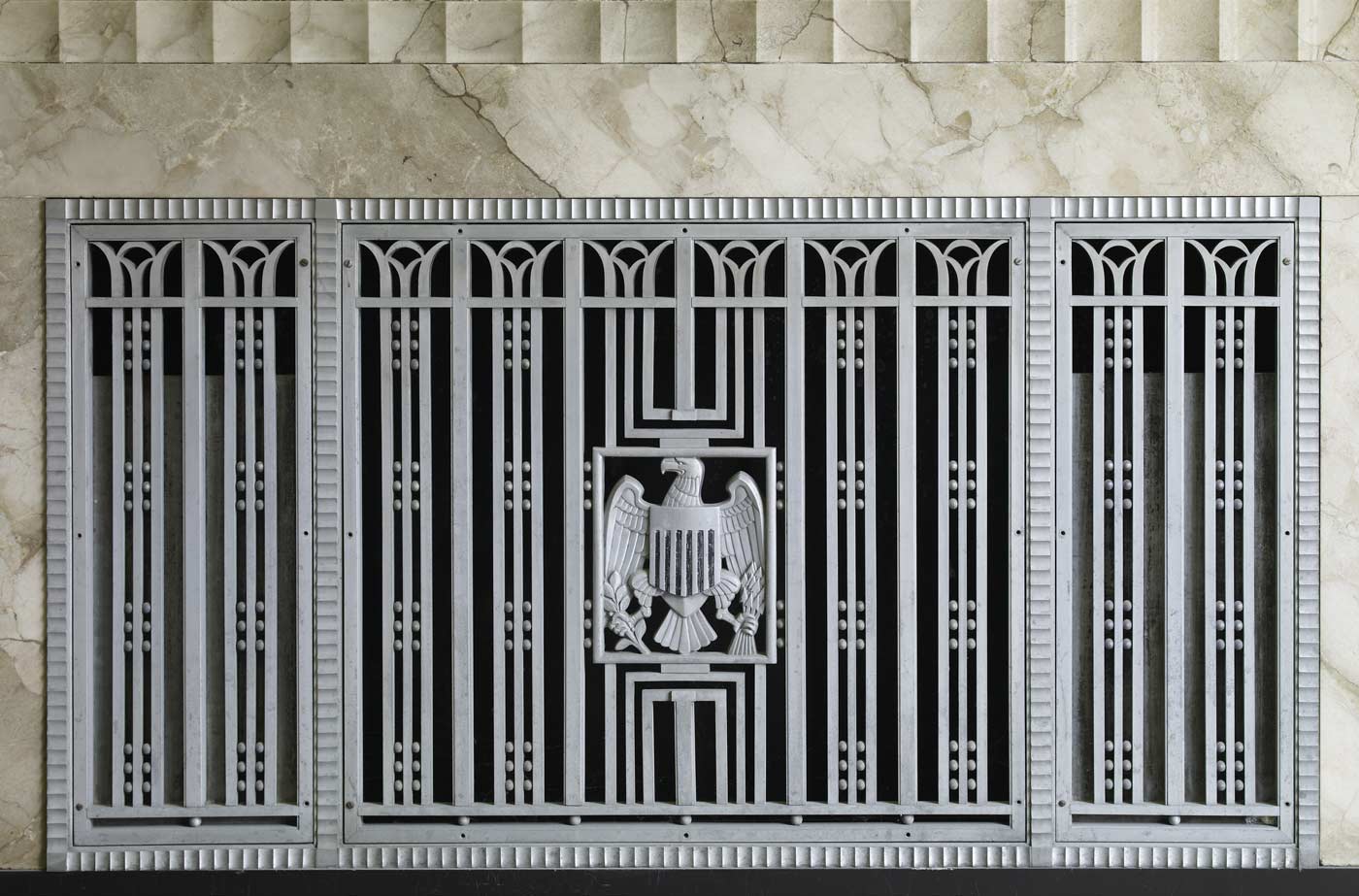
1932. James T. Foley U.S. Post Office and Courthouse, Albany, New York. Interior grill detail.

BUY FINE-ART PRINT

Interior grill detail, James T. Foley U.S. Post Office and Court

1932. James T. Foley U.S. Post Office and Courthouse, Albany, New York. Interior eagle detail.

BUY FINE-ART PRINT

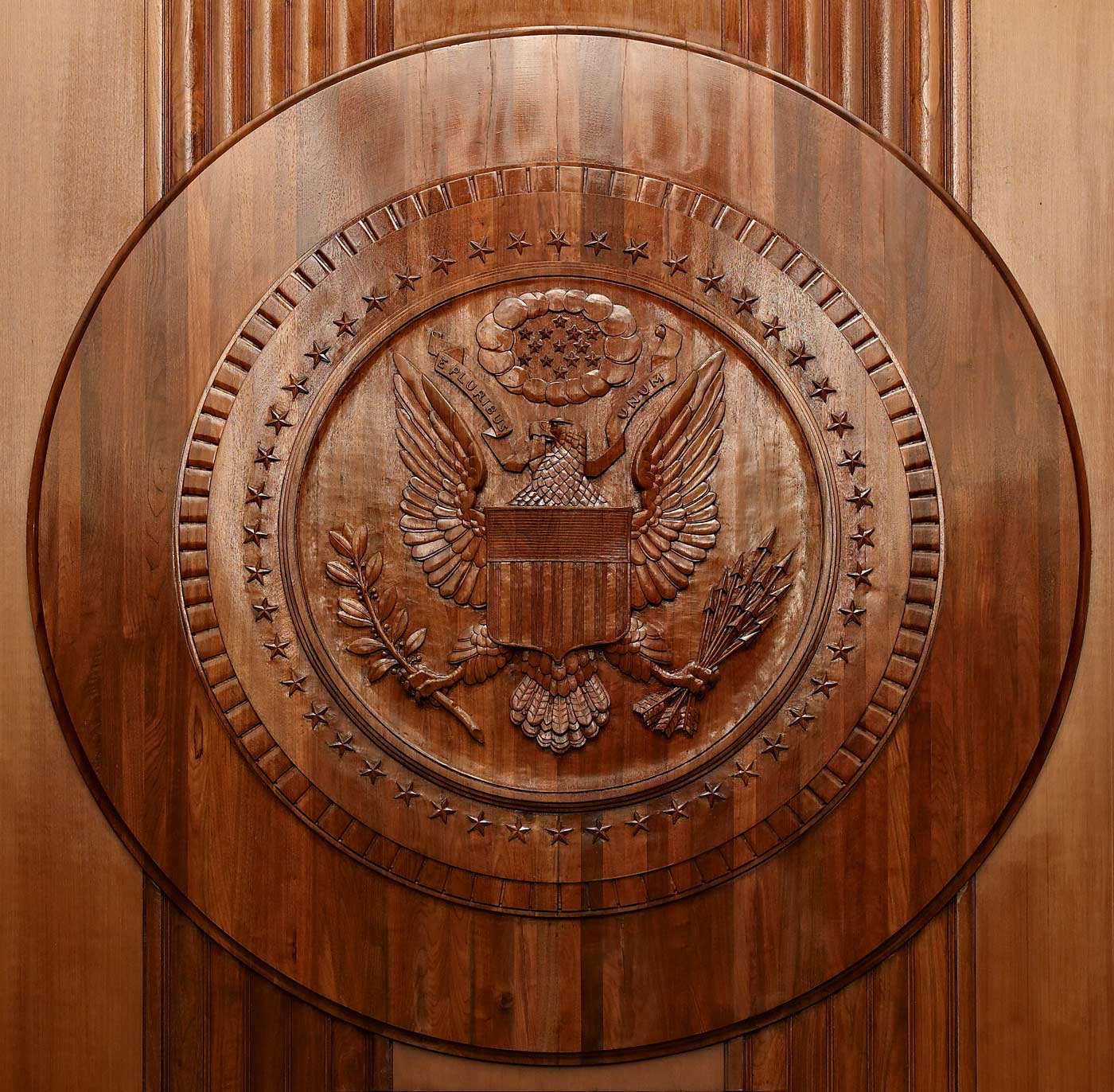
Art Deco US Bald Eagle. 1931 interior inlays in wood lobby detail. James T. Foley U.S. Post Office and Courthouse, Albany, New York Photo by Carol M. Highsmith1

1932. James T. Foley U.S. Post Office and Courthouse, Albany, New York. Interior lobby detail. Wood inlay eagle seal.

BUY FINE-ART PRINT

A legacy of the New Deal’s policies and WPA.


During the ‘1930s and 1940’ the public works and employment programs instituted by the Roosevelt administration, part of the government’s response to the Great Depression, created thousands of new buildings, and public artworks across the country. Source

The program was expanded with the creation of WPA, the Works Progress Administration. It was an American New Deal agency, employing millions of job-seekers (mostly unskilled men) to carry out public works projects, including the construction of public buildings and roads. It was established on May 6, 1935, by presidential order, as a key part of the Second New Deal. Source.

The legacy of these programs is invaluable.

Art Deco Bald Eagle 1932 Clarkson S. Fisher Federal Building & U.S. Courthouse, Trenton, NJ - Carol M. Highsmith

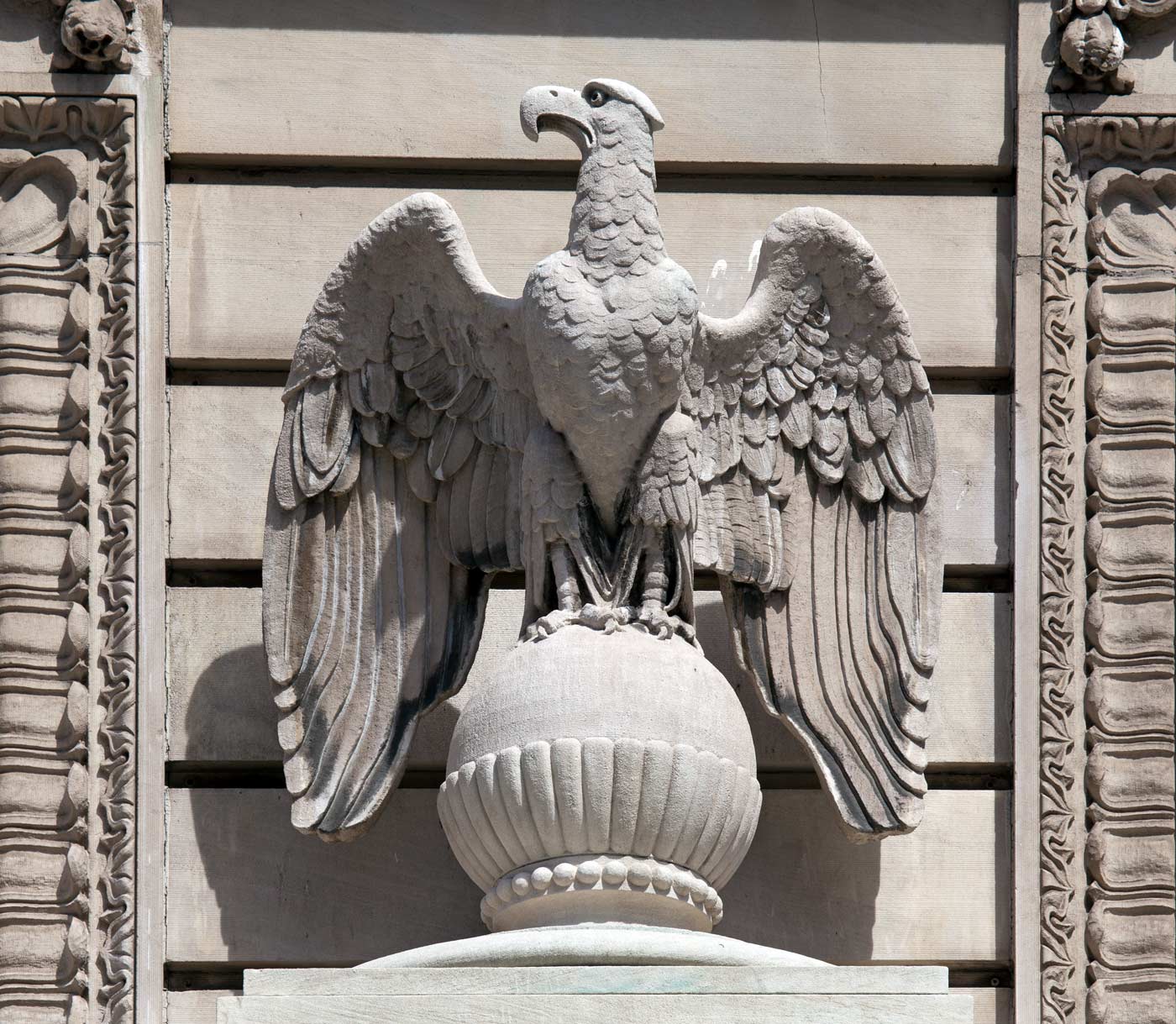
1932. Exterior detail: eagle on stone. Clarkson S. Fisher Federal Building & U.S. Courthouse, Trenton, New Jersey.

The building is significant as a large WPA project. The exterior is a well-executed design with a "Stripped Neo-Classical" form featuring both Classical and Art Deco terra cotta detailing and fine grillwork. The interior of the building includes fine marble, brass, copper, and tile finishes, "New Deal Art" murals by Charles Wells, and impressive, almost completely intact courtrooms, public corridors, and judges’ chambers. More

BUY FINE-ART PRINT

Exterior details, Clarkson S. Fisher Federal Building & U.S. Cou

1932. Exterior detail: eagle on iron. Clarkson S. Fisher Federal Building & U.S. Courthouse, Trenton, New Jersey.

BUY FINE-ART PRINT

Exterior details, Clarkson S. Fisher Federal Building & U.S. Cou

1932
Clarkson S. Fisher Federal Building & U.S. Courthouse, Trenton, New Jersey.
Exterior detail.

BUY FINE-ART PRINT

The Kennedy-Warren apartment building, 3133 Connecticut Ave., NW, Washington, D.C. 1931

1931
The Kennedy-Warren apartment building.
Washington, D.C.
Architect: Joseph Younger.

The Kennedy-Warren, also known as the "Old Lady", was constructed from 1929 to 1931, and is considered the largest and best example of an Art Deco building in Washington.

BUY FINE-ART PRINT

John W. McCormack U.S. Post Office and Courthouse, Boston, Massa

1933. The John W. McCormack Post Office and U.S. Courthouse. Boston, Massachusetts. Architect: Ralph Adams Cram.

A superb example of monumental Art Deco civic architecture, the John W. McCormack U.S. Post Office and Courthouse presents intriguing exceptions to typical narratives of 1930s federal architecture. The use of Art Deco on large-scale federal buildings of that decade is rare. Originally named the U.S. Post Office, Courthouse, and Federal Building, it was designed by an architect famous for Gothic Revival ecclesiastical work. More

BUY FINE-ART PRINT

The Sidney M. Aronovitz U.S. Courthouse, Post Office and Custom

1933. The Sidney M. Aronovitz U.S. Courthouse, Post Office, and Customs House. Key West, Florida. Supervising Architect: James Alfonso Wetmore.

The passage of the Public Buildings Act of 1926 precipitated a period of building construction that was unprecedented in the United States. The Act specified that the office of the Supervising Architect of the Department of the Treasury would be responsible for the design and construction of all public buildings. The Key West Federal Building was constructed during this period, in 1930-1932.
The building is a two-story limestone-clad building. It is constructed of Key Largo limestone quarried at the Windley key quarry, a site now owned by the state of Florida. It is a Deco interpretation of a classical style. Source

BUY FINE-ART PRINT

The Sidney M. Aronovitz U.S. Courthouse, Post Office and Custom
1934 Interior grill with eagle. Art Deco style Federal Building

1933 Monroe Post Office and US Courthouse. Monroe, Louisiana. Interior art grill. Architect: James Alonso Wetmore. Image source. The courthouse is a four-story building comprised of over 45,000 square feet and was built in 1933 by the Works Progress Administration, a U.S. government workforce consisting of citizens that were out of work. These men used A-model vehicles to hoist sandstone, brick, and mortar to construct this structure. The original inside walls were made of plaster, most of which has been replaced by gypsum wallboard. Source

BUY FINE-ART PRINT

1936 Courtroom eagle at U.S. Court House, Austin, Texas

1936. Courtroom eagle at U.S. Court House, Austin, Texas, Austin. Architects Charles H. Page /  Kenneth Franzheim

An excellent example of Depression-era Moderne architecture. This style is revealed in its central massing, the rectangular form, the vertical flow of the window bays, the decorative metal grilles, and the geometric details. The exterior is also defined by reed-like pilasters, which enhance the vertical flow of the building while reflecting an element of restrained Neo-Classical influence.

BUY FINE-ART PRINT

Exterior medallion, Robert N.C. Nix Federal Building, Philadelph

1937. Exterior Medallion. Robert N.C. Nix Federal Building. Philadelphia, Pennsylvania. Architect: Harry Sternfeld.

A representative example of a relatively large, federally-funded, Depression-era project. Built under the auspices of the Public Works Administration (PWA), the building displays the stylistic approach of much late-1930s PWA architecture. A product of the locally prominent architect Harry Sternfeld (1888-1976) in association with the Ballinger Company (fl. 1920-present), it is one of a small number of high-quality Art Deco buildings constructed in Philadelphia. More

BUY FINE-ART PRINT

Exterior medallion, Robert N.C. Nix Federal Building, Philadelph

1937. Exterior Medallion. Robert N.C. Nix Federal Building. Philadelphia, Pennsylvania. Architect: Harry Sternfeld.

BUY FINE-ART PRINT

1937 Courtroom detail Robert Nix Federal Building Philadelphia P

1937. Courtroom interior wooden detail. Robert N.C. Nix Federal Building. Philadelphia, Pennsylvania. Architect: Harry Sternfeld.

BUY FINE-ART PRINT

Eagle at Federal Building and U.S. Court House, Peoria, Illinois

1938. Eagle at Federal Building and U.S. Court House, Peoria, Illinois. Architect Howard Lovewell Cheney.

This building was designed in the streamlined Art Moderne style, which was very popular in the late 1920s and the 1930s. This style emphasized the massing of simple geometric forms, as well as the use of repetitive window openings (typically grouped in multi-story, recessed vertical bands); contrasting light and dark building components; bas-relief wall ornamentation; and highly stylized (often geometric) forms for decorative design elements such as exterior lamps, handrails, and stone sculptures. More

BUY FINE-ART PRINT

Eagle at Federal Building and U.S. Court House, Peoria, Illinois

1939-1944
Appraisers building.
San Francisco, California
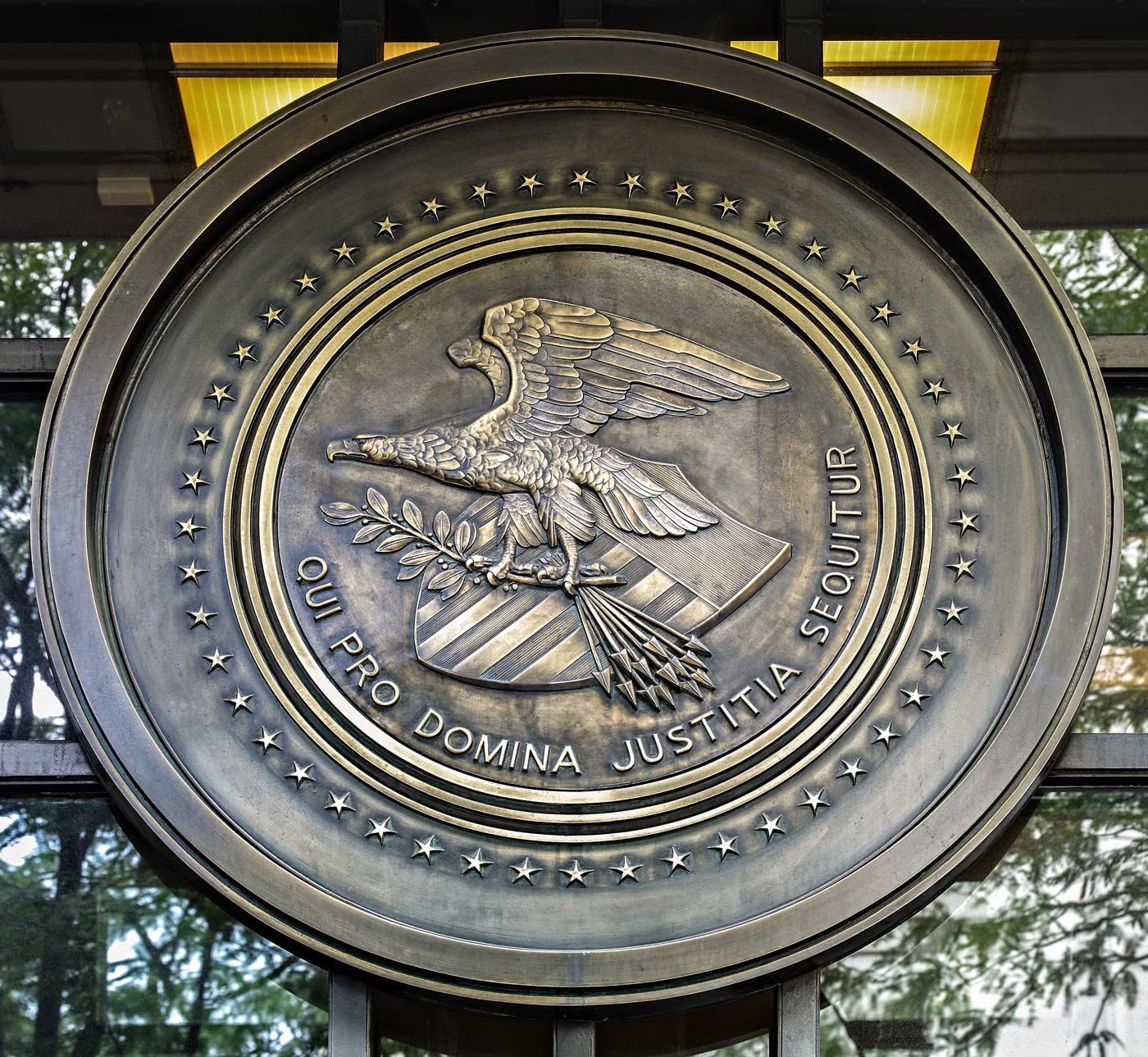
Front exterior eagle detail.
Architect: Gilbert Stanley Underwood.

The United States Immigration Station and Appraisers Stores, San Francisco (now commonly called the Appraisers Building)  housed immigration and customs agencies of the Federal government since its completion in 1944. The building embodies distinctive architectural characteristics spanning two significant periods in American architecture, the Depression and World War II.

BUY FINE-ART PRINT

Bald-Eagle-about-to-launch-Kachemak-Bay-Alaska

A Bald Eagle about to launch. Kachemak Bay, Alaska. Photo by Andy Morffew.

Theodore Roosevelt, Benjamin Franklin, and the Bald Eagle.


Seal of the President of the United States

Today the Bald Eagle is an immovable symbol, the pride of any U.S. citizen, and no one would ever dare criticize or replacing it. It hasn't always been like this.

Benjamin Franklin, for instance, called the Bald Eagle "A Bird of Bad Moral Character. "You may have seen him perched on some dead Tree near the River, where, too lazy to fish for himself, he watches the Labour of the Fishing Hawk. When that diligent bird has at length taken a fish, the Bald Eagle pursues him and takes it from him."

President Teddy Roosevelt once said that he did not understand why the Bald Eagle was chosen as US national symbol. He said that it should have been the Grizzly Bear. About the Bald Eagle, he said "It is nothing more than a glorified vulture!"
It even seems he ordered to replace the eagle with the grizzly, but overwhelmed by a sea of protests, he gave up.

Copyright, links and credits


All the images in this post are taken by Carol M.Highsmith, who donated her life's work of more than 100,000 images, royalty-free, to the Library of Congress, which established a rare, one-person archive.
If you use her pictures, we do recommend credit.


Carol Highsmith's America. Highly recommended.
Carol Highsmith Archive at the Library of Congress
Wikipedia Page

EUR Euro