
The Bugatti Dream Factory — La Fabbrica Blu, Campogalliano, 1990–1995
Dreamed by Romano Artioli for decades. Designed by Gianpaolo Benedini in a few months. Documented by Roberto Bigano.
A photographic exploration of the legendary Blue Factory at Campogalliano — an avant-garde industrial complex designed for creativity, comfort, and technical excellence. Natural light, architectural elegance, and uncompromising craftsmanship reveal the humanistic vision behind Bugatti's rebirth — documented as it happened.
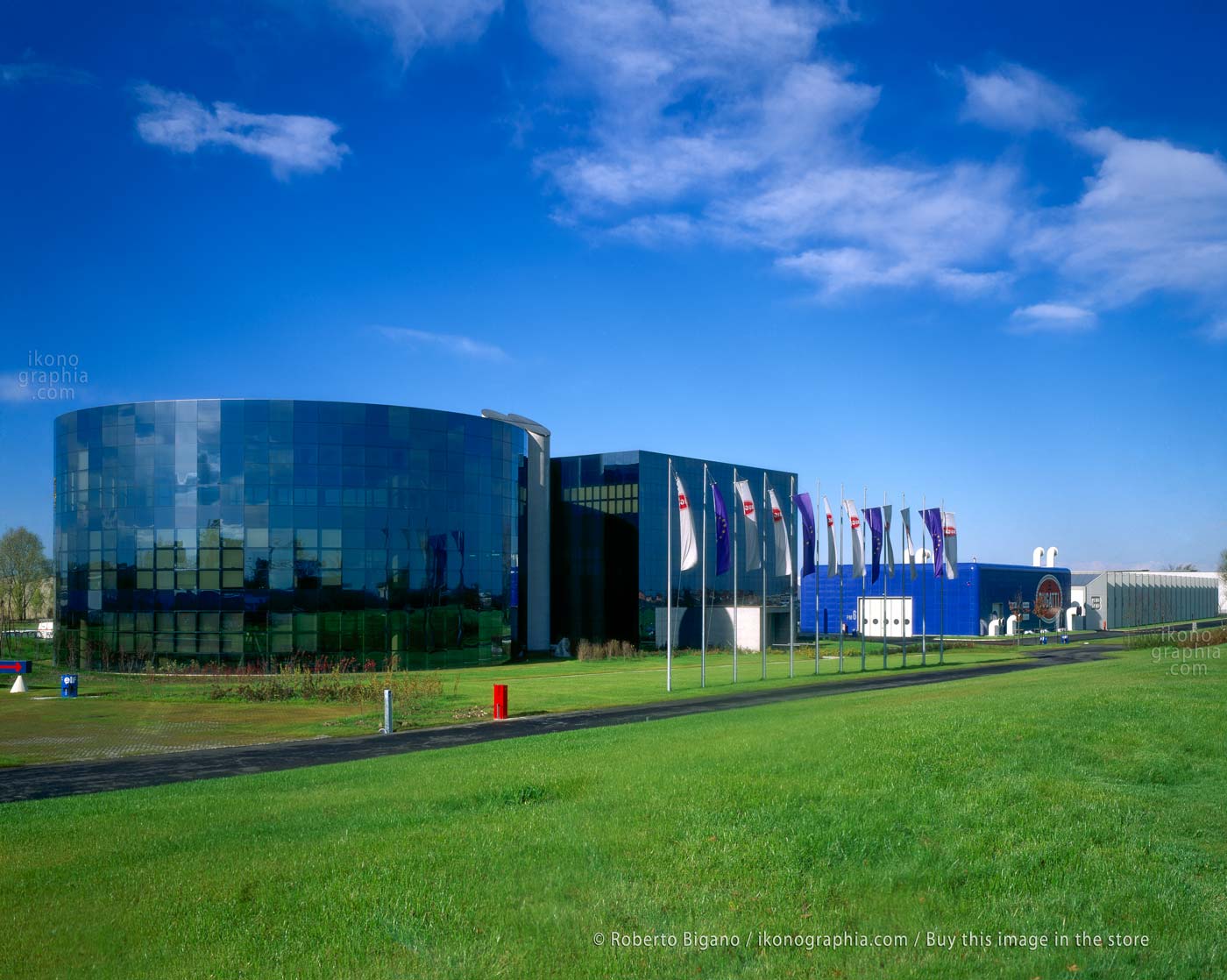
Before the first car was assembled, Bugatti Automobili had to invent a place capable of sustaining an unprecedented ambition: not merely a factory, but an environment designed to foster precision, creativity, and human intelligence at the highest level.
Conceived and built in Campogalliano during the early 1990s, the Fabbrica Blu was unlike any contemporary automotive plant. It rejected the logic of industrial alienation in favor of natural light, controlled acoustics, advanced air quality, and spatial clarity. Architecture was not treated as a neutral container, but as an active component of production itself.

The “Prove Motori” Development Building
This image reflects the almost obsessive attention to cleanliness and order that Romano Artioli required throughout the factory.
The monumental Bugatti emblem and the large white ventilation pipes—visible from miles away—symbolized the factory’s heart and soul, embodying shared ambition and pride in building something unprecedented.
The Blue Factory — Conceived by Romano Artioli
The Bugatti factory was one of the most advanced of the time. Romano Artioli himself explains why.
"To make innovative cars, I thought it was essential to motivate workers. I always had in mind the factories I visited during my life: places of alienation and suffering. What we needed instead was an environment immersed in nature, which stimulates creativity.
Therefore, the plant was designed to give technicians maximum comfort and the freedom to express their talent in the best possible way.
All the buildings had natural lighting. The measurement equipment was the most advanced. The air in the rooms was pollutants-free. The circular building where the designers worked on the upper floor was a jewel of avant-garde architecture, all in glass. The acoustic was also ideal for allowing designers to work without disturbance. There was a circular hall with a rotating platform on which cars were displayed on the ground floor. Last but not least, the plant was properly air-conditioned as the Modena climate varies from hot, humid summers to intense winter cold".
From "Bugatti & Lotus Thriller.
Leggi in italiano
Ikonographia celebra il mito di Bugatti Automobili con una serie di post, usando le splendide immagini di Roberto Bigano, fotografo di Bugatti nei primi anni novanta. Attraverso il racconto del suo rapporto con l’azienda, sarete in grado di immergervi completamente nell’atmosfera assolutamente unica che si era creata in quegli anni.
Roberto Bigano, fotografo di Bugatti Automobili vi racconta tutta la storia.
Tutto cominciò con una telefonata di un amico copywriter che avevo conosciuto sotto naja: Beppe Maghenzani. Beppe era stato coinvolto in un progetto estremamente ambizioso: rilanciare il marchio Bugatti. Il lavoro prevedeva una serie di iniziative tra le quali la realizzazione di volumi che degnamente illustrassero la storia del mito Bugatti.
Si pensò prima di tutto ad un servizio fotografico dal tema “Lo spirito Bugatti oggi in Alsazia”, un’indagine nei luoghi natali del mito, insomma, che ne fosse non solo storica rievocazione ma anche, come diceva il titolo, evocazione “spirituale”. Per questo complesso lavoro, a mezza via tra lo scavo archeologico e la seduta medianica, l’amico Beppe pensò a me come alla persona più adatta.
Bugatti Automobili — General View
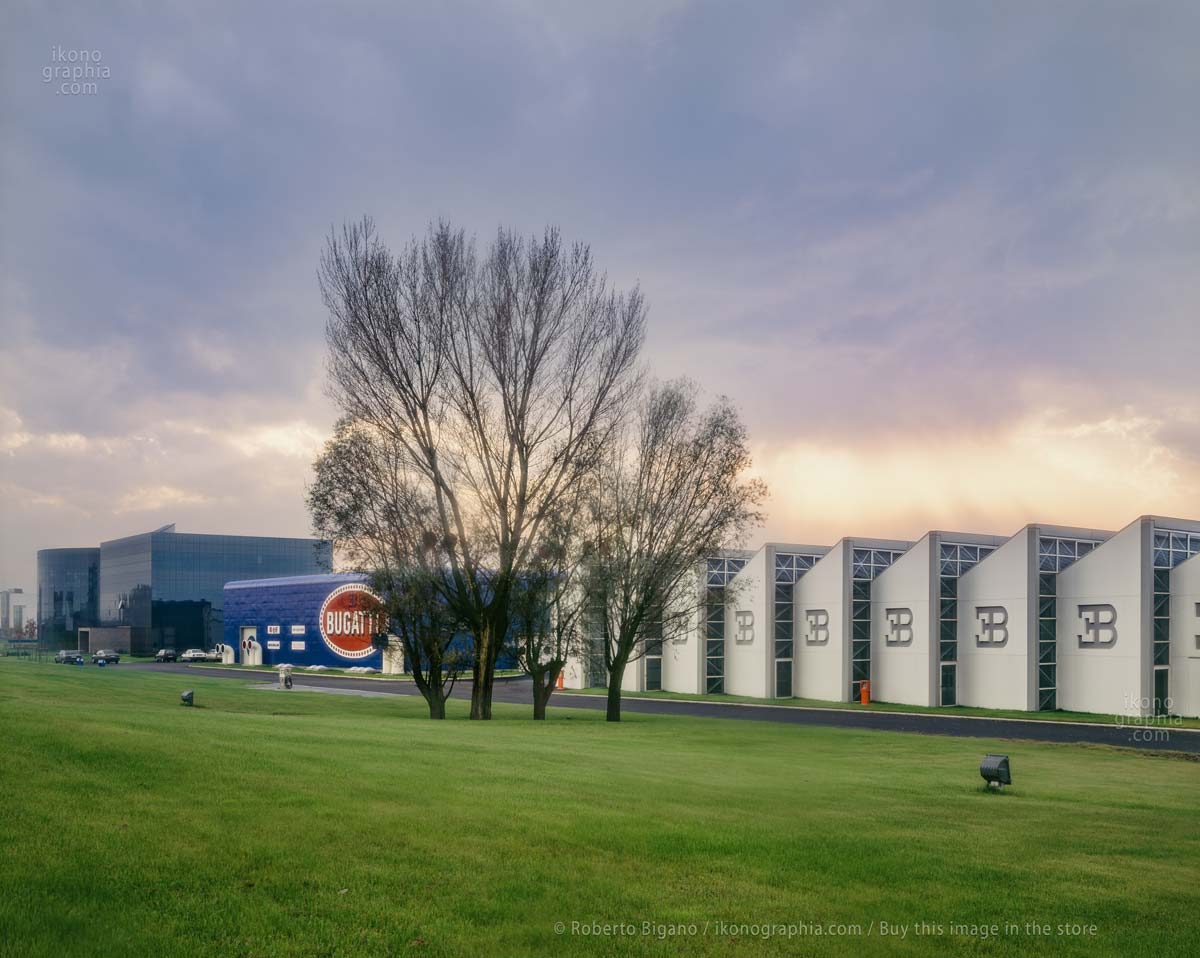
Winter view of the Bugatti Head-Quarter and Factory at Campogalliano
Roberto Bigano, Bugatti's photographer, tells all the story
Through his story you can dive into the incredible mood created in those years.
Through his story you can dive into the incredible mood created in those years.
Everything started with a phone call from a copywriter friend, Beppe Maghenzani. Beppe was part of an overly ambitious project: to revitalize the Bugatti brand. Part of the project comprehended, creating a book that would illustrate the story of the Bugatti legend.
The initial thought was to have a photoshoot-themed “The Bugatti spirit today in Alsace,” a study of the legend’s birthplace. It is supposed to be a historical commemoration and, as the title said, but a spiritual evocation. For this intricate work, halfway between the archeological excavation and the mediumistic session, my friend Beppe thought of me as the best person for the job.
Leggi in italiano
La Fabbrica Blu.
La fabbrica Bugatti di Campogalliano era tra le più avanzate dell’epoca.
Romano Artioli in persona ci spiega il perché.
Per realizzare auto innovative, ritenevo indispensabile motivare coloro che ci avrebbero lavorato. Avevo sempre presente gli stabilimenti visitati nel corso della mia vita: luoghi di alienazione e sofferenza. Quello che serviva invece era un ambiente immerso nella natura, che stimolasse la creatività. Tutto lo stabilimento fu quindi progettato innanzitutto per dare ai tecnici il massimo comfort e la possibilità di esprimere al meglio il loro talento.
Tutti gli edifici godevano di illuminazione naturale. Le apparecchiature di misura erano le più avanzate tecnicamente, costruite espressamente per noi dagli specialisti delle attrezzature per prestazioni estreme Schenk. L’aria delle sale prova era totalmente priva d’inquinanti, pura come quella delle Dolomiti, per effettuare le analisi delle emissioni per le omologazioni.
La palazzina circolare, ai cui piani superiori lavoravano i progettisti, era un gioiello di architettura d’avanguardia, tutta in vetro. Le sue colonne portanti fungevano anche da canali per la circolazione dell’aria condizionata. Era dotata di pavimenti galleggianti per collegare in ogni punto i computer e le attrezzature speciali.
Anche l’acustica risultò ideale per permettere ai progettisti di lavorare senza disturbi di sorta. Al piano terra, leggermente interrato, era presente un salone circolare con al centro una pedana rotante a filo pavimento per esporre le auto. Indispensabile era che gli ambienti fossero ben condizionati, perché il clima modenese varia dal caldo soffocante dell’estate al freddo intenso dell’inverno, con un’umidità costante.
Dal libro di Romano Artioli: “Bugatti & Lotus Thriller.”
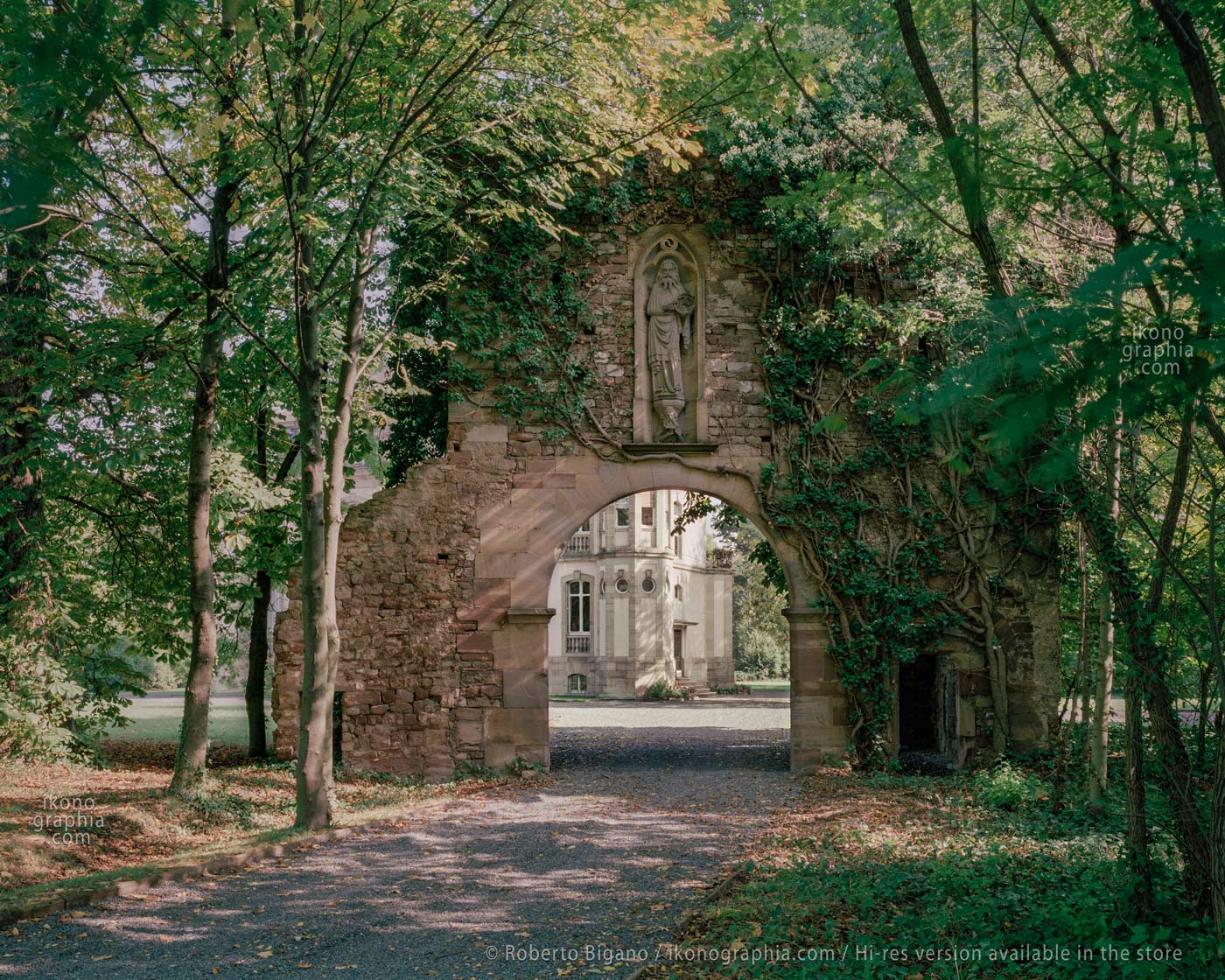
Molsheim, Alsace, France. Chateau St. Jean, the former Bugatti. headquarters.
Chateau St. Jean a Molsheim in Alsazia, sede della Bugatti, a quel tempo in rovina, ma comunque affascinante.
How I met Romano Artioli.
I returned home with the fruits of my mission in Alsace. The appointment with the client was in Ora, near Bolzano. I was met by Romano Artioli’s wife, Renata Kettmeir. “Nice work,” she commented after the first few images. “And since you’re doing such a good job, please feel free to go to Campogalliano to finish it.”
At the new Bugatti premises, I was immediately received by Romano Artioli. I was literally speechless when Mr. Artioli began discussing work. “Fine, Mr. Bigano, you are to document the history of new Bugatti, its cars, and the company. You are to illustrate the birth of the legend through every stage in the journey.
I want it all: successes and failures, moments of euphoria and suffering, designing, mechanics’ sweat, the wind gallery – in short, everything right up to the presentation of the new EB110 to be released next year in Paris, and the following Gran Gala evening at Versailles.”
“But Mr. Artioli,” I replied, embarrassed and shocked. How can you be sure I’m capable of coping with it if you don’t know me and you’ve never seen a photo of mine?” “Listen,” he answered. “I’ve never yet found a photographer to please my wife. If you’ve made a good impression on her, then you must be excellent.”
Leggi in italiano
l mio incontro con Romano Artioli.
Tornai quindi alla base con il risultato della mia missione in Alsazia. L’appuntamento con il cliente era ad Ora in provincia di Bolzano. Fui ricevuto dalla moglie di Romano Artioli, Renata Kettmeir, cui piacque il lavoro. “Visto che lavora così bene vada pure a Campogalliano, così potrà completare il servizio”.
Alla sede della nuova Bugatti fui ricevuto subito da Romano Artioli. Rimasi letteralmente senza fiato quando Artioli iniziò a parlarmi di lavoro senza chiedermi di vedere una sola foto. “Bene Signor Bigano,” furono le parole con le quali esordì “lei deve documentarmi la storia della Bugatti, delle automobili, dell’azienda, deve testimoniare la nascita del mito attraverso ogni sua tappa. Voglio tutto, i successi ma anche gli insuccessi, i momenti di euforia come i periodi di sofferenza, i trionfi alle gare come gli errori, la progettazione, il sudore dei meccanici, la galleria del vento, tutto insomma fino al giorno della presentazione della nuova EB110 che faremo l’anno prossimo a Parigi, oltre al Gran Galà nella reggia di Versailles”.
“Ma Signor Artioli” gli risposi imbarazzato ed esterrefatto “Come può essere sicuro che io sia in grado di portare a termine un lavoro così complesso se non mi conosce nemmeno e non ha visto una sola mia fotografia?” “Guardi” mi rispose Romano Artioli. "Non ho mai trovato un fotografo che andasse bene a mia moglie. Se piace a lei, dev’essere bravissimo”. Ve lo giuro, mi disse proprio così.
Main Entrance to Bugatti Automobili, Campogalliano
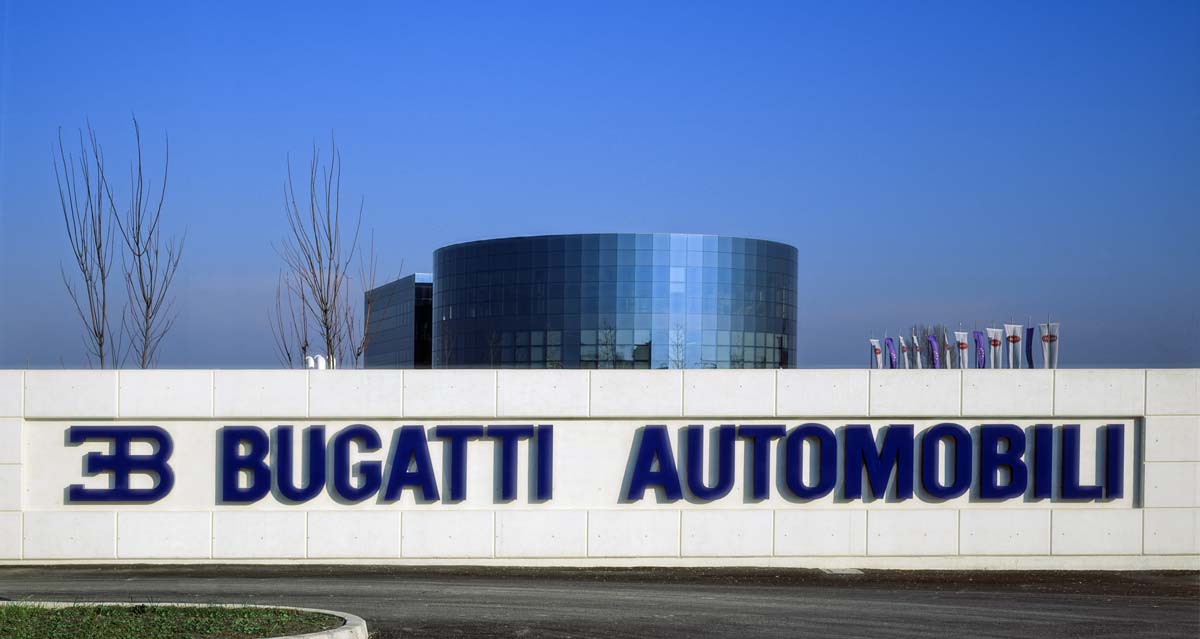
The entrance to the Campogalliano industrial complex, conceived by architect Gianpaolo Benedini for Bugatti Automobili.
The circular glass building—visible beyond the perimeter wall—embodied an avant-garde approach to industrial architecture, uniting corporate identity, transparency, and spatial rigor in a single, unmistakable form.
Working for Bugatti Automobili
That’s what he said, and that’s how the great adventure started – and I worked for Bugatti almost full-time for a whole year. It was a thrilling experience, an incredible situation.
The company was a true gem, and I was treated like a prince; I felt like Benvenuto Cellini at the Medici court. Wherever I went and whatever I needed, I was supported in everything and for everything by a legion of assistants.
Mr. Artioli liked my work and introduced me to a thousand potential clients. "He is an artist, the best"; "his photos have a soul." At the same time, he nicknamed me "Dolce Vita," meaning I wasn't working hard enough.
Working with Romano Artioli was stimulating because he was able to get the most out of me. Sometimes he even went so far as to give me suggestions. The post's featured photo of the "cleaning works at Campogalliano" was his idea.
Leggi in italiano
l mio incontro con Romano Artioli.
Tornai quindi alla base con il risultato della mia missione in Alsazia. L’appuntamento con il cliente era ad Ora in provincia di Bolzano. Fui ricevuto dalla moglie di Romano Artioli, Renata Kettmeir, cui piacque il lavoro. “Visto che lavora così bene vada pure a Campogalliano, così potrà completare il servizio”.
Alla sede della nuova Bugatti fui ricevuto subito da Romano Artioli. Rimasi letteralmente senza fiato quando Artioli iniziò a parlarmi di lavoro senza chiedermi di vedere una sola foto. “Bene Signor Bigano,” furono le parole con le quali esordì “lei deve documentarmi la storia della Bugatti, delle automobili, dell’azienda, deve testimoniare la nascita del mito attraverso ogni sua tappa. Voglio tutto, i successi ma anche gli insuccessi, i momenti di euforia come i periodi di sofferenza, i trionfi alle gare come gli errori, la progettazione, il sudore dei meccanici, la galleria del vento, tutto insomma fino al giorno della presentazione della nuova EB110 che faremo l’anno prossimo a Parigi, oltre al Gran Galà nella reggia di Versailles”.
“Ma Signor Artioli” gli risposi imbarazzato ed esterrefatto “Come può essere sicuro che io sia in grado di portare a termine un lavoro così complesso se non mi conosce nemmeno e non ha visto una sola mia fotografia?” “Guardi” mi rispose Romano Artioli. "Non ho mai trovato un fotografo che andasse bene a mia moglie. Se piace a lei, dev’essere bravissimo”. Ve lo giuro, mi disse proprio così.
The Blue Factory — La Fabbrica Blu
Designed by architect Gianpaolo Benedini, the Campogalliano complex is built around three distinct architectural modules, conceived as a single functional and aesthetic system.
Benedini himself describes the design process that shaped one of the most radical industrial architectures of the period.
Gianpaolo Benedini introduces the Bugatti Production Facility Complex
The industrial complex of Campogalliano was designed by the architect Gianpaolo Benedini with avant-garde criteria. It comprises three main modules, aesthetically different, creating a whole with an absolute functional and aesthetic value. Mr. Benedini himself tells us how he got there.
In the mid-spring of 1989, I got a call from Romano Artioli. He had bought a potato field in Campogalliano to build the Bugatti headquarters. I had earned his trust by converting a former factory into the Subaru Italia headquarters in record time.
Mr. Artioli put me in contact with the engineer Stanzani, the technical director, and Pedrazzi, Bevini, Benedetti, the specialized operators. Together we began to tackle the problems related to timing, different functions, and relative dimensions.
In those days, people were still designing on tracing paper with the drafting machine, and —believe me—, it was faster than today, and short times were foreseen.
Given the operational complexity, I decided to think with three different main functional typologies, the offices, the production, and the test rooms building. Once I prepared some sketches to identify each building's positions considering any future developments, I began the executive design.
I decided to proceed in parallel with the different buildings, using prefabricated parts. In this way, times were reduced and optimized. So it happened that, while the foundations were being carried out on-site, the slabs and facades of the office building were created elsewhere, with an organized path that everyone respected.
Leggi in italiano
L'architetto Gianpaolo Benedini introduce il complesso industriale di Campogalliano.
Progettato con criteri di avanguardia, lo stabilimento è composto di tre moduli principali, diversi tra loro che creano un insieme dal valore funzionale ed estetico assoluto. Gianpaolo Benedini in persona ci racconta tutta la storia.
Nella primavera del 1989, Romano Artioli mi telefonò dicendomi che aveva comprato un campo di patate a Campogalliano per costruire la sede della Bugatti. Mi ero guadagnato la sua fiducia riconvertendo a tempi record una ex fabbrica, nella sede della Subaru Italia.
Mi raccontò quale era il suo obbiettivo e mi mise in contatto con l’ing. Stanzani che aveva in quel momento la direzione tecnica e con Pedrazzi, Bevini, Benedetti, gli operativi tecnici che avevano la responsabilità di mettere in pratica il sogno di Romano. Con loro cominciai ad affrontare i problemi legati alle tempistiche, alle diverse funzioni e relative dimensioni.
Il lavoro era estremamente complesso, ed i tempi ristretti. A quei tempi si progettava ancora su carta da lucido con il tecnigrafo e devo dire che fu un vantaggio perché era un modo di lavorare snello e veloce.
Vista la complessità operativa, decisi di ragionare su tre diverse principali tipologie funzionali, uffici, produzione ed il corpo destinato ad accogliere le sale prova. Predisposti alcuni schizzi per identificare le posizioni di ogni fabbricato, considerando eventuali futuri sviluppi, cominciai la progettazione esecutiva.
Considerando la necessità di completare lo stabilimento per fasi, ma in tempi brevissimi, decisi che era necessario procedere con la costruzione in cantiere e, parallelamente in stabilimenti vari, per le parti prefabbricate. In tal modo furono ridotti e ottimizzati i tempi. Mentre si eseguivano le fondazioni in opera, solai e facciate del fabbricato uffici venivano realizzati con un percorso organizzato che tutti rispettarono. Devo dire che tutte le imprese coinvolte di qualsiasi dimensione e posizione geografica furono contagiate dalla febbre Bugatti.
I progetti furono realizzati in sinergia con l’ing. Magistrelli (che ebbe la responsabilità delle strutture e degli impianti) ritrovato dopo alcuni anni di frequentazione comune al liceo. Tutta la parte edile fu realizzata dall'impresa mantovana Martinotti.
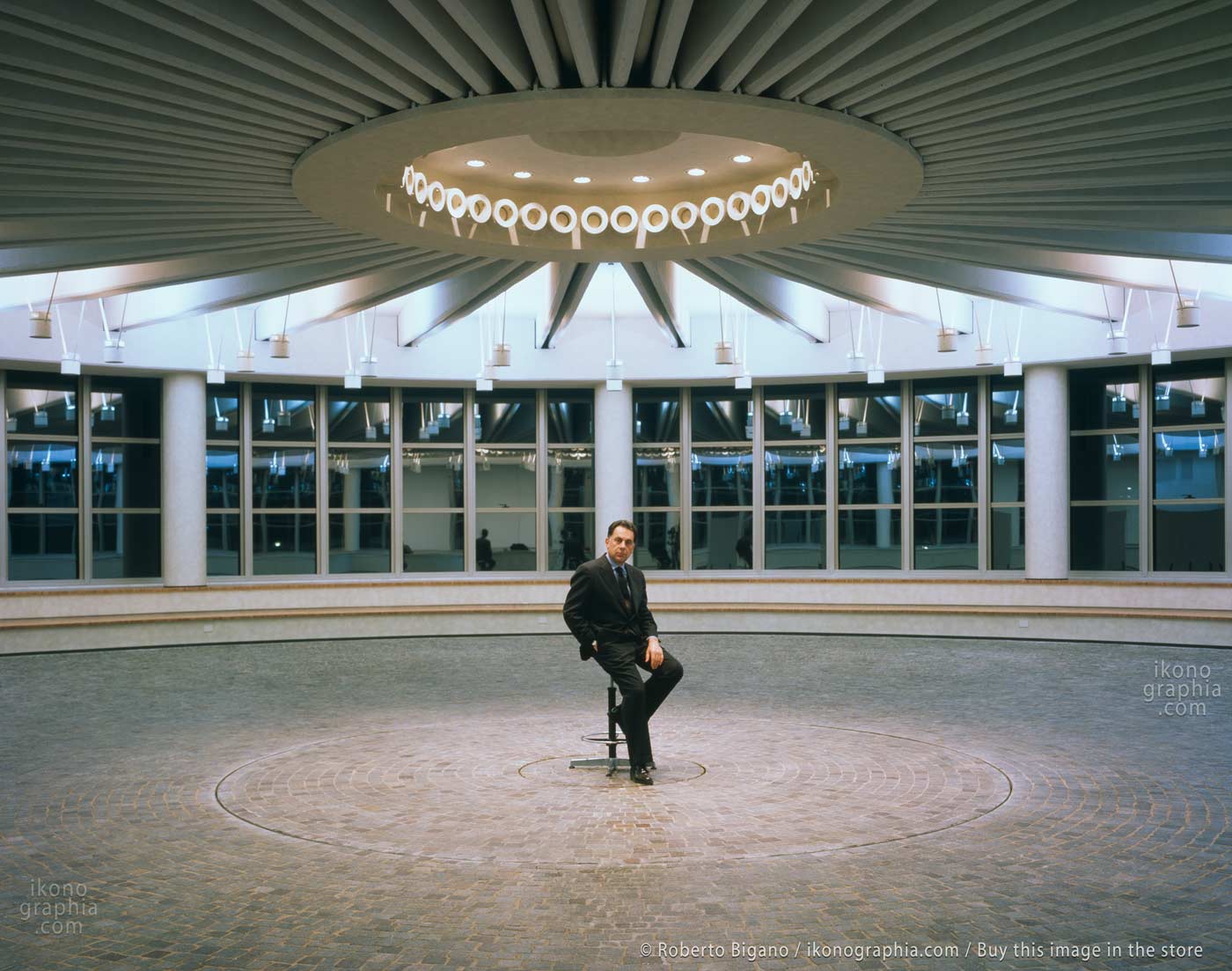
Architect Gianpaolo Benedini
Architect Gianpaolo Benedini portrayed on the rotating platform of the circular hall at Bugatti Automobili, a multifunctional space used for car displays, meetings, and photography within the avant-garde glass building.
L'architetto Gianpaolo Benedini nel centro della piattaforma rotante nel salone circolare da lui progettato.
The Circular Building
The circular building, where the designers worked on the upper floors, was a jewel of avant-garde architecture, all in glass. Its supporting columns also served as funnels for the air conditioning circulation system. It was equipped with floating floors so that computers and special equipment could be connected at every point. The acoustics were also ideal for allowing designers to work without disturbance.
On the ground floor, which was slightly underground, there was a circular hall that had a rotating platform in the middle flush with the floor on which cars were displayed and which was also used for meetings and photography sessions. It was essential that the rooms be well air conditioned as the Modena climate varies from suffocating summer heat to intense winter cold, with constant humidity.
Leggi in italiano
L'edificio circolare.
La palazzina circolare, ai cui piani superiori lavoravano i progettisti, era un gioiello di architettura all’avanguardia, tutta in vetro. Le sue colonne portanti fungevano anche da canali per la circolazione dell’aria condizionata. Era dotata di pavimenti galleggianti per collegare in ogni punto i computer e le attrezzature speciali.
Anche l’acustica risultò ideale per permettere ai progettisti di lavorare senza disturbi di sorta.
Al piano terra, leggermente interrato, era presente un salone circolare che al centro aveva una pedana rotante a filo pavimento sulla quale venivano esposte le auto, utilizzato anche per le riunioni.

Engineers' Hall
The bright, futuristic engineers' hall occupied the fully glazed upper level of the circular building. Designed with softened radii and continuous glass, the space dissolved boundaries between structure, light, and work.
Every desk flooded with natural light. Controlled acoustics and climate regulation created an environment where concentration and collaboration coexisted—embodying Romano Artioli's belief that innovation flourishes in spaces designed for people as carefully as for machines.
The Main Building housing the hall and the offices
This fully glazed cubic building houses the large luxury hall carpeted with Carrara marble and laid with mosaics and the offices. It is connected with the circular building equipped with floating floors to connect computers and special equipment at every point. Again Mr. Benedini tells.
On September 15, 1990, the facility was inaugurated with a ceremony that sealed the twinning with Molsheim. The amazement of the guests was not only for the beautiful girls who welcomed them at the reception but also for grasping a different way of considering the workplace and workers.
Visitors were also stunned by the luminosity and functionality of the buildings
Leggi in italiano
L’edificio principale per hall ed uffici.
Il luminoso edificio cubico ospitava l’ampia e lussuosa hall, con pavimenti in marmo di Carrara e decorazioni in mosaico. Era connesso con l’edificio circolare, ed i pavimenti galleggianti permettevano di connettere facilmente computer ed apparecchiature speciali. Ancora una testimonianza di Gianpaolo Benedini.
Quando il 15 settembre del 1990, lo stabilimento fu inaugurato con una cerimonia che sigillava il gemellaggio con Molsheim, lo stupore degli invitati non fu solo per le bellissime ragazze alla reception ma anche nel cogliere un modo diverso di considerare il posto di lavoro che vedeva al centro l’uomo, secondo la volontà di Romano Artioli; con grande soddisfazione di noi tecnici che eravamo riusciti a concretizzarla. La luce, la chiara corrispondenza tra l’architettura e la funzionalità di ogni diversa tipologia di quanto era stato costruito, erano riuscite a trasmettere i valori effettivi che avevamo come obiettivo.
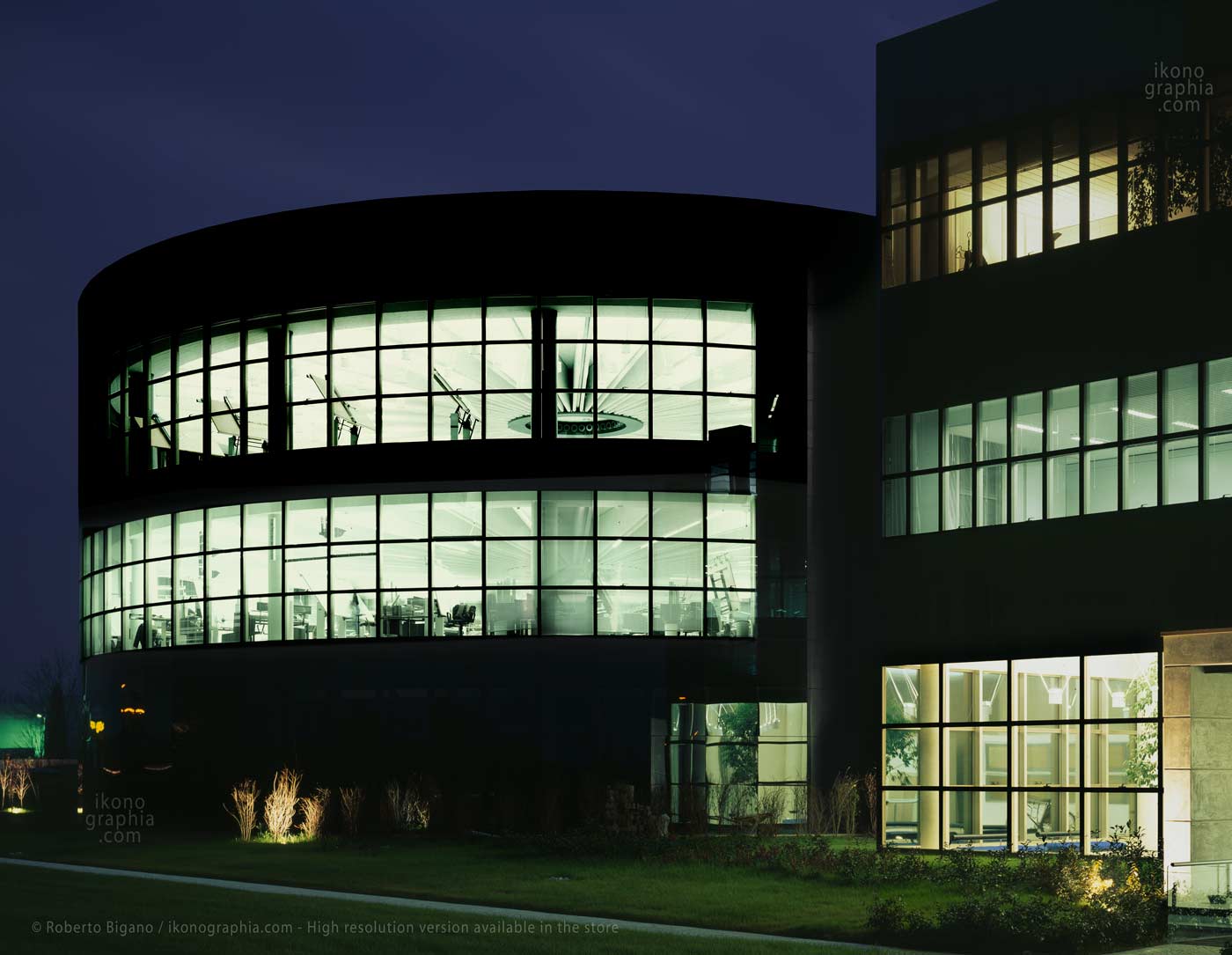
Bugatti Design Hall and Offices — Night View, Campogalliano
The illuminated interiors reveal an architecture conceived around openness, light, and the visibility of work—core principles of the Campogalliano project.

Reception Hall at Bugatti Automobili — Carrara Marble Interior
This bright reception hall symbolized Bugatti Automobili’s renewed identity and the company’s ambition to redefine standards of quality and representation.
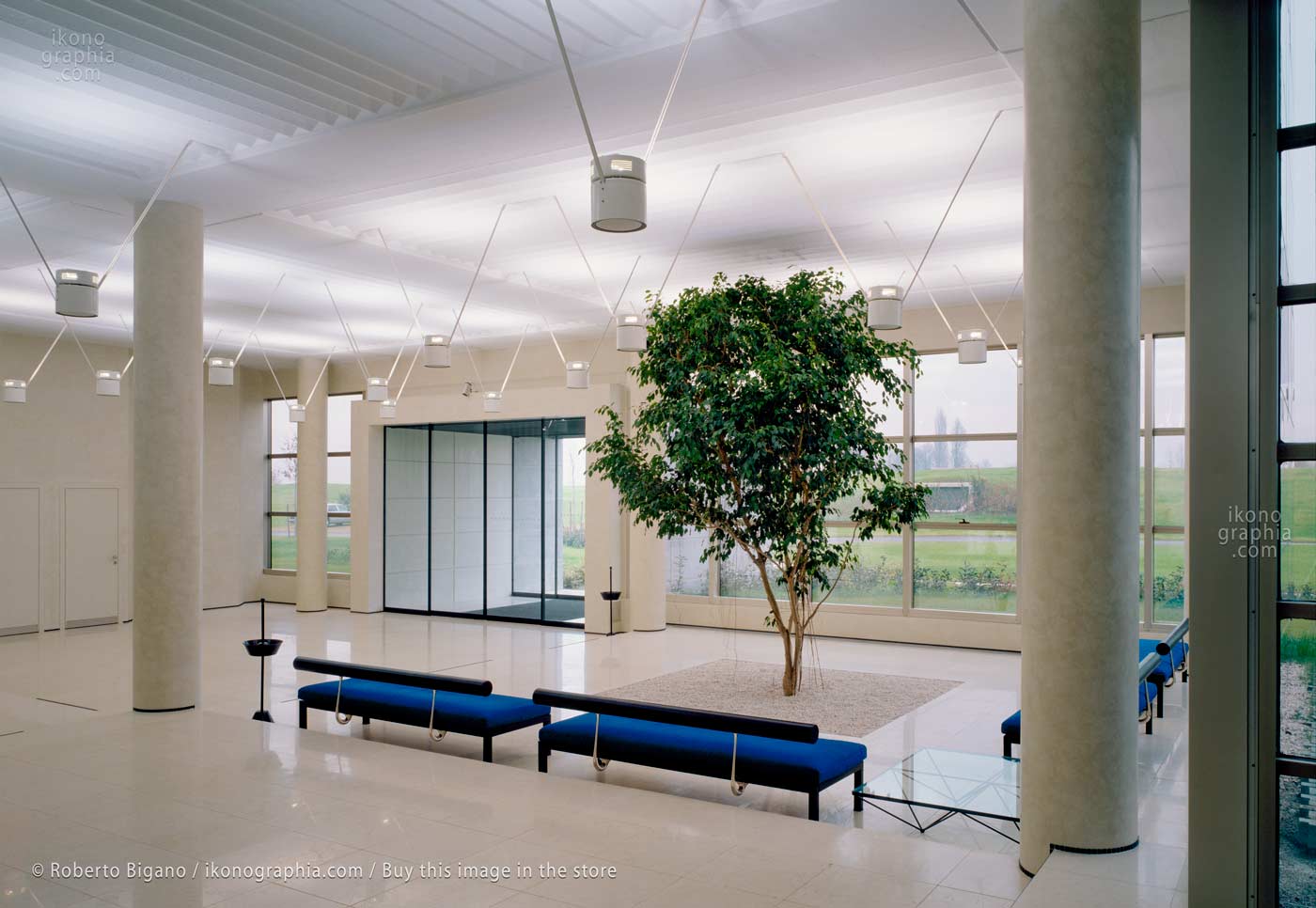
The Bugatti Automobili Main Hall — Display and Reception Space
The reception hall at Bugatti Automobili combined refined luxury with warmth and restraint. Carrara marble, subtle gold detailing, and carefully balanced proportions reflected Gianpaolo Benedini’s unostentatious approach to elegance, creating a space that felt welcoming rather than intimidating.
The Bugatti Automobili Main Hall — Light, Space, and Order
The reception hall at Bugatti Automobili combined refined luxury with warmth and restraint. Carrara marble, subtle gold detailing, and carefully balanced proportions reflected Gianpaolo Benedini’s unostentatious approach to elegance, creating a space that felt welcoming rather than intimidating.

Elevator’s Hall with Ettore Bugatti Bronze Bust
The elevator’s hall featuring a bronze bust of Ettore Bugatti and leather-clad columns produced by Poltrona Frau, integrated into the refined interior design of the Campogalliano headquarters.

Executive Office Doors, Architectural Detail
The exquisite detail of the doors of the offices on the ground floor. Design by Gian Paolo Benedini.
The "Prove Motori" Building
To follow the development of EB 110 (110 years since the birth of Ettore Bugatti), it was necessary to start with the building dedicated to development and tests on the engine.
Thus, it was the first building built with solid concrete with blue metallic skin like many racing Bugattis.
With the Bugatti emblem and the large white ventilation pipes, this impressive building symbolizes the factory's heart and soul. The immense Bugatti logo, visible from miles away, was a symbol of belonging and pride.
Leggi in italiano
Il reparto "Prove Motori".
Per procedere a pari passo con lo sviluppo dell’auto, che già si sapeva si sarebbe chiamata EB 110 (110 anni dalla nascita di Ettore Bugatti), si doveva cominciare dallo sviluppo e dai test sul motore. Per questa ragione il primo edificio da realizzare fu destinato ai banchi prova, un corpo di solido calcestruzzo con la pelle metallica blu, come molte Bugatti da competizione del passato.
Questo impressionante, originale edificio con l'emblema Bugatti e i grandi camini angolari, rappresentavano lo spirito e l'anima dell'azienda. L'immenso marchio, visibile a chilometri di distanza era un simbolo di orgoglio ed appartenenza.

The “Prove Motori” Development Building with Monumental Bugatti Emblem
Clad in blue metallic panels recalling Bugatti’s racing heritage, the engine development building became one of the factory’s strongest visual identities.
The monumental Bugatti emblem—visible from miles away—signaled belonging, shared ambition, and technical pride.

"Prove Motori" Development and Production Buildings — Ventilation Pipes
This impressive building was built with solid concrete with blue metallic skin like many racing Bugattis.
Further on, the production building with the EB, Ettore Bugatti logo.
The Production Building
According to Mr. Artioli, to make innovative cars, it was essential to motivate the workers. "I always had in mind the factories I visited during my life: places of alienation and suffering". So the architect started from this brief.
Instead of long, dark factory warehouses, Benedini designed halls flooded by light. There were two twin buildings, one dedicated to production lines, the other to services, as recreational spaces and canteen. More than a canteen, it was a quality restaurant, with no partition between workers, technicians, and managers, and even renowned guests, often including the Habsburg, expressly asked to eat there.
A clarification from Mr. Benedini.
All the projects were carried out in synergy with Engineer Magistrelli (responsible for the structures and systems), my former high school mate. The whole facility was built with the Mantuan company Martinotti.
Leggi in italiano
I reparti di Produzione.
Secondo Romano Artioli, per costruire macchine innovative era necessario motivare il personale. "Avevo sempre presente gli stabilimenti visitati nel corso della mia vita: luoghi di alienazione e sofferenza". L'architetto seguì il suo brief alla lettera.
Invece di capannoni poco luminosi e funzionali, Benedini disegnò due edifici gemelli, spaziosi ed inondati dalla luce. Il primo era dedicato alle linee di produzione, il secondo ai servizi, tra cui spazi collettivi multifunzionali e mensa.
Più che mensa era un ristorante di qualità, senza divisione tra operai, tecnici e dirigenti, ed anche ospiti blasonati, tra cui spesso figuravano gli Asburgo, chiedevano espressamente di poter mangiare lì.

The Production Building
The iconic modular structure bearing Ettore Bugatti’s EB logo.
Long, dark factory warehouses replaced by halls flooded with natural light.
Conceived as twin buildings—one dedicated to assembly lines, the other to services—the structure achieved architectural clarity under exceptional constraints: tight deadlines required the use of pre-existing modular systems, transformed here into a coherent and distinctive industrial form.

Production Line with Mandelli Precision Machinery
One of the rational, highly controlled production lines at Bugatti Automobili, equipped with custom high-precision machinery by Mandelli, engineered to achieve tolerances of one-thousandth of a millimeter.

Orderly Powertrain Machining Lines
Orderly, rational machining lines for Bugatti Automobili powertrains, built around custom high-precision systems by Mandelli, designed to achieve tolerances of one-thousandth of a millimeter.

EB110 GT — The Making of a Dream Car at Bugatti Automobili
Behind the scenes of the EB110: people, process, and precision.
Once the factory was made, the car had to be built. Follow us in this second episode on Bugatti Automobili, a behind the scene journey in the various design phases that led to the new Gran Turismo’s birth. See all the men and women who built the EB110.
Copyright Links and Credits
Photography, Copyright & Credits
All photographs © Ikonographia / Roberto Bigano — All Rights Reserved. These images are part of the Ikonographia Visual Archives: Bugatti Automobili & EB110 Archive (1990–1995).
Roberto Bigano served as official photographer for Bugatti Automobili throughout the company's operational years in Campogalliano. This archive was produced from inside the project, with unrestricted access and no editorial constraints. The material is exclusive to Ikonographia and available nowhere else.
⸻
Credits & Acknowledgments
Ikonographia gratefully acknowledges the fundamental contribution of Romano Artioli, founder of Bugatti Automobili, and Gianpaolo Benedini, architect and designer of both the Fabbrica Blu and the EB110, without whose vision, trust, and collaboration this archive would not exist.
Excerpts from Romano Artioli's book "Bugatti & Lotus Thriller" are reproduced with the author's authorization.
⸻
Terms of Use (Summary)
The images presented in this archive are copyrighted and available for licensed use only through Ikonographia Visual Archives.
You may not download, reproduce, publish, or distribute these images without a valid license. For commercial or editorial licensing, please refer to the product pages or contact Ikonographia directly. A full explanation of licensing terms is available in the Shop / Licensing Information section under "Ikonographia — Standard License" and "Ikonographia — Merchandising & Product Use Licenses."
⸻
Ikonographia Mission Statement
Ikonographia is committed to the accurate documentation, preservation, and ethical dissemination of twentieth-century visual culture.
⸻
Archival Notes
These photographs were produced between 1990 and 1995 as part of Roberto Bigano's role as official photographer for Bugatti Automobili. The archive documents the factory, the production process, the design evolution, and the people behind one of the most ambitious automotive projects of the late twentieth century.
The story is told from inside: by the founder who initiated the enterprise, the architect-designer who shaped its form, and the photographer who followed the project throughout its development. All images follow Ikonographia's internal archival standards for resolution, color accuracy, and metadata structure to ensure long-term consistency across the collection.
⸻
Further Reading (Selected Sources)
- Romano Artioli, Bugatti & Lotus Thriller — A first-person account of the Bugatti Automobili project by its founder: the dream, the factory, the cars, and the dramatic events that brought it all to an end. Available in English — Amazon US · Italian — Amazon IT
- Romano Artioli — Official Website The story of a boy with a big four-wheel dream.
⸻
Explore the Bugatti Automobili Archive
-

Bugatti “Prove Motori” Development Building — Campogalliano, 1991
$103 -
La Fabbrica Blu — Bugatti Campogalliano Factory by Gianpaolo Benedini (1991)
$80 -

The Production Building — The iconic modular structure with Ettore Bugatti’s EB logo
$80 -

Bugatti Design Hall and Offices — Night View, Campogalliano
$57


